

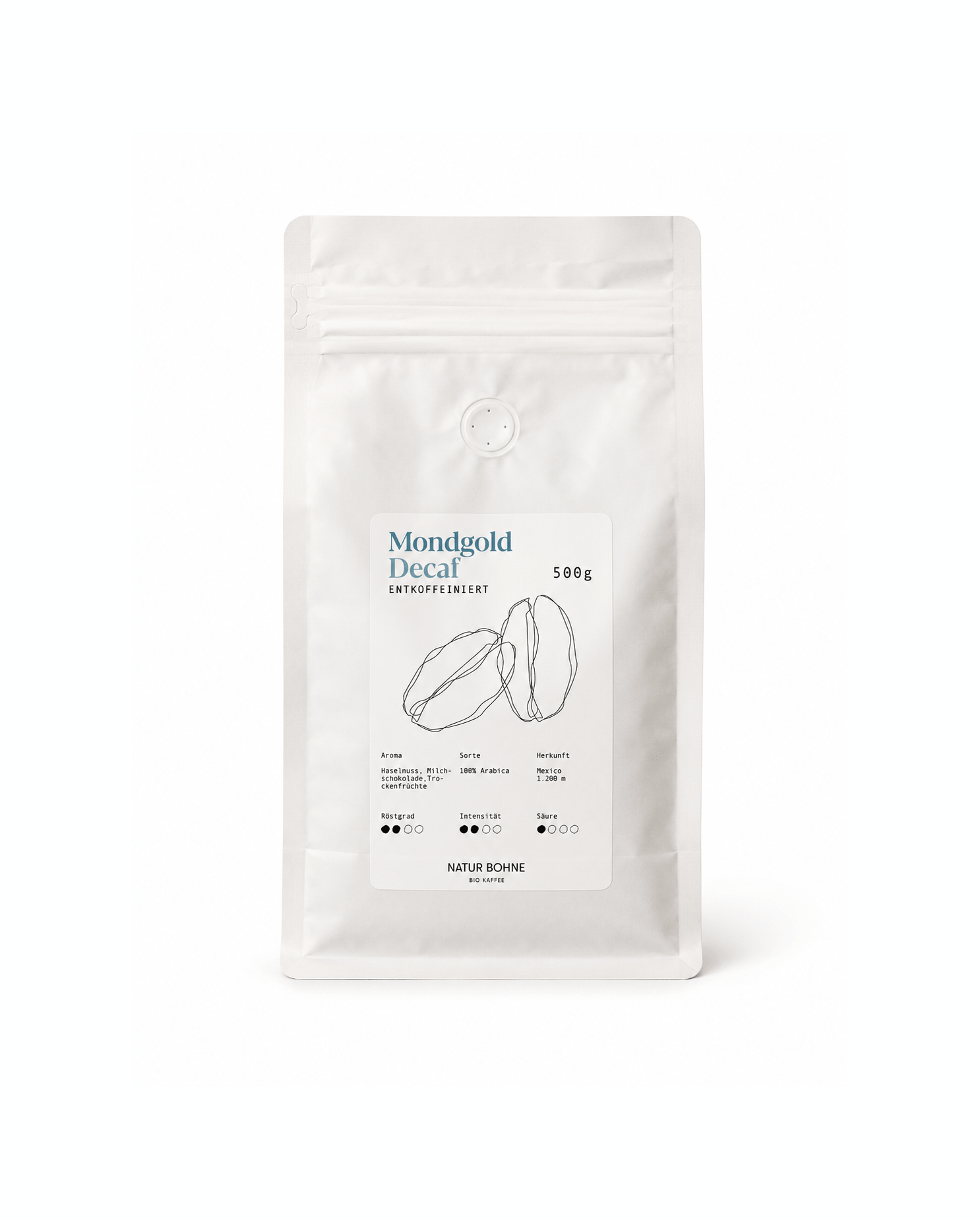


Mondgold Decaf
Mondgold is a decaffeinated organic specialty coffee from Chiapas, Mexico, decaffeinated using the 100% chemical-free Mountain Water Process. In an espresso machine or fully automatic coffee maker, its taste of sugarcane, hazelnut, and milk chocolate is reminiscent of a classic espresso – just without the caffeine.
incl. VAT excl. shipping costs .
🚚 Shipping within Germany: 3.49 €
🚚✨ Only 35,1 € away from FREE shipping in Germany!
Taste & Details
Schonend entkoffeiniert – ohne Chemie
Nachtgold wird im Mountain‑Water‑Prozess der mexikanischen Firma Descamex entkoffeiniert – einem 100 % chemiefreien Verfahren. Dabei werden die Bohnen zunächst behutsam bedampft und anschließend in Wasser eingetaucht, damit das Koffein in die Flüssigkeit übergeht.
Dieses Wasser wird über spezielle Filter vom Koffein befreit und danach wiederverwendet, sodass die Bohnen ihre Aromen weitgehend behalten. Zum Schluss werden sie schonend für mehrere Stunden getrocknet und gereinigt – ein aufwendiger Prozess, der Umwelt und Geschmack gleichermaßen schont.
Mondgold Decaf


Bohnenprofil
Sorte
100% Arabica
Mountain Water Process · 100% chemical-free · Residual content: <0.1% caffeine
Röstlevel
Medium, Omniroast
Anbaugebiet
Mexico
Catimor, Sarchimor, Red Caturra
SCA Score
82
Anbauhöhe
1.225m
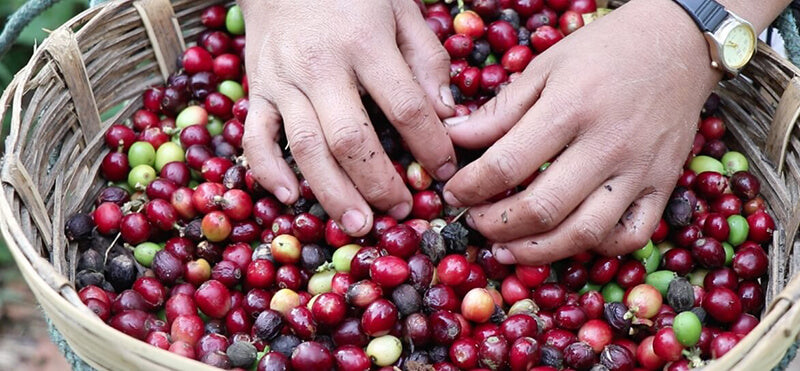
Was diesen Kaffee besonders macht
No caffeine. With pleasure. With responsibility.
Mondgold is our decaffeinated specialty coffee for all who want to skip the caffeine, but not the flavor. This decaf impresses with fruity sweetness, sustainable organic cultivation, and a particularly gentle decaffeination process – ideal for late hours, sensitive stomachs, or mindful moments of enjoyment.
Naturally decaffeinated – using the Mountain Water Process
Nachtgold is decaffeinated directly in Mexico – using the Mountain Water Decaf Process . Only pure spring water from the mountains is used. The caffeine is gently removed in a multi-stage water bath – completely without chemicals.
- 100% natural: No solvents, no residues
- Full aroma: Flavor compounds and oils are preserved
- Highest digestibility: Particularly gentle for sensitive connoisseurs
This process is considered the gold standard for decaf in the specialty coffee world – making Nachtgold one of the best decaffeinated coffees on the market.
In the cup, forest honey, dried fig, and delicate milk chocolate unfold, accompanied by malty and caramel notes. A harmonious, rounded profile that proves: Decaf can be really good .
Tested caffeine content & certification
Decaffeinated coffee can only be sold as decaf if the legally defined maximum caffeine content is not exceeded .
Every batch is tested and certified accordingly.
Nachtgold fully meets these requirements and is well below the applicable limits for decaffeinated coffee.
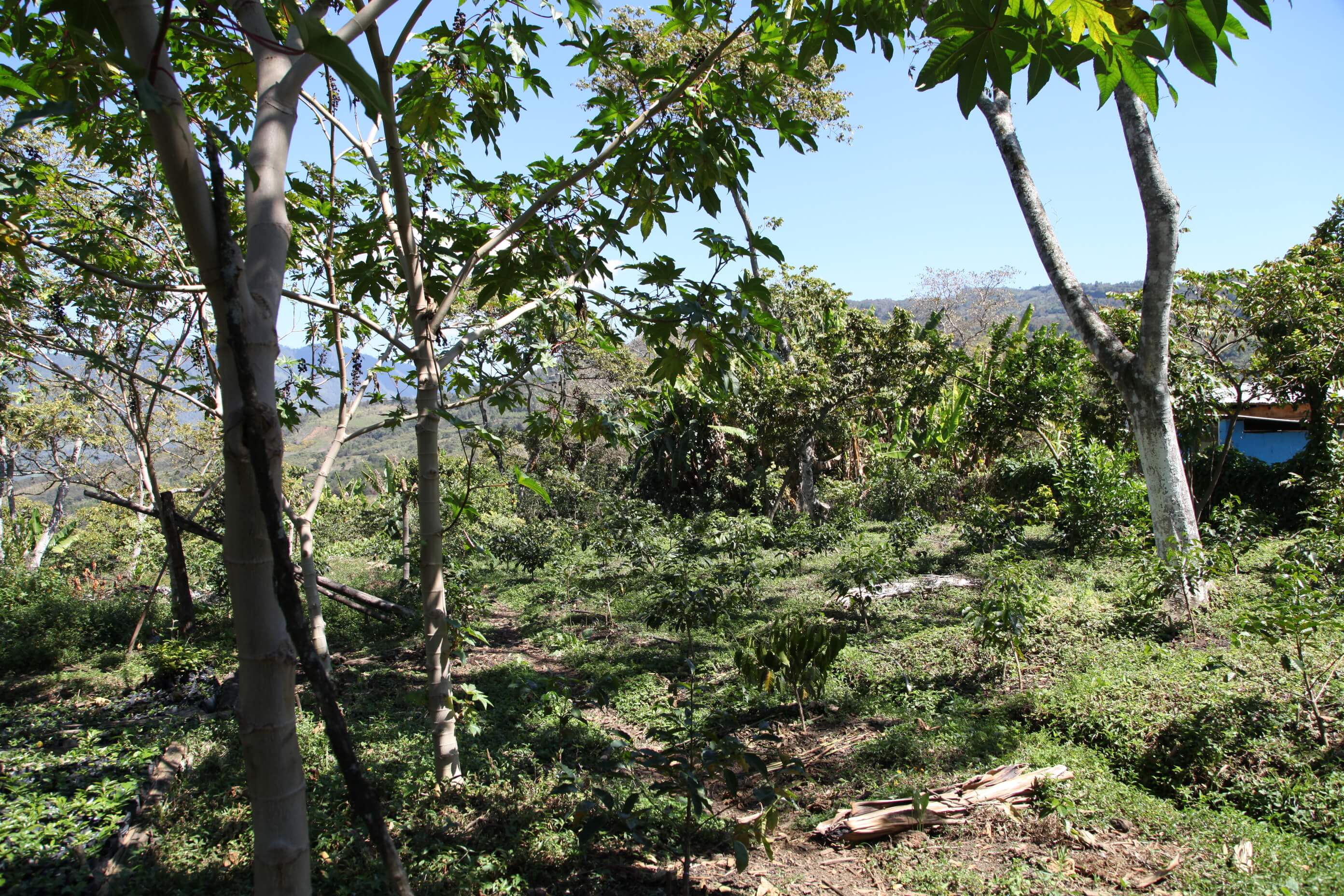
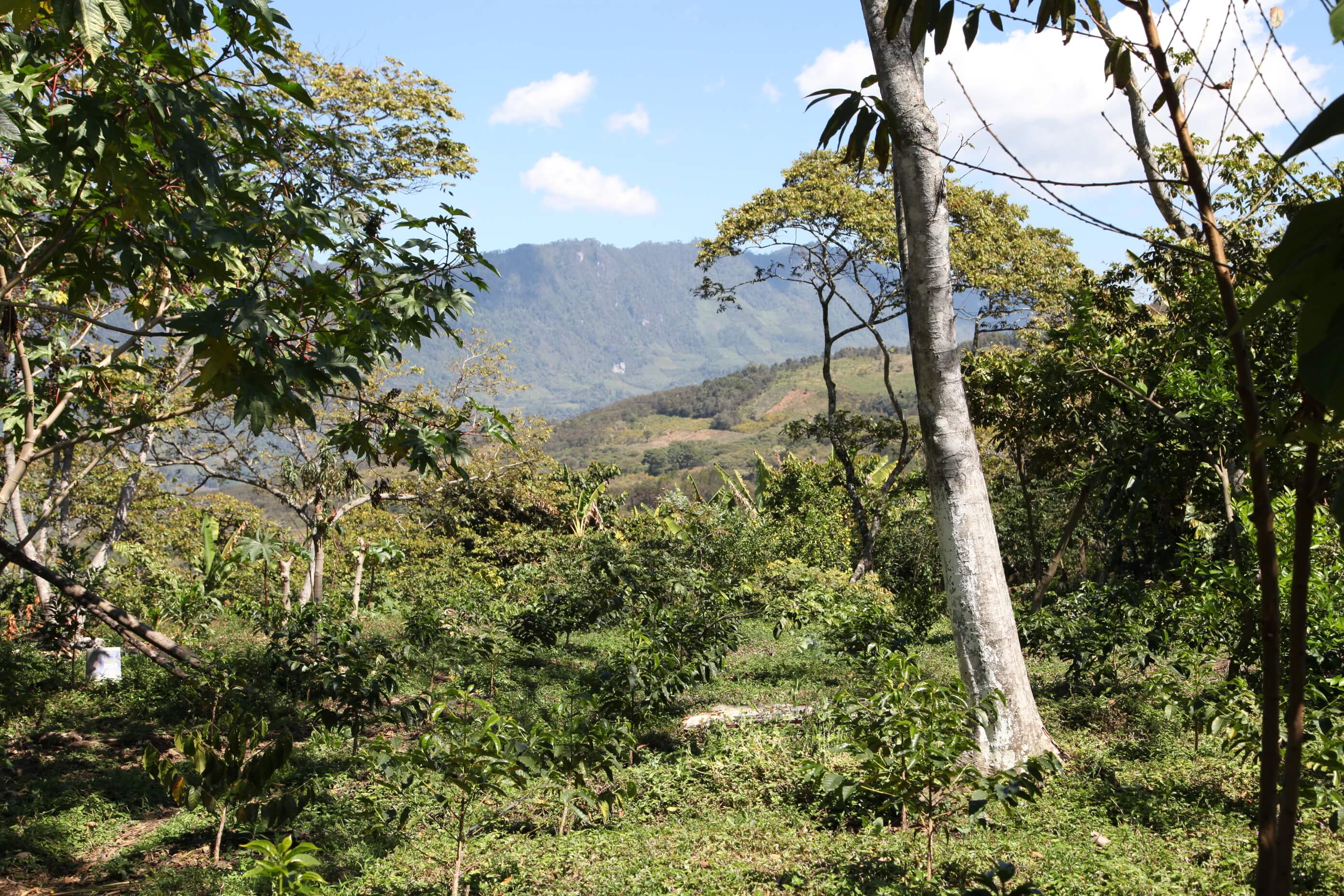
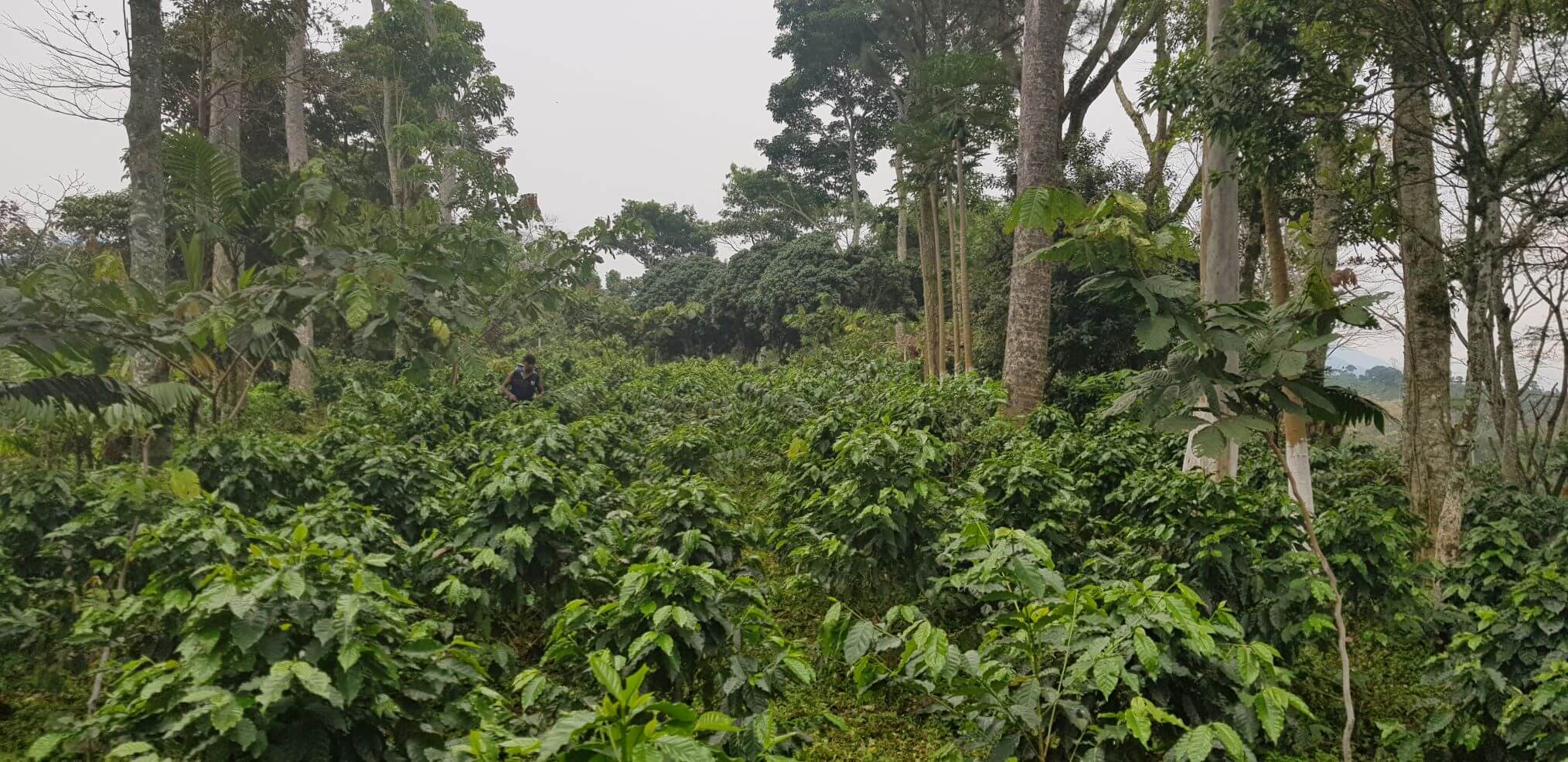
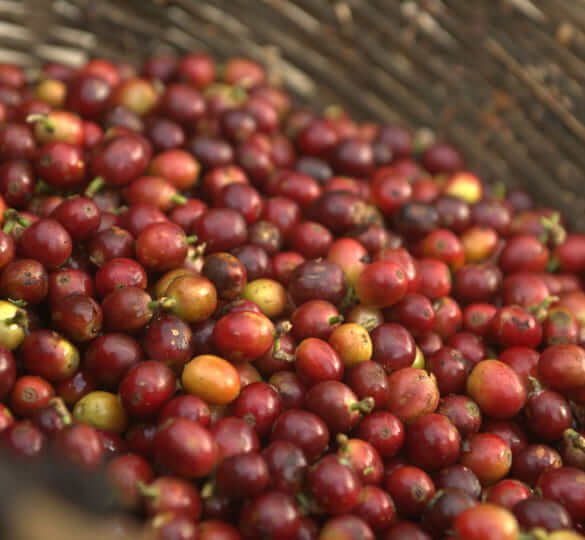
Die Menschen hinter dem Kaffee
 Altitude
1.225m
Altitude
1.225m
 Origin
Mexico
Origin
Mexico
 Varieties
Catimor, Sarchimor, Red Caturra
Varieties
Catimor, Sarchimor, Red Caturra
 Process
Washed
Process
Washed

Flavor Profile: Fruity-sweet, mild, lively
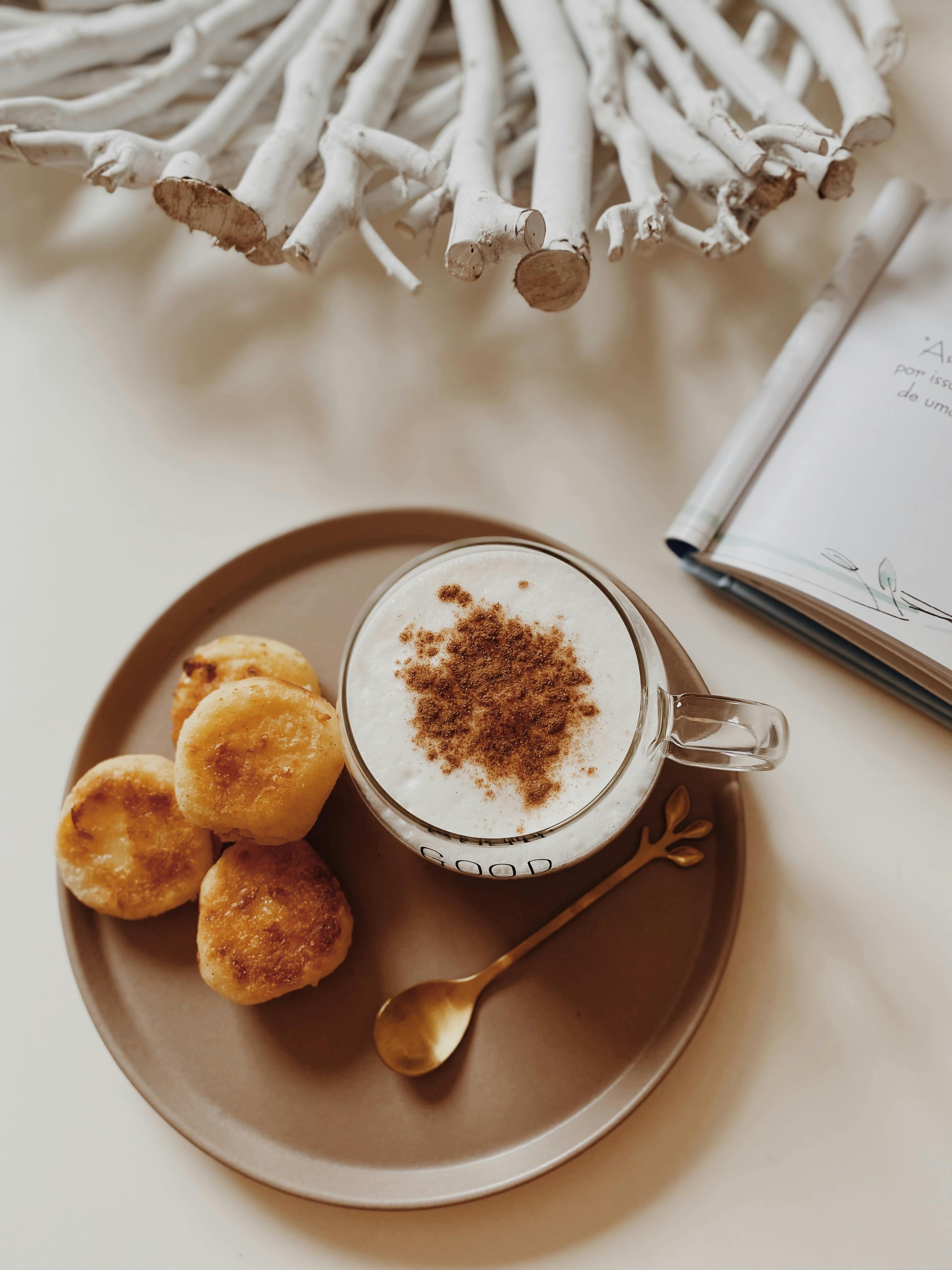
In the cup, Mondgold reveals a fresh, pleasantly sweet profile with notes of sugarcane, hazelnut, and delicate
milk chocolate
, complemented by dried fruits and a lively citrus note.
The acidity is
mild and harmoniously integrated
, the body soft and round – ideal black, with milk, or as a gentle espresso.
In short:
A decaf that doesn't
“
sacrifice
”
, but rather surprises.
Who Nachtgold is particularly suitable for
Nachtgold is particularly often chosen by:
- Pregnant and breastfeeding women
- People with sleep problems or evening routines
- Caffeine-sensitive or delicate connoisseurs
- People with sensitive stomachs
- Anyone who prefers low-acid, easily digestible coffee
- Conscious consumers with a focus on origin & process
Product facts at a glance
- Bean: 100% Arabica (Organic)
- Origin: Yajalón, Chiapas, Mexico (approx. 1,200–1,225 m)
- Decaffeination: Mountain Water Process (Mexican Water)
- Roast Level: Medium (Omniroast)
- Acidity: Mild, pleasantly integrated
- Aromas: Forest honey, fig, milk chocolate, caramel, malt
- Use: Espresso, fully automatic machine, filter, French Press, Bialetti
Nachtgold Decaf – for conscious coffee enjoyment without caffeine. Honestly decaffeinated. Full flavor. Sustainably designed.

Geeignet für filter coffee, Decaf Espresso, and French Press Espresso
Angaben zum Hersteller
The perfect extraction
Preparation recommendation
Our Omiroast are the ultimate all-rounders in our range - intense in taste and aromatic right down to the last note. So that you can exploit the full potential of our beans, we have put together a few preparation recommendations here.
Portafilter
Grinding level: Fine (depending on the grinder)
Recipe: Double Shot
- Use 16-20 g of freshly ground beans depending on the sieve.
- Use the DWT tool (Dosing & Weighing Technique) to slightly loosen the coffee beans before tamping. This ensures an even extraction.
- Tamp the coffee evenly and firmly into the portafilter.
- Make a double espresso (approx. 25-30 seconds extraction time).
- For our Omniroast, we recommend a brew ratio of around 1:5 to 1:2.5. This means that if you use 18 grams of ground coffee, for example, you should have around 36 to 45 grams of espresso in your cup. This ratio ensures a balanced extraction of the aromas, bringing out the full flavor of your high-quality beans.
- Enjoy it pure or as a base for your milk drink.
Moka pot
Grinding level: medium-fine (depending on the grinder)
Recipe:
- Fill the lower boiler with water up to the safety valve.
- Use 15-18 g of ground coffee in the sieve.
- Assemble the pot and place it on the stove over medium heat.
- When the coffee starts to fizz and rise, remove the pot from the stove and let the coffee rest for a moment.
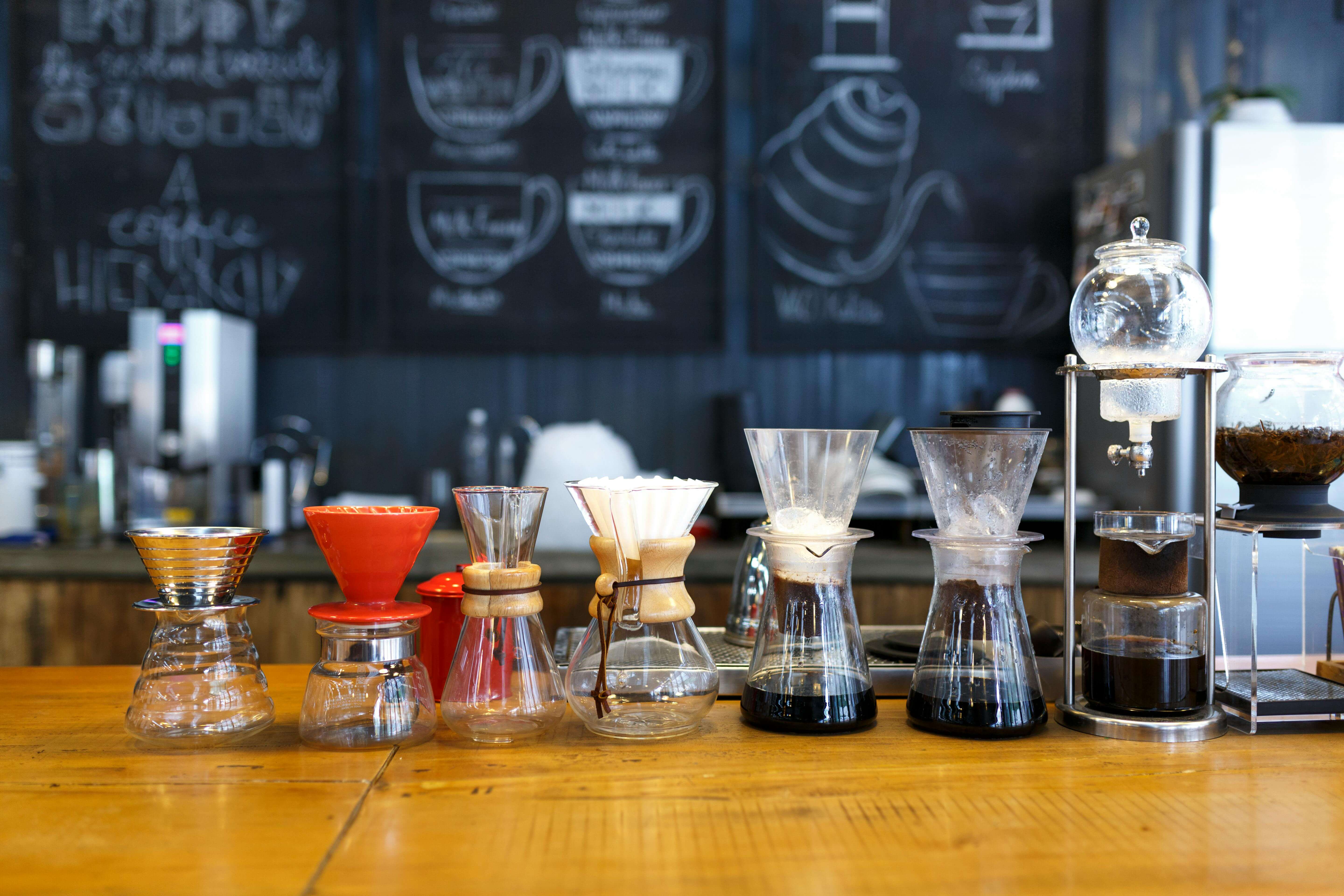
filter coffee
Our Omni Roasts are also perfect for those who love the full, balanced aroma of the beans and want to make a filter coffee from them. With these preparation instructions, every cup will be a moment of enjoyment!
1. V60 (Pour Over)
Grinding level: Medium (depending on the grinder)
Recipe:
- Use 25 g of coffee to 400 ml of hot water (approx. 92-95 °C). Perfect with 92°C
- Wet the filter and pour the water out.
- Start with a “bloom” – first pour 50 ml of water and wait 30 seconds.
- Then pour in the remaining water slowly and evenly in circular movements.
AeroPress
Grinding level: medium to fine (depending on the grinder)
Recipe:
- Use 15-18 g of coffee and 240 ml of hot water (approx. 90-95 °C). Perfect with 92°C
- Pour the water over the coffee and stir briefly. Wait 30 seconds. Then pour in the first of the water.
- Put the plunger on and press slowly for 30 seconds to 1 minute so that you reach a total time of max 1:30 minutes.
Organic packaging made from renewable raw materials
Our coffee beans come in sustainable packaging – developed for optimal protection and maximum environmental friendliness.
The advantages of our packaging at a glance:
- Laboratory-tested protection:
Protects reliably against external influences, ideal for high UV protection requirements.
- Bio-based PLA film:
Made from renewable raw materials (e.g. sugar cane or corn starch) – reduces the use of petroleum-based plastic and lowers CO₂ emissions.
- Food safe & EU production:
Highest quality standards thanks to European manufacturing.
- Certifications:
With "OK biobased" seal and FSC®-certified paper for sustainable commitment.
- Resealable and with aroma valve
Our valve protects your coffee beans from oxygen, moisture and foreign odors - so the full bouquet is preserved. Despite being sealed once for hygienic reasons, the packaging can be easily resealed at any time. This means you can fully enjoy your fresh coffee aroma at any time.
Our packaging not only optimally protects the coffee beans, but also contributes to conserving resources and reducing CO₂.
If you have any questions, please feel free to contact us at any time. We will get back to you as soon as possible, within 24 hours on weekdays.
-
Shipping info
We ship our coffee beans the same day if you order before 1pm.
-
Support
We will also be there to support you and advise you after your purchase. If you have any questions about the product you purchased from us, please contact us.
-
Contact
Email: hello@naturbohne.de
Telefon: 07454 / 870 48 64 -
Kaffeeabo
Das Kaffeeabo von Naturbohne
Behalte die volle Kontrolle über deine Abonnements
Überspringe, verschiebe, bearbeite oder storniere Lieferungen jederzeit – ganz nach deinen Bedürfnissen.
Do you have any more questions?
Contact
If you have any questions about our products, please write to us here or use the chat function.