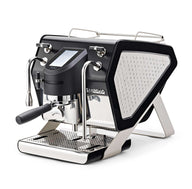
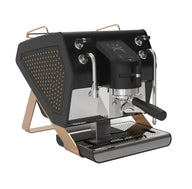
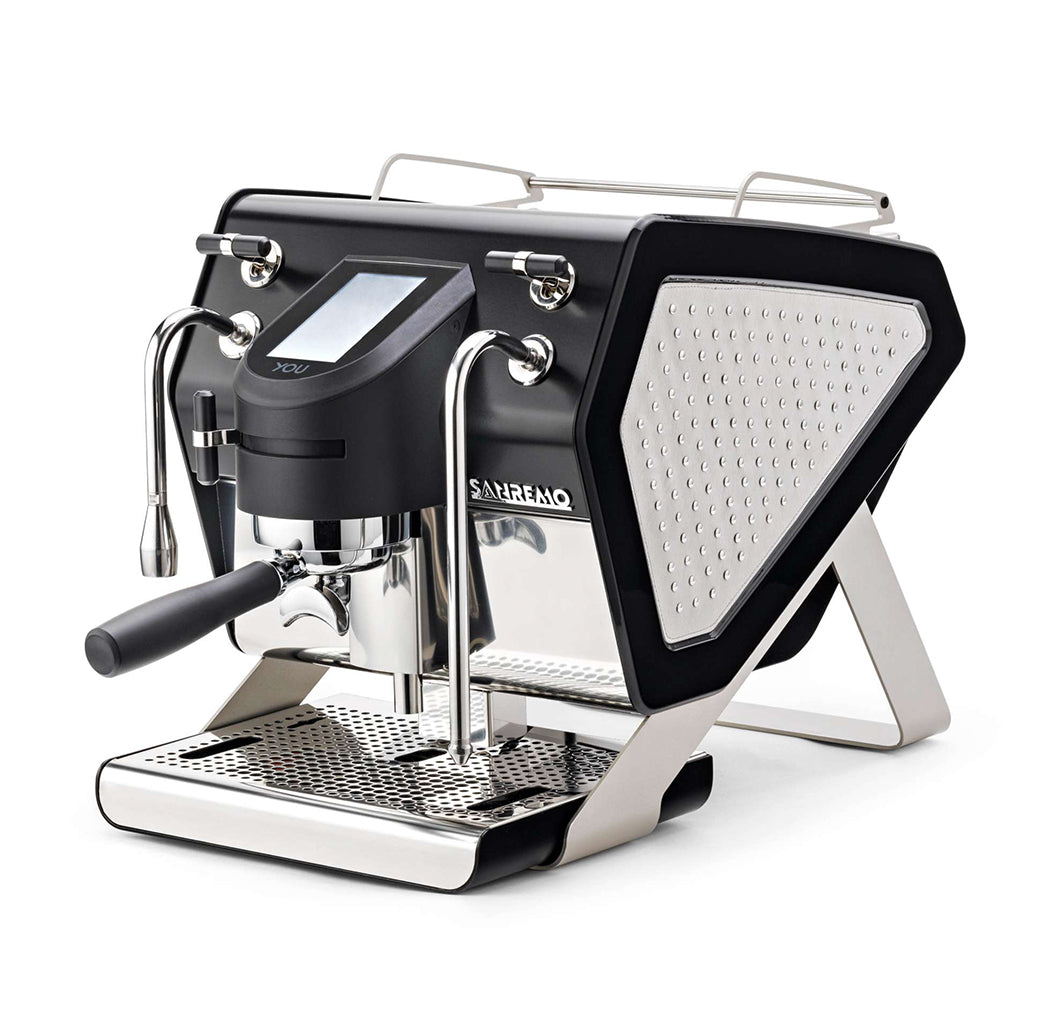
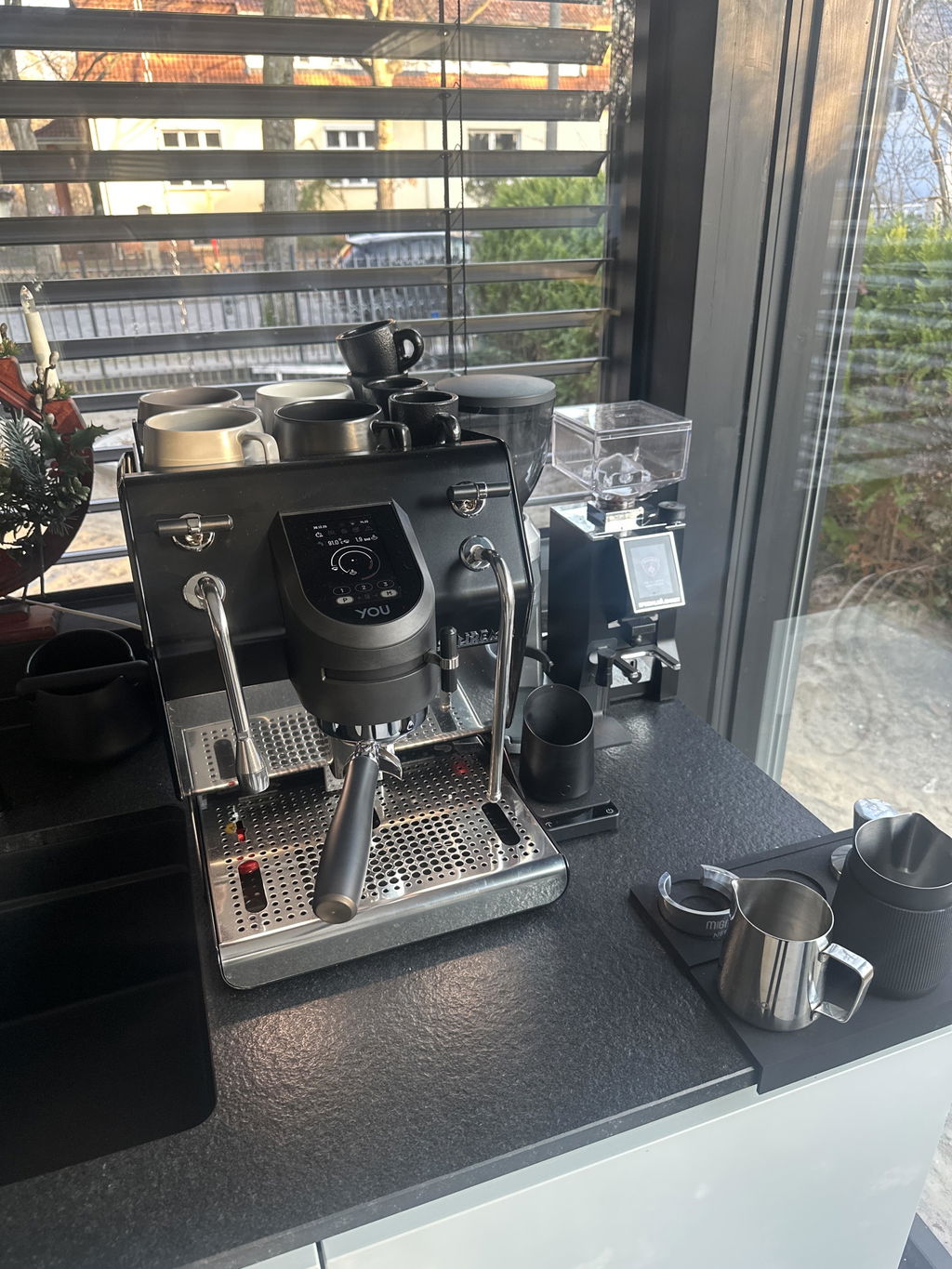
Was unterscheidet die SANREMO YOU Siebträgermaschine von der SANREMO YOU Special Edition?
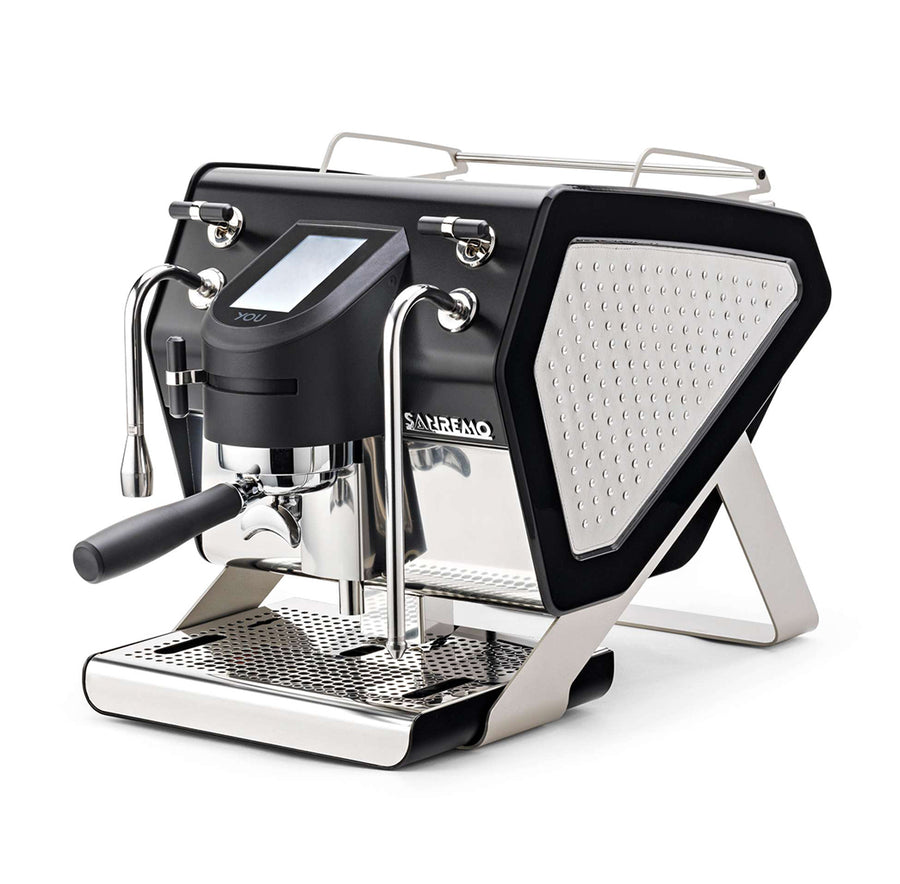
Die SANREMO YOU Siebträgermaschine und die SANREMO YOU Special Edition unterscheiden sich in ihren Ausstattungsmerkmalen und Design-Elementen. Während beide Modelle die gleiche grundlegende Technologie und Leistung bieten, könnte die Special Edition in Bezug auf besondere Features oder ein exklusives Design aufgewertet sein. Für spezifischere Unterschiede in den technischen Spezifikationen oder Design-Details stehen uns derzeit keine genauen Informationen zur Verfügung. Wenn Sie an einem einzigartigen Kaffeeerlebnis interessiert sind, empfehlen wir Ihnen, sich die SANREMO YOU Special Edition näher anzusehen.
Should I buy the SANREMO YOU espresso machine or the SANREMO Cube R espresso machine?
The decision between the SANREMO YOU espresso machine and the SANREMO Cube R espresso machine depends on your individual needs. The San Remo YOU features a dual boiler system with precise PID control and a modern web app for machine management. If you're looking for a compact and efficient machine, the Cube R could be a good alternative. Both machines are designed for demanding baristas and offer excellent performance.
Wie ist die Ersatzteilversorgung und Service-Zugänglichkeit im gewerblichen Dauerbetrieb geregelt?
Für die San Remo You sind Ersatzteile über den Hersteller verfügbar. Die Bereitstellung im Servicefall erfolgt in der Regel innerhalb von 1–2 Wochen. Für den zuverlässigen Betrieb im gewerblichen Einsatz empfehlen wir den Abschluss einer Wartungsvereinbarung mit vereinbarten Reaktionszeiten. Bei Fragen zu Ersatzteilverfügbarkeit oder Service wenden Sie sich bitte direkt an San Remo oder Ihren Fachhändler.
Wie stabil bleibt die Brühtemperatur bei Back-to-Back-Shots, reicht der 0,5L-Boiler wirklich aus?
Der 0,5-Liter-Espressoboiler mit PID-Steuerung sorgt bei mehreren direkt nacheinander bezogenen Shots für eine stabile Brühtemperatur. Dank des separaten 1,0-Liter-Dampfkessels im Dualboiler-System bleibt die Temperatur im Espressoboiler auch beim parallelen Milchschäumen konstant, da keine Wärme entzogen wird. Die PID-Regelung gleicht Temperaturschwankungen schnell aus, sodass bei 2 bis 4 aufeinander folgenden Espressi eine reproduzierbare Extraktion möglich ist. Die Ringbrühgruppe unterstützt eine gleichmäßige Temperaturführung. Für typische Home-Barista-Anwendungen mit 2 bis 4 Getränken hintereinander ist das System gut geeignet. Bei deutlich höherer Auslastung empfiehlt sich die Cube R mit größerem Boiler und Rotationspumpe.
What flow control options does the YOU specifically offer, mechanically via a valve or digitally via pump control?
The YOU features mechanical pre-infusion via the ring brew group and flow control through a valve. The mechanical pre-infusion follows the classic approach: water flows into the coffee bed at reduced pressure before the pump goes to full pressure. Additionally, you control the flow via a dedicated valve, manually adjusting the flow rate during extraction. This is not electronic profiling like with pressure profiling machines, but hands-on flow control. For baristas who enjoy experimenting with variable flow (long pre-infusion with light roasts, reduced flow with fine grind sizes), the system is flexible enough.
Gear pump instead of rotary pump, does that really make sense in a dual boiler with direct water connection?
The gear pump in the YOU offers quiet operation for home use and takes up less space than a rotary pump. With typical usage, it is well-suited for most home barista requirements, even with a direct water connection. For very high draw frequencies, such as those occurring in offices, a machine with a rotary pump like the Cube R is recommended, as this pump is designed for constant pressure during many consecutive shots.
App-Steuerung bei einer Siebträgermaschine, was kann ich da wirklich regeln, außer Timer und Temperatur?
Über die Web-App steuerst du PID-Temperatur beider Boiler, programmierst Bezugsvolumen für Single/Double, aktivierst Preinfusion-Zeiten und schaltest den Standby-Modus zeitgesteuert. Du siehst auch Shot-Timer und Brew-Statistiken. Die App läuft auf Smartphone und Desktop, praktisch, wenn du morgens die Maschine aus dem Bett aufheizen willst. Was die App nicht macht: echtes Druckprofiling oder Flow-Kurven erstellen (das bleibt manuell über das Flow-Control-Ventil). Die App ist ein Komfort-Feature für Routine-Einstellungen, kein Ersatz für manuelles Profiling. Für Remote-Aufheizen und schnelle PID-Anpassungen funktioniert sie sehr gut.
Was macht eine Dualboiler-Maschine anders als eine normale Espressomaschine?
Bei der SANREMO YOU arbeiten zwei getrennte Kessel: ein 0,5-Liter-Espressokessel und ein 1,0-Liter-Dampfkessel. Du kannst gleichzeitig Espresso beziehen und Milch aufschäumen, ohne dass die Temperatur schwankt. Jeder Kessel hat eine eigene PID-Steuerung, du stellst beide Temperaturen digital ein. Das ist der Hauptunterschied: Bei Einkreisern musst du zwischen Espresso und Dampf umschalten und warten, bei der YOU läuft beides parallel. Für dich bedeutet das: stabiler Espresso und schneller Workflow, gerade wenn du mehrere Cappuccini hintereinander machst.
Wie lange dauert es, bis die Maschine aufgeheizt ist und ich loslegen kann?
Die SANREMO YOU braucht rund 10 Minuten Aufheizzeit. Das ist die Zeit, bis beide Kessel ihre Zieltemperatur erreicht haben und die PID-Anzeige grün zeigt. Anders als bei klassischen E61-Maschinen musst du hier nicht 30 bis 40 Minuten warten, der kleinere Espressokessel (0,5 Liter) heizt deutlich schneller durch. Nach den 10 Minuten kannst du direkt beziehen. Tipp: Lass den Siebträger in der Brühgruppe eingespannt, damit er mitwärmt, dann wird dein erster Shot nicht sauer.
What settings do I need to make at the beginning myself, or can I start immediately?
You can start right away, the YOU comes factory-set to espresso temperature. The PID automatically regulates both boilers. What you should do: Adjust the brew temperature via the web app to match your beans (1–2 °C higher for light roasts, lower for dark). The volumetrics are pre-programmed, you press the brew button, and the machine stops automatically at the chosen amount. You can adjust the amount later yourself. Flow Control is built-in, but optional; at the beginning, leave it on standard. The app shows you all values, you don't need to read a manometer.