Hinweis zur Preisentwicklung
Bestellungen können derzeit noch zum angezeigten Preis aufgegeben werden. Für einzelne Hersteller (z. B. Mahlkönig, Eureka, Rocket Espresso) wurden Preisanpassungen für das kommende Jahr angekündigt. Der aktuell angezeigte Preis gilt für Bestellungen, die jetzt eingehen.

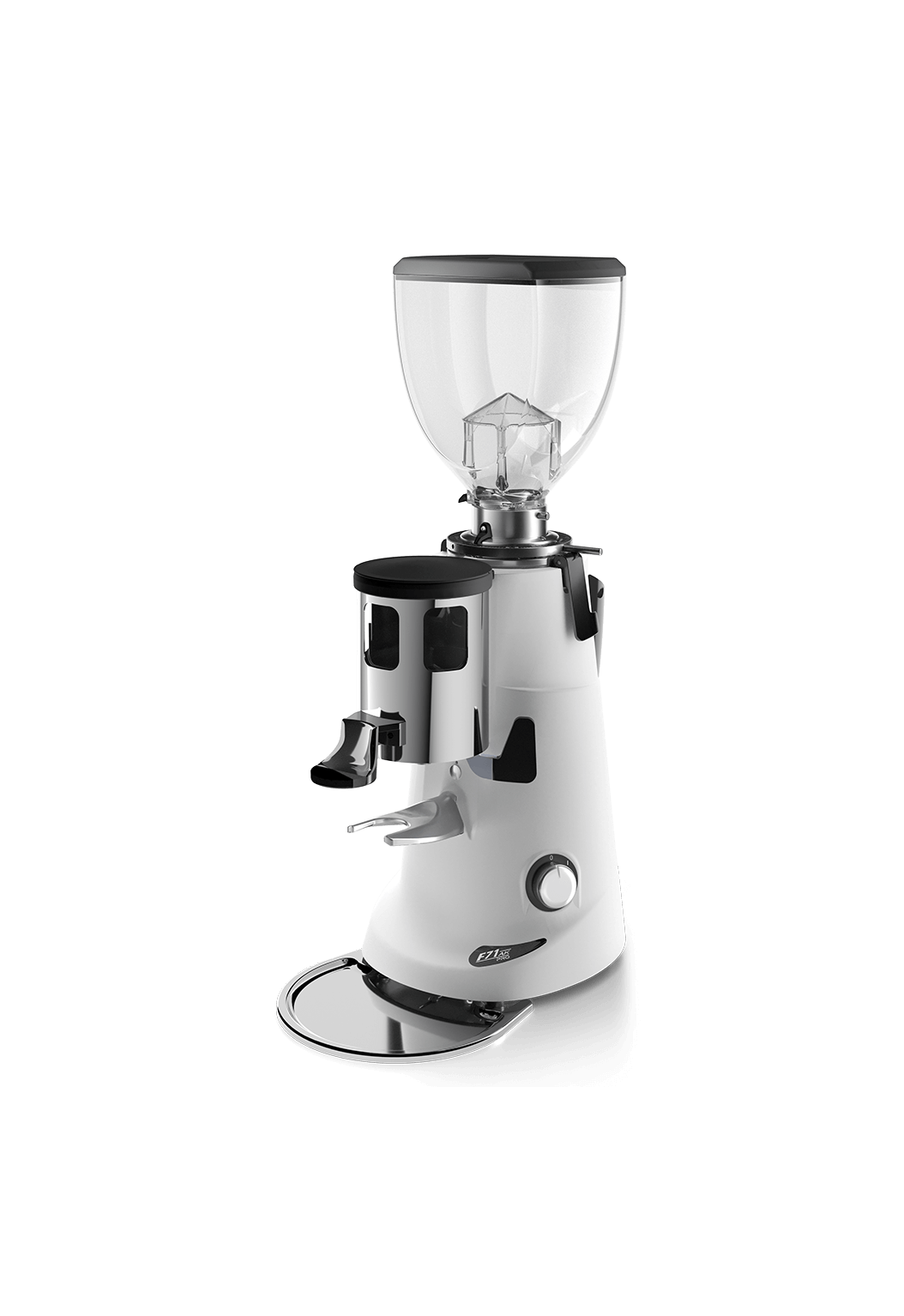
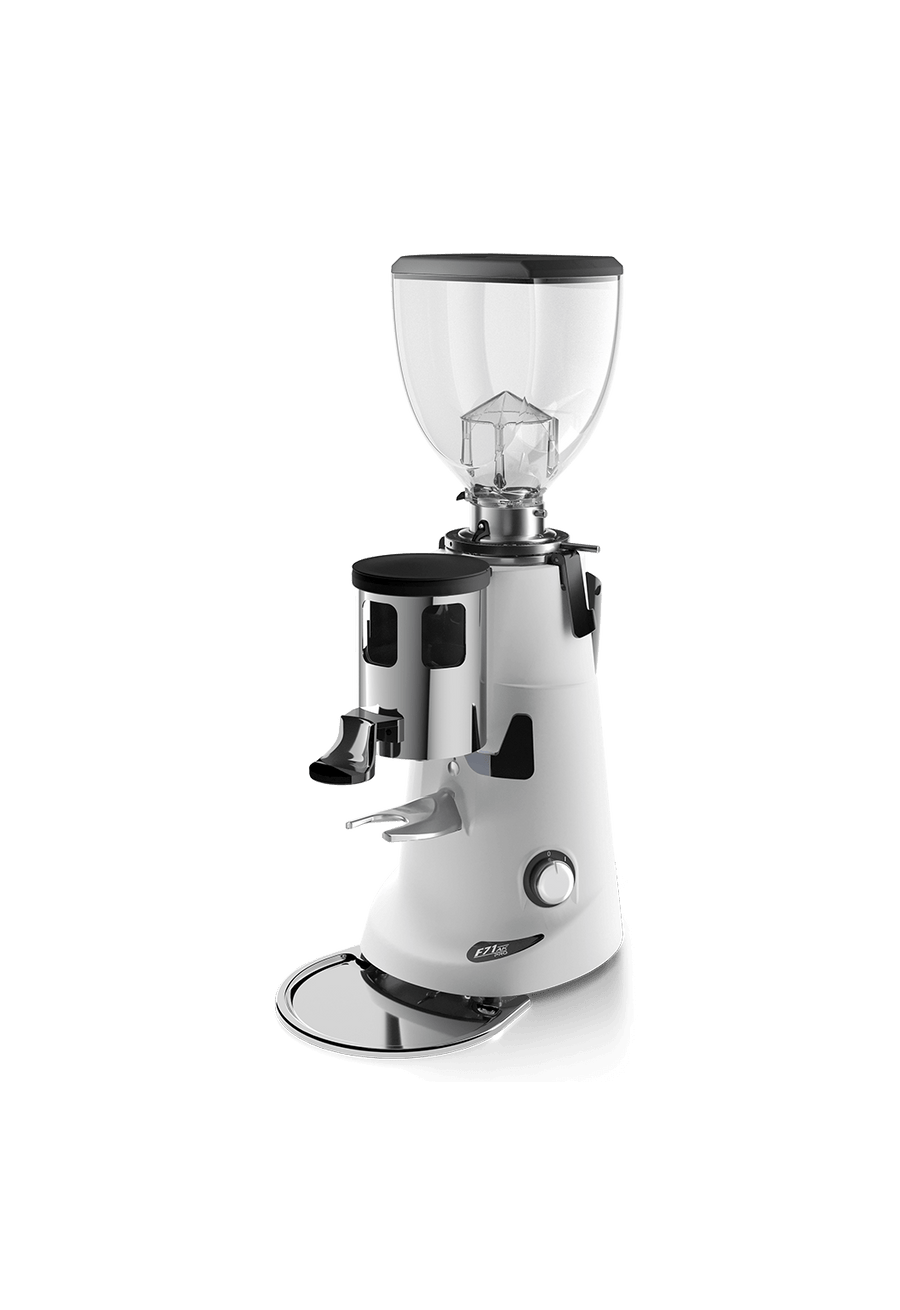
Fiorenzato F71 AK PRO moulin à café – Meules coniques pour exigences maximales

Découvrez la précision de mouture professionnelle : La Fiorenzato F71 AK PRO est le moulin à café idéal pour tous ceux qui recherchent des performances maximales, des résultats constants de premier ordre et un supplément d’arôme. Conçue pour une utilisation intensive en restauration, coffee shops et environnements exigeants de barista, elle établit de nouveaux standards en matière d’efficacité et de plaisir.

  • Moteur puissant de 850 watts : Pour des résultats rapides et homogènes même à haut débit.
  • Mécanisme de mouture conique professionnel (71 mm) : Pour une mouture particulièrement douce, respectueuse des arômes, avec un minimum de dégagement de chaleur.
  • Avantages du moulin conique :
    • Moins d’échauffement de la mouture – arômes et huiles préservés de façon optimale.
    • Vitesse de mouture et efficacité accrues – idéal pour de grands volumes et une utilisation intensive.
    • Résultat de mouture particulièrement homogène et fin, même avec différentes variétés de grains.
    • Silencieux en fonctionnement et moins de charge électrostatique.
  • Réglage micrométrique continu de la mouture : Réglage précis pour chaque méthode de préparation – de l’espresso au café filtre.
  • Grand réservoir à grains : 1,5 kg de capacité – idéal pour les bars à café très fréquentés.
  • Technologie Pro avec chambre de mouture amovible : Pour un nettoyage et un changement de type de café en quelques secondes, sans réajuster la mouture.
  • Construction robuste : Matériaux de qualité et boîtier massif pour une durabilité maximale au quotidien.

Données techniques :

  • Puissance du moteur : 850 watts
  • Moulin : Conique, Ø 71 mm
  • Vitesse de rotation : env. 420 tr/min (50 Hz) – 500 tr/min (60 Hz)
  • Conteneur de haricots : 1,5 kg
  • Poids : env. 20 kg
  • Dimensions : env. 255 x 745 x 320 mm (l x h x p)

Avec le Fiorenzato F71 AK PRO, vous optez pour une qualité sans compromis, une technologie de mouture de pointe et un confort d’utilisation maximal. Le moulin conique garantit un traitement délicat et un arôme préservé – même sous forte sollicitation. Idéal pour les coffee shops soucieux de perfection et d’efficacité.

Commandez maintenant et découvrez la différence – jour après jour, tasse après tasse !

Angaben zum Hersteller

Fiorenzato, Via Rivale 18, 30036 Santa Maria di Sala (VE), Italie, www.fiorenzato.com, info@fiorenzato.it

5.0
Chiffon de bar Natur Bohne 40x40
Couleur
Couleur: Senfgelb
Puly Grind nettoyant pour moulin 10x15g
Distributeur:Puly Grind
Poudre de café PULY NSF
Distributeur:Puly
Eureka Tamper Station (double)
Distributeur:Eureka
Couleur
Couleur: Noix de pin
Brosse de groupe Basic
Distributeur:LF
5.0
Eureka Leveler ⌀58mm
Distributeur:Eureka
Matériau
Matériau: Chêne
Outil de distribution WDT Wiedemann
Distributeur:Wiedemann
Couleur
Couleur: Chêne
Nical 125 filtre à clipser / filtre à eau pour porte-filtre et machines à espresso
Distributeur:Nical

Upgrade for your portafilter machine

Matching accessories

Retirer
Retirer
Retirer

Frequently Asked Questions

I bought a new coffee grinder from Naturbohne and there are coffee residues in it.

Please note: Some manufacturers test their coffee grinders before shipping, which means that small coffee residues or bean residues can occasionally be found in the grinder. This procedure is used to test functionality and is considered a quality feature. Of course, we only sell new products - unless expressly stated otherwise.

Static charge – coffee grounds spray out from the side

With some coffee grinders, the ground coffee can become statically charged and spray out of the portafilter at the side. This means that not all of the ground coffee gets into the portafilter, which can lead to uneven extraction. Our recommendation: Use a dosing funnel to ensure that all of the ground coffee is precisely fed into the portafilter - for optimal espresso enjoyment.

What is dead space in coffee grinders?

Conventional coffee grinders often leave a so-called dead space in which coffee residues accumulate. These residues can not only affect the freshness, but also lead to old and fresh coffee grounds being mixed, which negatively affects the taste. In contrast, single dose grinders have a well-thought-out design that eliminates the dead space. Each portion is ground individually and precisely so that no residues are left behind - for a consistently pure and full-bodied coffee experience.

Which portafilter fits my espresso machine?

When choosing the right portafilter for your portafilter machine, it is important to know that each manufacturer develops its own brewing group - the most well-known is the Faema E61. However, this does not mean that any portafilter will fit without any problems. An incompatible portafilter can leak, which will have a direct negative impact on the quality of your espresso. We therefore recommend using either the portafilter originally supplied or one that is explicitly stated to be compatible with your machine. This will ensure that the pressure is optimally built up and the espresso is perfectly extracted.

Can I visit you or pick up the goods personally?

Yes, of course, you are welcome to come by and look at our products by appointment. We would be happy to advise you personally. The best thing to do is to send us an email with a few suggested appointment times.

We are located 5 minutes from the motorway between Stuttgart and Lake Constance on the edge of the Black Forest.

Important note, first use coffee grinders

Another little tip for the perfect start with your new mill:

You will get the best grinding result after you have ground about 1-2 kg of beans. It is best to use a few cheap beans so that the grinder can work optimally. And if you are wondering what you can do with the bean flour - it is perfect plant fertilizer! 🌿

It contains nitrogen, potassium, sulfur and phosphorus and is a real nutrient bomb for your plants.

Könnt ihr bei meiner Siebträgermaschine eine Offset Kalibrierung durchführen ?

Es gibt einige Argumente, die gegen eine Offset-Kalibrierung bei Lelit-Siebträgermaschinen sprechen, insbesondere bei Modellen wie der Lelit Bianca. Diese beziehen sich vor allem auf die Komplexität und die Limitierungen des Offsets als alleinige Lösung für Temperaturprobleme:

  1. Temperaturschwankungen und Instabilität. Der Offset berücksichtigt eine konstante Differenz zwischen Kesseltemperatur und Brühtemperatur. In der Praxis können jedoch Temperaturschwankungen auftreten, z. B. durch längere Standzeiten oder kontinuierliches Brühen. Dadurch ist die tatsächliche Brühtemperatur nicht immer präzise vorhersehbar.
  2. Abhängigkeit von Umgebungsbedingungen. Faktoren wie Raumtemperatur, Luftfeuchtigkeit und der Zustand der Maschine (z. B. Aufheizzeit) beeinflussen die Brühtemperatur erheblich. Ein fester Offset kann diese Variablen nicht dynamisch ausgleichen, was zu ungenauen Ergebnissen führen kann.
  3. Wärmeverlust bei Standzeiten. Nach längeren Pausen kühlt die Brühgruppe ab, und die Maschine benötigt Zeit, um wieder auf die gewünschte Temperatur zu kommen. Ein korrekt eingestellter Offset kann dies nicht kompensieren, weshalb zusätzliche Maßnahmen wie ein “Cooling Flush” nötig sind.
  4. Fehlkalibrierungen ab Werk. Bei einigen Lelit-Modellen wurde festgestellt, dass der Offset ab Werk oft ungenau eingestellt ist (z. B. 4–8 Grad zu niedrig bei der Lelit Bianca). Dies erfordert eine manuelle Nachkalibrierung durch Fachpersonal, was für Endnutzer kompliziert sein kann.
  5. Missverständnisse in der Anwendung. Viele Nutzer sind durch widersprüchliche Informationen zur Offset-Einstellung verunsichert, was zu Fehlanpassungen führen kann. Beispielsweise wird oft erwartet, dass der Offset allein alle Temperaturprobleme löst, obwohl er nur ein Teil eines komplexeren Systems ist.

Fazit
Die Offset-Kalibrierung ist ein nützliches Werkzeug, aber sie sollte nicht isoliert betrachtet werden. Eine Kombination aus präziser PID-Steuerung, regelmäßiger Wartung und angepassten Techniken (z. B. Spülshots) ist notwendig, um optimale Brühergebnisse zu erzielen.

Can't find an answer to the frequently asked questions?

Then write to us!

Do you have any more questions?

Contact

If you have any questions about our products, please write to us here or use the chat function.

Ce site est protégé par hCaptcha, et la Politique de confidentialité et les Conditions de service de hCaptcha s’appliquent.