

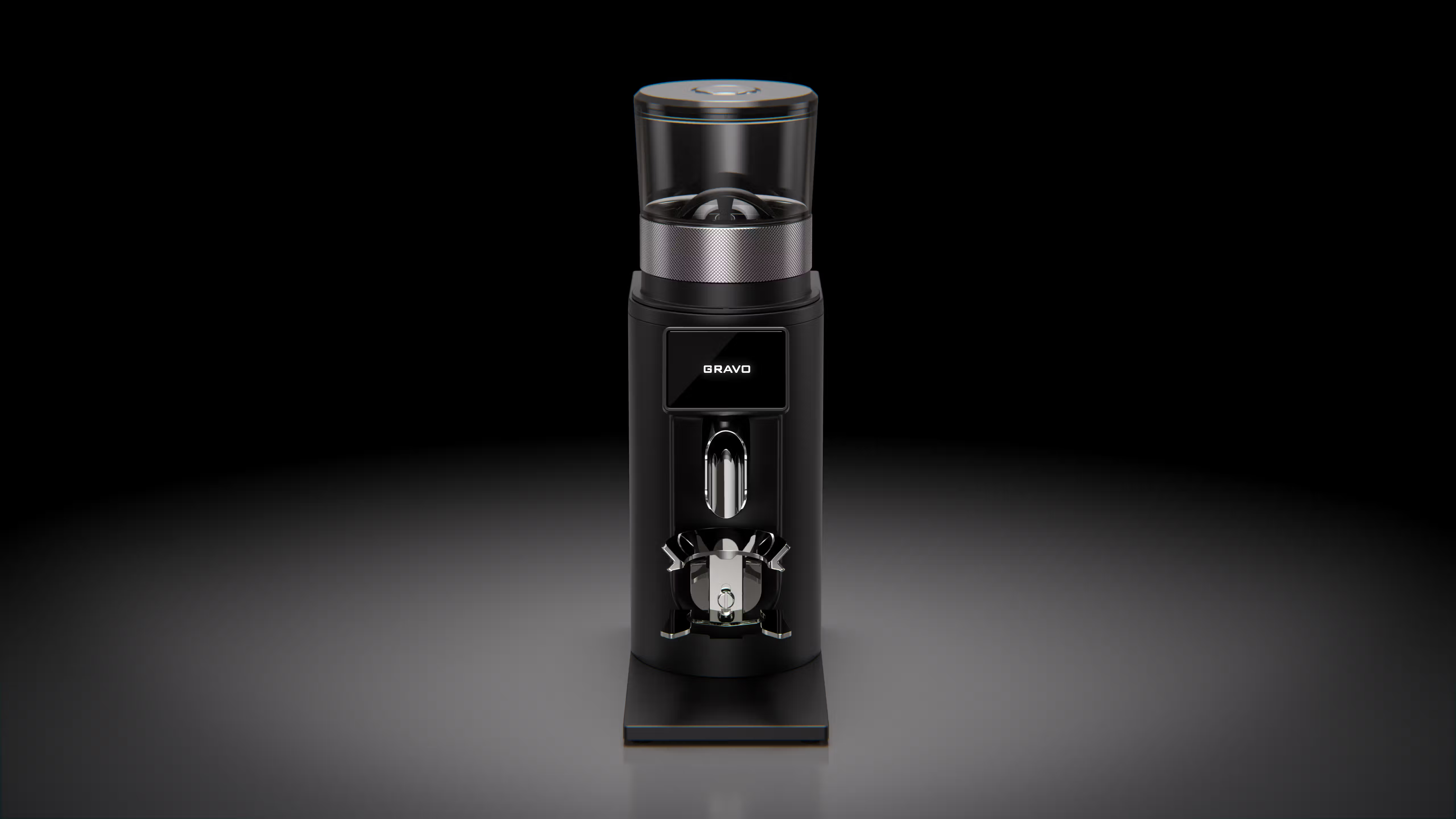



Rocket Espresso Gravo 63 – GbW espresso grinder with 63 mm flat burrs, touchscreen, and variable RPM
incl. VAT, excluding shipping costs
Finanzieren ab 60,53 € / Monat* mit
🚚 Shipping within EU: 34 €
EU shipping costs, see shipping policy.
Rocket Espresso Gravo 63 – GbW espresso grinder with 63 mm flat burrs, touchscreen, and variable RPM
Rocket Espresso Gravo 63 – GbW Espressomühle mit 63 mm Flachmahlscheiben, Touchscreen und variabler RPM
Die Rocket Espresso Gravo 63 ist eine der spannendsten neuen Grind by Weight Espressomühlen 2026 und richtet sich an anspruchsvolle Home-Baristas und Prosumer. Mit 63 mm Flachmahlscheiben, elektronischer Mahlgradeinstellung, Touchscreen, bürstenlosem 300-Watt-Motor und variabler RPM-Steuerung von 500 bis 1500 U/min kombiniert die Rocket Gravo moderne Mühlentechnologie mit der neuen Rocket-Designsprache.
Wenn du eine Rocket Gravo Espressomühle kaufen oder Rocket Gravo vorbestellen möchtest, bekommst du eine der ersten Rocket-Mühlen mit echter GbW-Technologie, elektronischer Rezeptlogik und praxisnahen Features für flexible Home-Barista-Workflows.
Die wichtigsten Vorteile auf einen Blick
- 63 mm Flachmahlscheiben in schraubenloser / blind ausgeführter Bauweise
- Grind by Weight, Grind by Time und Single Shot in einer Mühle
- Elektronische Mahlgradeinstellung mit speicherbaren Rezepten
- 900–1500 RPM regulär, per Langdruck bis 2000 RPM erweiterbar
- 300 Watt bürstenloser Motor
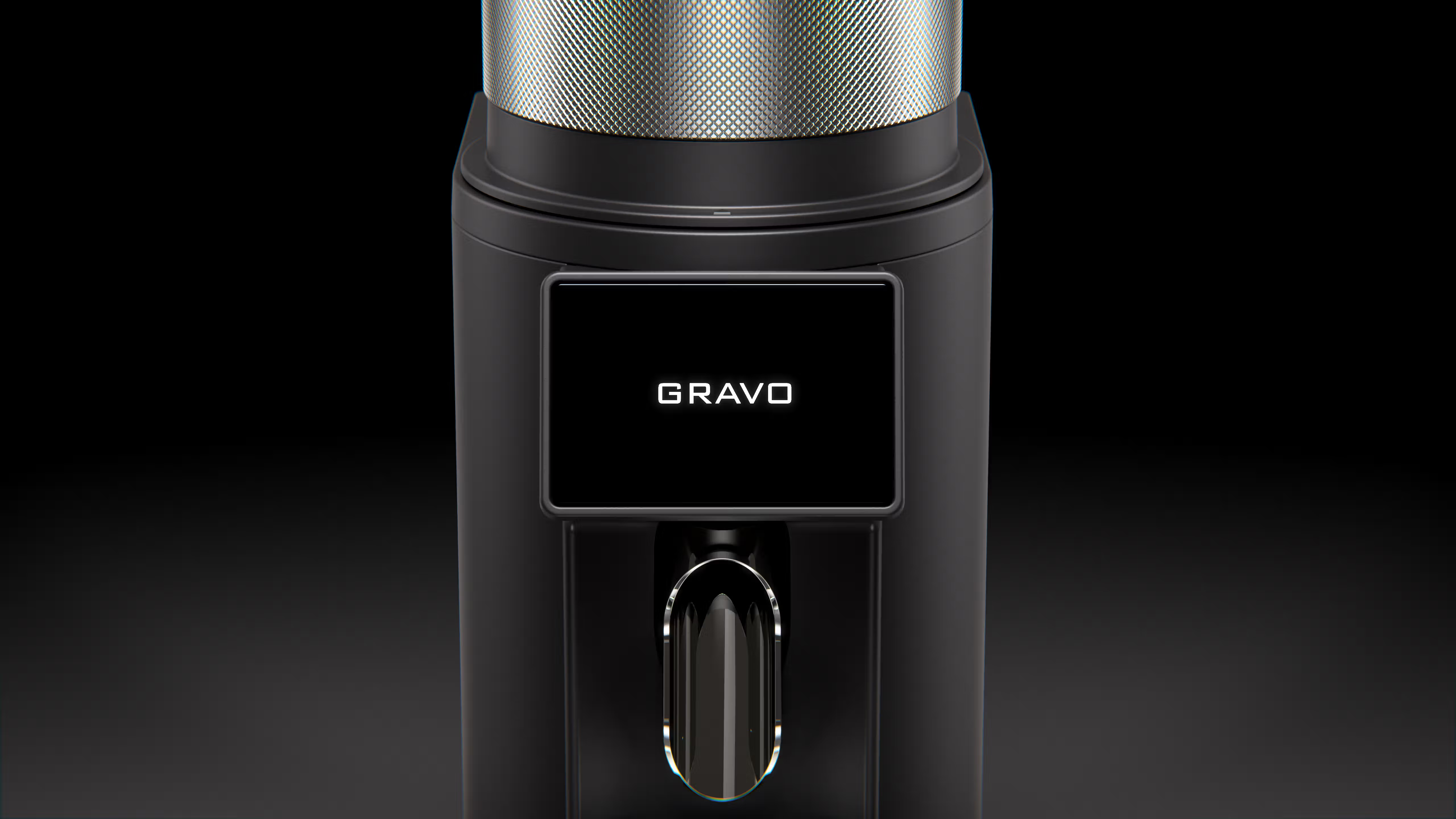
- 2,5 Zoll Touchscreen mit einfacher Homescreen-Bedienung
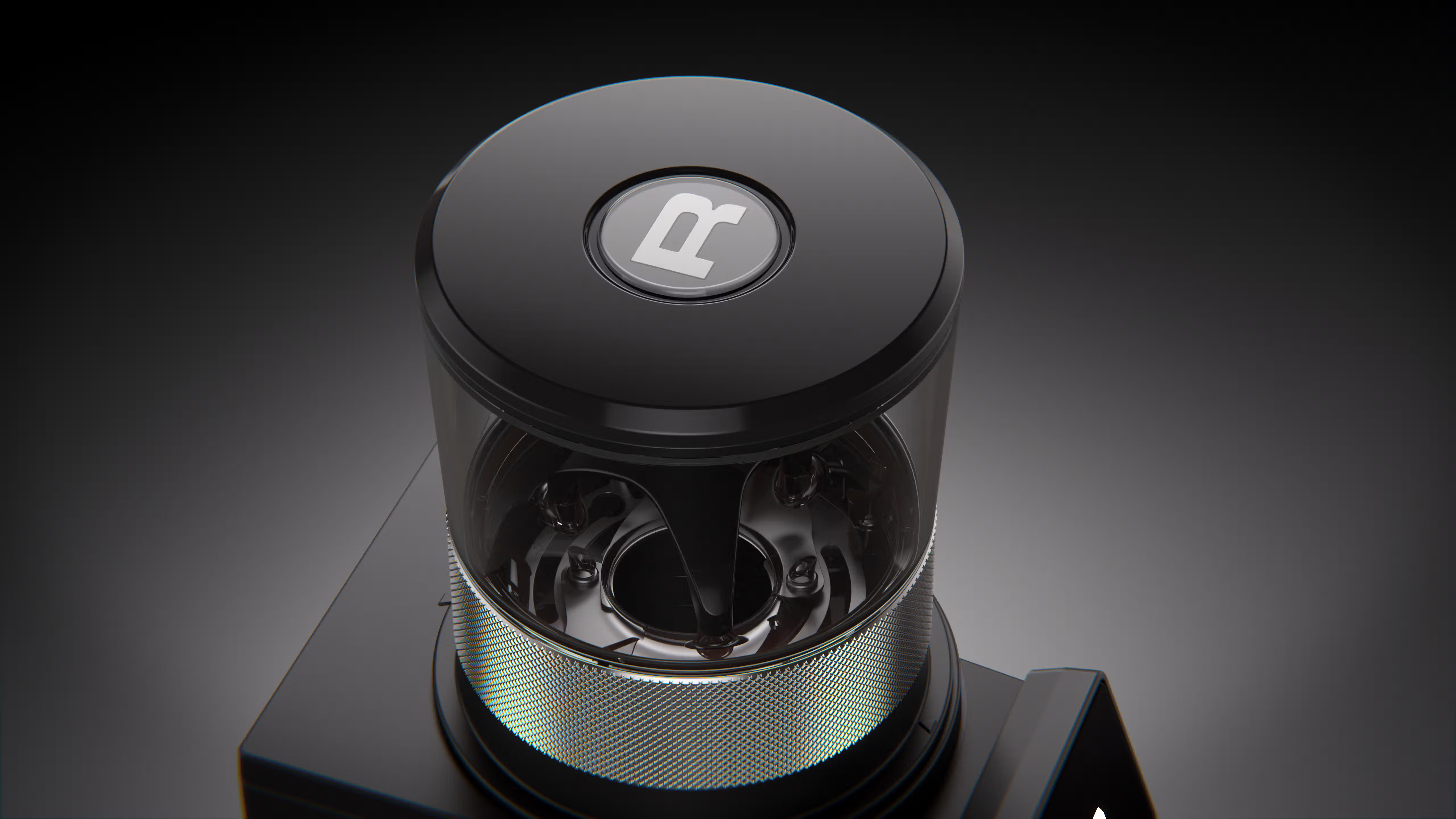
- Praxisnahes Bohnenwechsel-System mit 5 Einsätzen
- Werkzeuglos entnehmbare Edelstahl-Rutsche und leicht zugänglicher Flapper
- WiFi-Hardware für zukünftige Sync-Funktionen bereits integriert
- Kompaktes Edelstahlgehäuse in typischer Rocket-Premium-Anmutung
Grind by Weight – präzise dosieren ohne Nachwiegen
Das Herzstück der Rocket Gravo 63 ist die integrierte Echtzeit-Waage. Die Mühle wiegt jede Dosis während des Mahlvorgangs live mit und stoppt automatisch, sobald das gewünschte Zielgewicht erreicht ist. Das reduziert manuelle Korrekturen und sorgt für einen deutlich komfortableren Workflow.
Gerade im Espresso-Bereich ist das ein echter Vorteil: Statt über Zeit oder Gefühl zu dosieren, erhältst du eine klar definierte Zielmenge für jeden Shot. Das verbessert die Reproduzierbarkeit und spart Zeit im Alltag – besonders dann, wenn du regelmäßig mit denselben Rezepten arbeitest.
Wichtig zur Einordnung: Im analysierten Prototypen zeigte die GbW-Funktion noch eine Streuung von ungefähr ±0,5 bis 0,6 g. Rocket hat jedoch bereits angekündigt, den Algorithmus vor Serienstart weiter zu optimieren. Für die finale Marktversion ist daher mit einer verbesserten Dosiergenauigkeit zu rechnen.
Drei Dosiermodi in einer Mühle
Die Rocket Gravo 63 kombiniert drei Modi in einem System:
- Grind by Weight (GbW) für gewichtsbasiertes Mahlen
- Grind by Time (GbT) für zeitbasiertes Mahlen
- Single Shot für Einzelportionen bzw. die letzte Dosis deiner gewählten Bohnen
Diese Kombination macht die Gravo deutlich flexibler als klassische Rocket-Mühlen früherer Generationen. Sie eignet sich damit sowohl für Nutzer, die maximale Konstanz suchen, als auch für Anwender, die zwischen verschiedenen Kaffees und Rezepten wechseln möchten.
Einfacher Bohnenwechsel – interessant für Decaf und mehrere Kaffees
Einer der spannendsten Praxispunkte der Rocket Gravo 63 ist das 5-teilige Einsatz-System im Bohnenzulauf. Rocket hat hier ein durchdachtes Konzept entwickelt, das einen flexibleren Bohnenwechsel ermöglicht als bei vielen klassischen Hopper-Mühlen.
Die Einsätze sind mit A, B, C, D und E gekennzeichnet und begrenzen jeweils das verbleibende Bohnenvolumen im Zulauf. Der kleinste Einsatz fasst ungefähr 15 g Restbohnen. In der Praxis bedeutet das:
- letzte Dosis gezielt ausmahlen
- Hopper schließen
- Hopper werkzeuglos abnehmen
- neue Bohnen einfüllen
- mit passendem Rezept weiterarbeiten
Für Home-Baristas, die zwischen normalen Bohnen und Decaf oder zwischen zwei bis drei festen Espressoröstungen wechseln möchten, ist das ein echter Vorteil. Es ist zwar kein klassisches Single-Dose-System wie bei spezialisierten Single-Dose-Mühlen, aber ein sehr pragmatischer und alltagstauglicher Workflow für anspruchsvolle Haushalte.
Elektronische Mahlgradeinstellung statt klassischer Mechanik
Ein zentrales Unterscheidungsmerkmal zur bisherigen Rocket-Mühlengeneration ist die elektronische Mahlgradeinstellung. Der Mahlgrad wird digital über das Touchdisplay verändert und kann direkt mit Rezepten verknüpft werden.
Das bringt im Alltag klare Vorteile:
- präzise Reproduzierbarkeit
- sauberes Arbeiten mit gespeicherten Rezepten
- komfortabler Wechsel zwischen verschiedenen Kaffees
- keine umständliche Menüführung
Wichtig dabei: Die angezeigten Werte sind nach aktuellem Kenntnisstand keine echten Mikrometer-Angaben, sondern relative Skalenwerte. Für den Nutzer ist das im Alltag weniger entscheidend als für die technische Einordnung – wichtig ist vor allem, dass sich Einstellungen reproduzierbar speichern und abrufen lassen.
Variable Drehzahl – RPM-Regelung bis 2000 U/min
Die Rocket Gravo 63 bietet regulär eine einstellbare Drehzahl von 500 bis 1500 RPM. Im Praxistest des Prototyps zeigte sich zusätzlich, dass sich per Langdruck sogar bis zu 2000 RPM freischalten lassen.
Dieses Feature ist besonders interessant für experimentierfreudige Home-Baristas. Die Drehzahl beeinflusst sowohl das Extraktionsverhalten als auch den Geschmack. Wer unterschiedliche Bohnen, Röstungen und Rezeptstile ausprobiert, erhält damit zusätzlichen Spielraum bei der Feinabstimmung.
63 mm Flachmahlscheiben in blind / screwless Bauweise
Die Rocket Gravo arbeitet mit 63 mm Flachmahlscheiben in Blindburr-Bauweise. Die obere Einheit ist servicefreundlich konstruiert und mit nur wenigen Schrauben zugänglich. Dadurch lassen sich die Mahlscheiben vergleichsweise einfach warten oder tauschen.
Ein weiterer Vorteil ist die gute Zugänglichkeit des Innenraums. Für Nutzer, die Wert auf Pflege, Reinigung und langfristige Wartbarkeit legen, ist das ein echtes Plus.
Servicefreundlichkeit – eine der großen Stärken der Gravo
Im Praxistest wurde die Rocket Gravo 63 besonders für ihre Servicefreundlichkeit gelobt. Viele Teile lassen sich schnell und einfach erreichen:
- die Rutsche ist aus Edelstahl gefertigt und werkzeuglos entnehmbar
- der Flapper kann sehr leicht ausgebaut werden
- die Mahlscheiben sind gut zugänglich
- der Hopper lässt sich einfach abnehmen
Gerade für Nutzer, die ihre Mühle regelmäßig reinigen oder später an neue Anforderungen anpassen möchten, ist das ein klarer Vorteil gegenüber vielen geschlosseneren Systemen.
Flapper, Klumpenbildung und was Rocket noch verbessern will
Ein offener Kritikpunkt des getesteten Prototyps war der aktuelle Flapper. Im Test kam das Mahlgut teilweise relativ klumpig aus der Mühle. Rocket hat dazu bereits bestätigt, dass ein Redesign des Flappers vorgesehen ist.
Besonders positiv: Der Flapper ist sehr leicht zugänglich und soll sich bei Bedarf einfach austauschen lassen. Das ist nicht nur servicefreundlich, sondern zeigt auch, dass Rocket auf Feedback aus der Praxis reagiert.
Leise Bedienung und intuitive Steuerung
Im Test wurde die Gravo außerdem als angenehm unaufgeregt in der Bedienung beschrieben. Statt verschachtelter Menüs arbeitet die Mühle weitgehend direkt über den Homescreen. Einstellungen für Dosis, RPM und Mahlgrad sind schnell erreichbar und wirken im Alltag sehr intuitiv.
Auch die Geräuschentwicklung wurde positiv erwähnt. Ein offizieller dB-Wert liegt zwar noch nicht vor, im Praxiseindruck arbeitet der bürstenlose Motor aber hörbar ruhig.
WiFi und Zukunftspotenzial
Die Rocket Gravo 63 verfügt bereits über WiFi-Hardware. Rocket plant damit perspektivisch Funktionen wie Grind-by-Sync, also eine abgestimmte Kommunikation zwischen Mühle und kompatibler Maschine.
Zum Marktstart scheint diese Funktion noch nicht voll ausgerollt zu sein, sie macht aber deutlich, dass die Gravo als Plattform für zukünftige Rocket-Integrationen gedacht ist.
Technical data
- Mahlscheiben: 63 mm, flach, blind / screwless
- Motor: bürstenlos, 300 Watt
- Drehzahl: 500–1500 RPM regulär, bis 2000 RPM per Langdruck
- Mahlleistung: bis zu 2,5 g/s bei 1500 RPM
- Hopper-Kapazität: 300 g
- Display: 2,5" Touchscreen
- Dosiermodi: GbW, GbT, Single Shot
- Rezeptspeicher: bis zu 3 Rezepte pro Modus
- Abmessungen (B × T × H): ca. 135–140 × 260 × 410 mm
- Gehäuse: Edelstahl
- WiFi: vorhanden, zukünftige Sync-Funktionen geplant
Rocket Gravo 63 im Vergleich – für wen lohnt sich die Mühle?
Viele Nutzer vergleichen die Rocket Gravo 63 aktuell mit Modellen wie der Eureka Mignon Libra oder der Fiorenzato AllGround Sense. Während diese ebenfalls auf Grind by Weight setzen, positioniert sich die Gravo klar als Rocket Prosumer-Mühle der neuen Generation.
- moderneres Rocket-Design
- variable RPM für mehr Einfluss auf Geschmack und Extraktion
- elektronische Mahlgradeinstellung statt klassischer Mechanik
- praxisnahes Bohnenwechsel-System
- WiFi-Perspektive für zukünftige Rocket-Sync-Funktionen
Wenn du gezielt nach Rocket Gravo vs Eureka Mignon Libra oder Rocket Gravo vs Fiorenzato AllGround Sense suchst, ist die Gravo besonders für diejenigen spannend, die ein modernes Rocket-Setup mit technischer Zukunftsperspektive aufbauen möchten.
Für wen ist die Rocket Gravo 63 geeignet?
- ambitionierte Home-Baristas mit Fokus auf Espresso
- Nutzer, die eine hochwertige GbW-Mühle mit modernem Interface suchen
- Rocket-Fans, die ein optisch passendes Setup aufbauen möchten
- Prosumer, die zwischen Rezepten und Bohnen flexibel arbeiten
- Haushalte, die zwischen Espresso und Decaf oder mehreren festen Bohnen wechseln
- kleine semi-professionelle Umgebungen mit Fokus auf Konsistenz
Wichtige Hinweise zur Datenlage
Da es sich um ein neues Produkt im Preorder- bzw. Early-Launch-Stadium handelt, sind einige Angaben noch vorläufig oder beziehen sich auf einen getesteten Prototypen. Dazu gehören insbesondere:
- finale GbW-Präzision der Serienversion
- Retention im finalen Marktgerät
- endgültige Flapper-Version
- Geräuschpegel in dB
- genaue Breite (135 oder 140 mm je nach Quelle)
Rocket hat bereits signalisiert, vor Serienstart weitere Optimierungen umzusetzen.
Rocket Gravo 63 kaufen – lohnt sich die Vorbestellung?
Wenn du eine Rocket Gravo 63 kaufen oder Rocket Gravo vorbestellen möchtest, bekommst du eine der technisch spannendsten Rocket-Mühlen der letzten Jahre.
Gerade die Kombination aus Grind by Weight, 63 mm Mahlscheiben, Touchscreen, RPM-Steuerung, 300-Watt-Motor und flexiblem Bohnenwechsel-System macht die Gravo 63 zu einer der interessantesten Neuheiten im Rocket-Segment 2026.
FAQ – Häufige Fragen zur Rocket Gravo 63
Ist die Rocket Gravo 63 eine Single-Dose-Mühle?
Nicht im klassischen Sinn. Die Gravo ist eine Hopper-Mühle mit 300 g Bohnenbehälter. Durch das 5-teilige Einsatz-System und den Single-Shot-Modus ist sie aber deutlich flexibler beim Bohnenwechsel als viele klassische Hopper-Mühlen.
Kann ich zwischen Decaf und normalen Bohnen wechseln?
Ja, genau dafür ist die Gravo im Alltag interessant. Über das Einsatz-System, den abnehmbaren Hopper, gespeicherte Rezepte und den Single-Shot-Modus lässt sich ein Wechsel zwischen zwei oder drei festen Bohnensorten deutlich komfortabler umsetzen.
Hat die Rocket Gravo 63 Grind by Weight?
Ja. Die integrierte Echtzeit-Waage ist eines der Kernfeatures der Gravo. Neben GbW stehen auch Grind by Time und Single Shot zur Verfügung.
Is the GbW dosing precise?
Im getesteten Prototypen lag die Streuung noch bei etwa ±0,5 bis 0,6 g. Rocket hat jedoch bereits angekündigt, die Abstimmung bis zur Serienversion weiter zu verbessern.
Wie groß sind die Mahlscheiben?
Die Rocket Gravo 63 arbeitet mit 63 mm Flachmahlscheiben in blind / screwless Bauweise.
Ist die Rocket Gravo 63 leise?
Ein offizieller dB-Wert liegt aktuell nicht vor. Im Praxistest wurde der bürstenlose Motor aber als angenehm ruhig beschrieben.
Was bringt die RPM-Einstellung?
Die Drehzahl beeinflusst Mahlverhalten, Extraktion und Geschmack. Wer verschiedene Bohnen oder Rezeptstile nutzt, erhält damit zusätzlichen Spielraum für die Feinabstimmung.
Hat die Rocket Gravo 63 WiFi?
Ja. WiFi ist bereits verbaut. Rocket plant damit perspektivisch Sync-Funktionen zwischen Mühle und kompatiblen Maschinen.
Ist die Rocket Gravo 63 schon lieferbar?
Die Gravo befindet sich aktuell im Preorder-Status. Die geplante Auslieferung in Deutschland wird derzeit ab Ende April / Anfang Mai 2026 kommuniziert. Verschiebungen sind möglich.
Conclusion
Die Rocket Espresso Gravo 63 ist keine bloße Weiterentwicklung, sondern ein klarer Neustart im Rocket-Mühlensegment. Sie verbindet Grind by Weight, digitale Bedienung, variable RPM, starke Servicefreundlichkeit und ein durchdachtes Bohnenwechsel-Konzept in einem Gerät, das klar auf anspruchsvolle Espresso-Setups ausgerichtet ist.
Besonders spannend ist sie für Nutzer, die eine Rocket-Mühle mit moderner Technologie, flexibler Rezeptlogik und praxisnahem Workflow suchen – auch dann, wenn sie regelmäßig zwischen verschiedenen Bohnen wie Espresso und Decaf wechseln möchten.
Angaben zum Hersteller
* Bonität vorausgesetzt. Ratenbeispiel für PayPal Ratenzahlung: effektiver Jahreszins 12,49 % p.a., fester Sollzinssatz 11,80 % p.a., Laufzeit 24 Monate. Genaue Konditionen und Gesamtkosten werden im nächsten Schritt von PayPal angezeigt. Angebot gültig nur für Kunden mit Wohnsitz in Deutschland. Weitere Infos zur Bonitätsprüfung.
If you have any questions, please feel free to contact us at any time. We will get back to you as soon as possible, within 24 hours on weekdays.
-
Shipping info
We ship all products the same day if ordered before 1pm.
-
Support
We will also be there to support you and advise you after your purchase. If you have any questions about the product you purchased from us, please contact us.
-
Contact
Email: hello@naturbohne.de
Telefon: 07454 / 870 48 64
Frequently Asked Questions
I bought a new coffee grinder from Naturbohne and there are coffee residues in it.
Please note: Some manufacturers test their coffee grinders before shipping, which means that small coffee residues or bean residues can occasionally be found in the grinder. This procedure is used to test functionality and is considered a quality feature. Of course, we only sell new products - unless expressly stated otherwise.
Static charge – coffee grounds spray out from the side
With some coffee grinders, the ground coffee can become statically charged and spray out of the portafilter at the side. This means that not all of the ground coffee gets into the portafilter, which can lead to uneven extraction. Our recommendation: Use a dosing funnel to ensure that all of the ground coffee is precisely fed into the portafilter - for optimal espresso enjoyment.
What is dead space in coffee grinders?
Conventional coffee grinders often leave a so-called dead space in which coffee residues accumulate. These residues can not only affect the freshness, but also lead to old and fresh coffee grounds being mixed, which negatively affects the taste. In contrast, single dose grinders have a well-thought-out design that eliminates the dead space. Each portion is ground individually and precisely so that no residues are left behind - for a consistently pure and full-bodied coffee experience.
Which portafilter fits my espresso machine?
When choosing the right portafilter for your portafilter machine, it is important to know that each manufacturer develops its own brewing group - the most well-known is the Faema E61. However, this does not mean that any portafilter will fit without any problems. An incompatible portafilter can leak, which will have a direct negative impact on the quality of your espresso. We therefore recommend using either the portafilter originally supplied or one that is explicitly stated to be compatible with your machine. This will ensure that the pressure is optimally built up and the espresso is perfectly extracted.
Can I visit you or pick up the goods personally?
Yes, of course, you are welcome to come by and look at our products by appointment. We would be happy to advise you personally. The best thing to do is to send us an email with a few suggested appointment times.
We are located 5 minutes from the motorway between Stuttgart and Lake Constance on the edge of the Black Forest.
Important note, first use coffee grinders
Another little tip for the perfect start with your new mill:
You will get the best grinding result after you have ground about 1-2 kg of beans. It is best to use a few cheap beans so that the grinder can work optimally. And if you are wondering what you can do with the bean flour - it is perfect plant fertilizer! 🌿
It contains nitrogen, potassium, sulfur and phosphorus and is a real nutrient bomb for your plants.
Könnt ihr bei meiner Siebträgermaschine eine Offset Kalibrierung durchführen ?
Es gibt einige Argumente, die gegen eine Offset-Kalibrierung bei Lelit-Siebträgermaschinen sprechen, insbesondere bei Modellen wie der Lelit Bianca. Diese beziehen sich vor allem auf die Komplexität und die Limitierungen des Offsets als alleinige Lösung für Temperaturprobleme:
- Temperaturschwankungen und Instabilität. Der Offset berücksichtigt eine konstante Differenz zwischen Kesseltemperatur und Brühtemperatur. In der Praxis können jedoch Temperaturschwankungen auftreten, z. B. durch längere Standzeiten oder kontinuierliches Brühen. Dadurch ist die tatsächliche Brühtemperatur nicht immer präzise vorhersehbar.
- Abhängigkeit von Umgebungsbedingungen. Faktoren wie Raumtemperatur, Luftfeuchtigkeit und der Zustand der Maschine (z. B. Aufheizzeit) beeinflussen die Brühtemperatur erheblich. Ein fester Offset kann diese Variablen nicht dynamisch ausgleichen, was zu ungenauen Ergebnissen führen kann.
- Wärmeverlust bei Standzeiten. Nach längeren Pausen kühlt die Brühgruppe ab, und die Maschine benötigt Zeit, um wieder auf die gewünschte Temperatur zu kommen. Ein korrekt eingestellter Offset kann dies nicht kompensieren, weshalb zusätzliche Maßnahmen wie ein “Cooling Flush” nötig sind.
- Fehlkalibrierungen ab Werk. Bei einigen Lelit-Modellen wurde festgestellt, dass der Offset ab Werk oft ungenau eingestellt ist (z. B. 4–8 Grad zu niedrig bei der Lelit Bianca). Dies erfordert eine manuelle Nachkalibrierung durch Fachpersonal, was für Endnutzer kompliziert sein kann.
- Missverständnisse in der Anwendung. Viele Nutzer sind durch widersprüchliche Informationen zur Offset-Einstellung verunsichert, was zu Fehlanpassungen führen kann. Beispielsweise wird oft erwartet, dass der Offset allein alle Temperaturprobleme löst, obwohl er nur ein Teil eines komplexeren Systems ist.
Fazit
Die Offset-Kalibrierung ist ein nützliches Werkzeug, aber sie sollte nicht isoliert betrachtet werden. Eine Kombination aus präziser PID-Steuerung, regelmäßiger Wartung und angepassten Techniken (z. B. Spülshots) ist notwendig, um optimale Brühergebnisse zu erzielen.
Do you have any more questions?
Contact
If you have any questions about our products, please write to us here or use the chat function.