

- Construction
- thermoblock
- Group head
- Faema E61
- Temperature control
- yes
- Preinfusion
- mechanical
- Flow control
- no
- Boiler volume
- 0.75+1.4 l
- Boiler material
- stainless steel
- Water connection
- water tank
- Steam power
- normal
- Extraction
- programmable
- Pump type
- vibration pump
- Cup warmer
- yes
- Standby
- no
- Portafilter diameter
- 58 mm
- Heat-up time
- 6-8 min
- Control
- No app control
- Power
- 1200 W
The E61 was introduced in 1961 and has remained the reference point since. A thermosiphon keeps it at temperature continuously, instead of you having to search for it before each shot. You can get seals, shower screens and portafilters for it from specialty dealers, not just the manufacturer.
A PID control continuously measures the temperature and regulates the heater accordingly, instead of simply switching it on and off at a threshold. The difference does not show in the first espresso of the day but in the third in a row: the machine hits the same point again.
Before full pressure the coffee grounds are pre-wetted with low pressure. This is done mechanically through the design of the brew group, without electronics and without adjustments. It prevents channeling in the puck, that is spots where the water breaks through too quickly.
With Flow Control you manually control how quickly the water runs through the coffee grounds: start slowly, then increase pressure. That takes the edge off acidic beans and gives you an extra adjustment. Without Flow Control the extraction runs at a fixed pressure, and that is enough for most recipes.
Stainless steel is resistant to water constituents and neutral in taste. It conducts heat more slowly than copper, but the temperature stays more stable when many shots are pulled in succession.
With a tank the machine does not need a water connection and can be placed anywhere there is a power outlet. For that you have to refill, and the water quality is in your hands: filtered or soft water reduces descaling.
You can store extraction volumes and recall them at the push of a button. If you prefer to stop by hand you can still do that.
The vibration pump is the most common type for home use: compact, affordable, reliable. It is audible, namely for the duration of the extraction, about half a minute.
The top surface of the machine is warmed by residual heat. A prewarmed cup draws less heat from the espresso, and those last degrees decide whether it still tastes the same in the glass as in the cup.
The machine switches itself off after a set time or goes into a low-power state. That saves electricity when you turn it on in the morning and then forget about it during the day. Without standby it stays on until you switch it off.
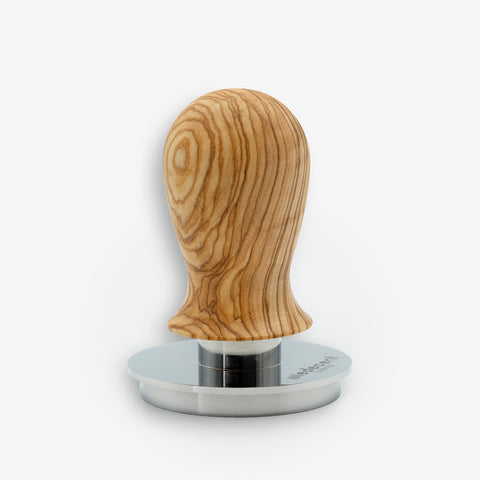
58 millimeters is the most common size. Baskets, tampers, levelers and distributors are available for it from many manufacturers, so you are not tied to an unusual size or a single supplier.