Wie stabil hält die Cassiopea die Brühtemperatur ohne PID, kann ich damit reproduzierbar extrahieren?
Die Cassiopea arbeitet mit zwei Aluminium-Thermoblöcken mit jeweils über 0,5 m Kupfer-Thermospirale, ohne PID-Regelung. Die Temperaturstabilität wird über Thermostaten geregelt, was für reproduzierbare Extraktion kritisch ist: Du hast keine Möglichkeit, die Brühtemperatur präzise zu setzen oder zu justieren. In der Praxis bedeutet das, dass die ersten Shots nach dem Aufheizen und bei Lastwechseln zwischen Brühen und Dampfen schwanken können. Für deine Ansprüche an Shot-zu-Shot-Konsistenz würde ich die Quick Mill Luna empfehlen, die hat PID-Steuerung, programmierbare Preinfusion und ein Expansionsventil zur Druckregulierung.
Welche Möglichkeiten habe ich, den Brühdruck bei der Cassiopea zu steuern oder zu messen?
Die Cassiopea hat ein Manometer (0–16 bar), das den Pumpendruck anzeigt, nicht den tatsächlichen Brühdruck am Puck. Du siehst damit, was die Vibrationspumpe liefert, aber du hast kein Expansionsventil und keine Druckprofilierung. Der Brühdruck ergibt sich aus Pumpendruck, Mahlgrad und Puck-Widerstand, du kannst ihn nur indirekt über die Mahlung beeinflussen. Für kontrollierte Druckprofile würde die Luna mit Expansionsventil oder die Sunny mit Druckprofilierungs-Hebel besser passen. Bei der Cassiopea arbeitest du mit fixem Setup und justierst über die Mühle.
Welche Thermoblock-Konstruktion hat die Cassiopea, und liefert sie stabile Brühtemperaturen für helle Filter-Röstungen?
Die Cassiopea nutzt zwei getrennte Aluminum-Thermoblöcke mit je einer 0,5 m langen Kupfer-Thermospirale, einen für Kaffee, einen für Dampf. Die Trennung ermöglicht parallele Nutzung. Allerdings: Die Cassiopea hat keine PID-Steuerung, sondern arbeitet mit Thermostaten. Das bedeutet Temperaturschwankungen zwischen den Bezügen. Bei hellen Specialty-Röstungen, die enge Temperaturfenster zwischen 88 und 93 °C brauchen, fehlt dir die Möglichkeit zur präzisen Einstellung. Für reproduzierbare Extraktionen mit helleren Single Origins empfehlen wir die Quick Mill Silvano, die hat einen 0,45-L-Boiler mit PID und liefert stabilere Temperaturen.
What practical difference does the dual thermoblock make compared to a classic single boiler, especially when I only drink espresso without milk?
For pure espresso, you do not need the second thermoblock. The additional thermoblock is responsible for steam and hot water. You can turn it off using the energy-saving switch. The advantage of the dual thermoblock is only relevant if you want to froth milk at the same time. The Quick Mill Carola PID has a 0.5-liter brass boiler with PID control. Brass has more thermal mass than aluminum and keeps the brewing temperature more constant. For espresso without milk, I recommend the Carola PID.
Gibt die Cassiopea mir genug Kontrolle über Extraktionsparameter, oder ist das ein Gerät für Einsteiger?
Quick Mill stuft die Cassiopea als Beginner-Level ein. Du hast manuelle Bezugssteuerung und ein Manometer, aber keine PID, keine Volumetrie, keine Flow Control. Die Thermoblöcke heizen in 5–7 Minuten auf, schwanken aber temperaturmäßig. Für bewusste Extraktion mit Single Origins fehlen dir die Werkzeuge: Du kannst Brühtemperatur nicht präzise wählen, Druck nicht modulieren, Bezugszeit nur manuell stoppen. Wenn du Varietäten und Processing-Methoden gezielt herausarbeiten willst, schau dir die Quick Mill Carola mit PID oder die Silvano mit PID und Boiler-Thermoblock-Hybrid an.
Is the Cassiopea suitable for me as a beginner?
The Cassiopea is well-suited for beginners. It heats up in 5–7 minutes. You can prepare espresso and milk foam simultaneously thanks to two separate thermoblocks. The manometer shows you the brewing pressure, so you can see directly if your tamping is correct. The side-accessible water tank holds 1.5 liters. The operation is done via toggle switches without a display. You control all steps manually and learn the basics of espresso and milk drinks.
Was bedeutet Dual-Thermoblock bei der Cassiopea?
Die Cassiopea hat zwei getrennte Thermoblocks aus Aluminium mit Kupfer-Thermospiralen. Ein Thermoblock erhitzt das Wasser für den Espresso, der andere für Dampf und Heißwasser. Du kannst beide gleichzeitig nutzen, Espresso ziehen und parallel Milch aufschäumen. Ein Energiesparschalter schaltet den Dampf-Thermoblock aus, wenn du nur Espresso trinkst. Das spart Strom. Thermoblocks heizen schneller auf als klassische Boiler, brauchen aber keine lange Wartezeit wie große Zweikreiser.
Brauche ich extra Zubehör für die ersten Espresso-Versuche?
Ja. Du brauchst eine Mühle, einen Tamper und frische Bohnen. Die Cassiopea hat einen 58mm-Siebträger, das ist Standard. Ein passender Tamper kostet 20–40 Euro. Die Mühle ist wichtiger als die Maschine, ohne gleichmäßiges Mahlgut klappt kein guter Espresso. Wir haben Einsteiger-Mühlen ab 150 Euro. Eine Waage hilft, die Dosis zu kontrollieren. Die Maschine selbst bringt einen Siebträger und Einsätze mit.
Wie lange muss ich warten, bis ich meinen ersten Kaffee trinken kann?
Die Cassiopea ist nach 5-7 Minuten betriebsbereit. Du schaltest sie ein, wartest bis die Kontrollleuchte signalisiert, dass die Temperatur erreicht ist, und kannst direkt brühen. Im Vergleich zu Kapselmaschinen (30 Sekunden) dauert es länger, aber dafür bekommst du echten Espresso mit Crema. Wenn du morgens wenig Zeit hast, schalte die Maschine beim Aufstehen ein, bis du fertig bist, ist sie warm.
Muss ich bei der Cassiopea viel reinigen und entkalken?
Der Reinigungsaufwand ist gering: Nach jedem Bezug spülst du die Brühgruppe kurz mit Wasser durch. Etwa zweimal im Jahr entkalkst du die Thermoblöcke, das geht einfach mit einem Entkalker, den du durchlaufen lässt. Wasser steht nicht im Boiler, deshalb bildet sich weniger Kalk als bei klassischen Espressomaschinen. Der Aufwand ist deutlich niedriger als bei Kaffeevollautomaten mit Brüheinheit und Milchsystem.









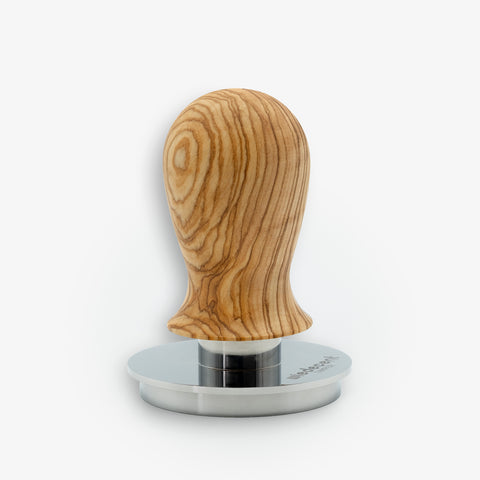 Wiedecent Tamper V6 58.35 mm