


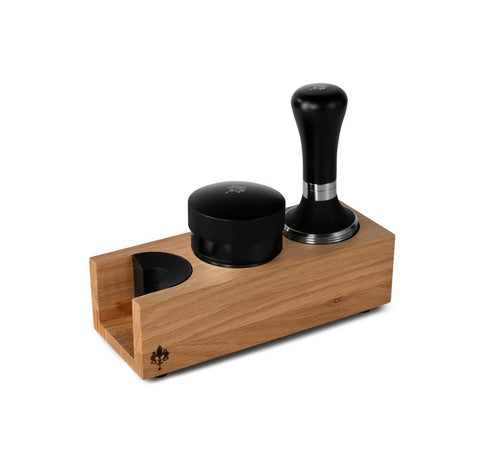
 Eureka Tamper Station (double)
Solid place to tamp, instead of on the counter edge. Reduces movement and protects the wrists during a shift.
from CHF 66.00incl. VAT.
Select
By flavour
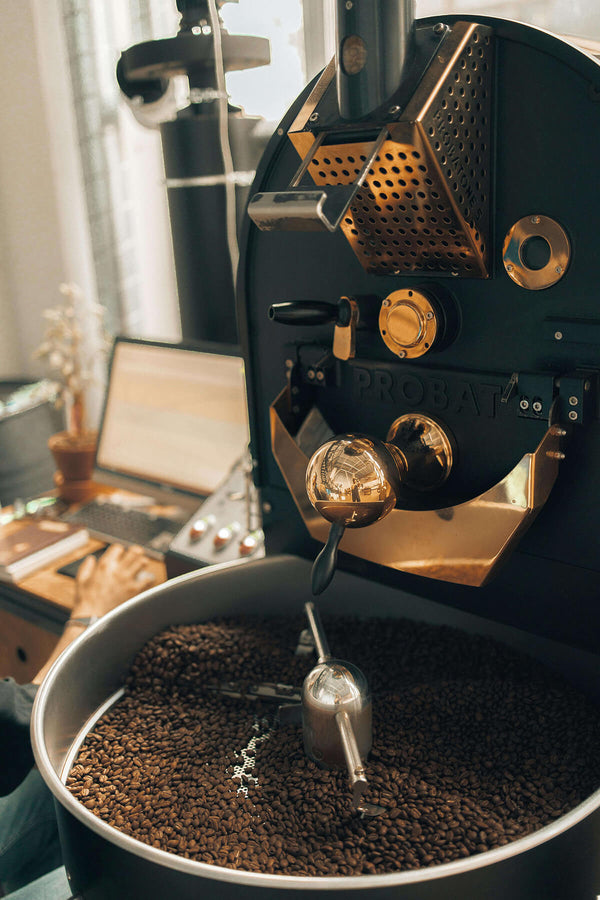 Always freshCoffee subscriptionFreshly roasted and delivered automatically.View →
By use
More affordable
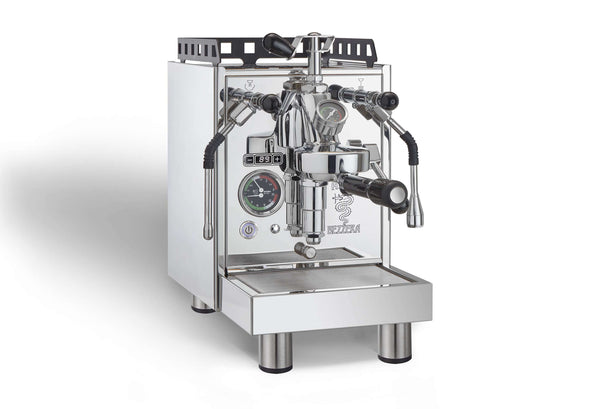 Inspected & discountedDisplay items & B-stockInspected machines at a discount.View →
By use
By technology
 From the magazineThe best grinders up to €500Hopper grinders for espresso compared.View →
Popular
Care & water
Refine
 New: setsWiedemann SetsBarista and finishing sets in a single wood type, up to 7% cheaper.View →
Who it's for
Terms
PersonalOffer for your teamMachine, grinder and beans from a single source.View →
Roastery
Magazine
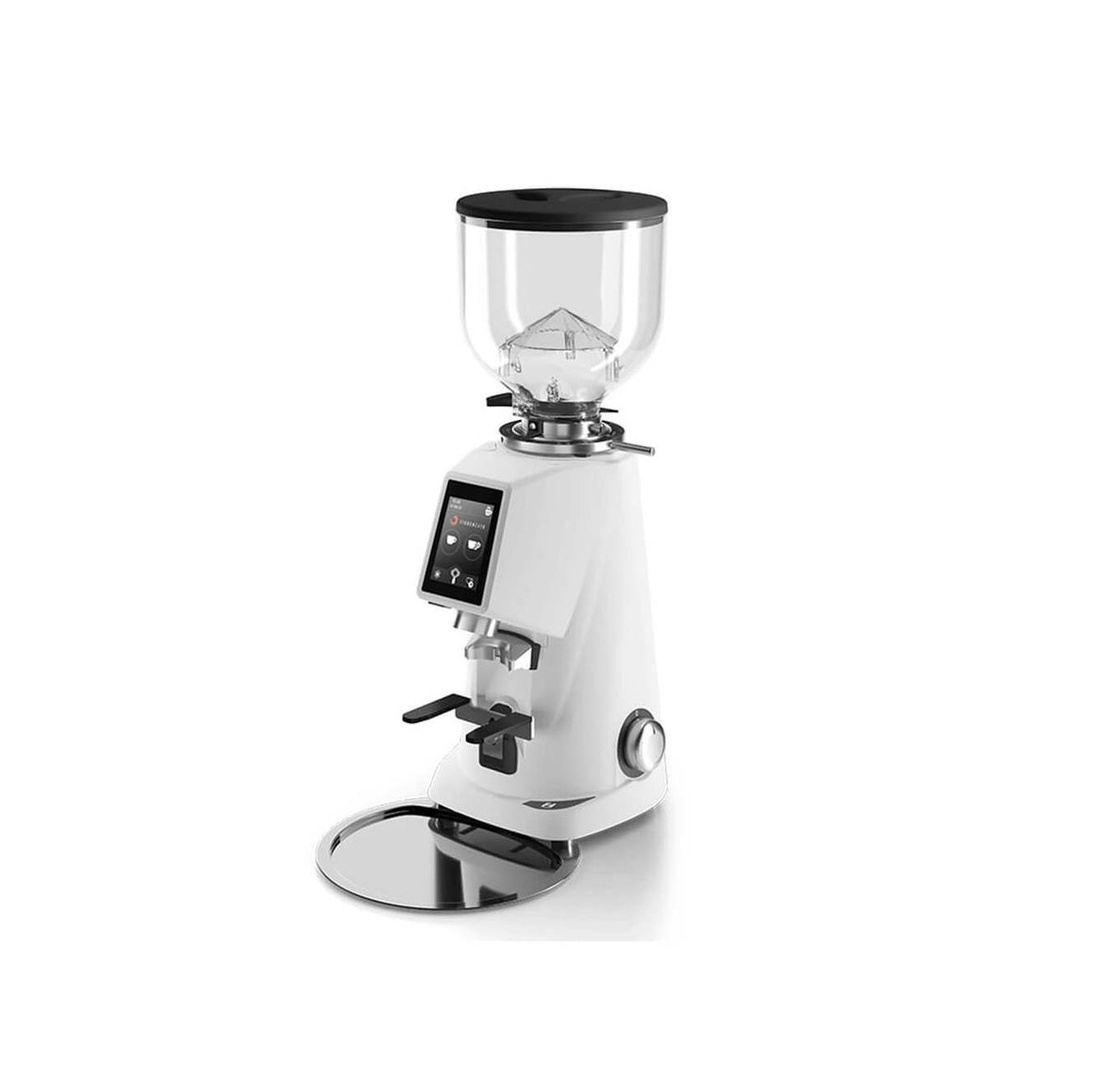
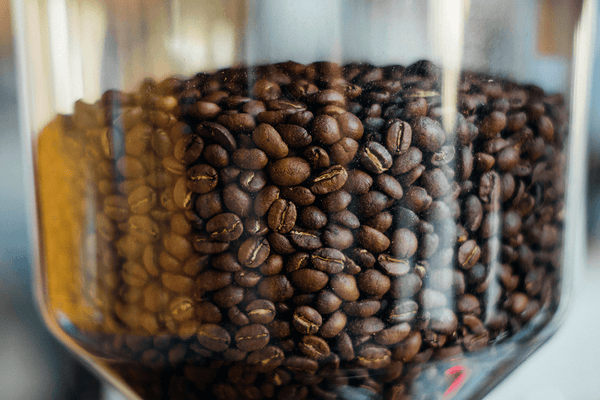
The beans sit in the hopper, ground on demand. This is the faster way when the same variety is always running.
The diameter of the grinding burrs determines how many revolutions are needed for the same amount of coffee.
Flat burrs grind with two parallel rings and deliver a tight particle size distribution.
Stepless means you can adjust continuously, even between two clicks.
The grinder grinds for a set time.
A large hopper means less frequent refilling.
The beans sit in the hopper and are ground on demand.
The manufacturer's guideline for how much coffee the burrs can handle before they should be replaced.
The numbers from the data sheet, in the order that matters. A faster grinder does not grind better, it only grinds more.
The larger the burrs, the fewer revolutions are needed for the same amount of coffee. The grounds heat up less, and heat in the ground coffee costs aroma. Installed are flat.
Manufacturer specification for when the burrs should be replaced. Dull burrs are not noticeable by the grind appearance, but only by taste.At 3 kg per day, that is about 123 operating days.
These are 408 square centimeters of counter that are permanently occupied. At 48 cm height you need space above it for refilling.
That's about 160 espressos per day, calculated with 18 g per shot. The daily throughput recommended by the manufacturer. If you regularly exceed it, you need the next size up, otherwise the grinder and ultimately the coffee will suffer.
All values come from the data sheet of this device. If a specification is missing, it is not listed here.
The same values by which you filter and compare in the shop. Is something missing? Write to us, we'll add it.
The beans sit in the hopper and are ground on demand. This is the faster way in everyday life, especially if the same coffee is used all the time. A full hopper, however, means that the beans at the bottom are exposed to the air for longer.
The diameter of the grinding burrs determines how many revolutions are needed for the same amount of coffee. Larger burrs need fewer revolutions, the grind warms up less, and heat in the grind reduces aroma.
Flat burrs grind with two parallel rings and deliver a tight particle size distribution. You do not recognize dull burrs by appearance but by the fact that the shot runs faster than usual.
Stepless means you can adjust continuously, even between two clicks. That is useful when a bean falls exactly between two settings, but it requires that you remember your setting.
The manufacturer's guideline for how much coffee the burrs can handle before they should be replaced. You do not notice dull burrs by their appearance but because the extraction runs faster than usual at the same setting.
The grinder grinds for a set time. That is quick for everyday use, but you have to readjust it when the bean changes or when the grind size changes, because then a different amount will flow in the same time.
A large hopper means less frequent refilling. Bear in mind that beans age in it: anything that stays in the hopper for longer than a few days loses aroma, no matter how good the grinder is.
Manufacturer: Fiorenzato · Fiorenzato, Via Rivale 18, 30036 Santa Maria di Sala (VE), Italy, www.fiorenzato.com, [email protected]
Eureka Tamper Station (double)Solid place to tamp, instead of on the counter edge. Reduces movement and protects the wrists during a shift.
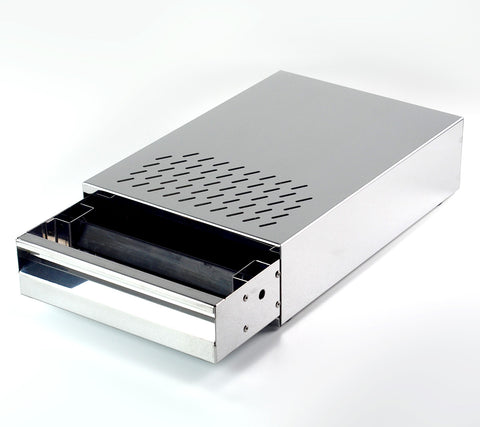 IPM Brew Drawer Maxi De Luxe
Runs all day in commercial use. The Maxi holds more and is quieter than a household box.
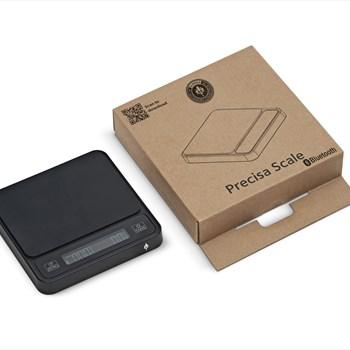 Eureka Digital Scale Precisa digital scale (with Bluetooth)
Without scale dosing at the grinder, a scale is the only way to keep the dose constant.
Organic and Demeter espresso from our own roastery as a monthly subscription. You set the quantity, we deliver weekly or every two weeks free to your door. Roasts can be changed monthly, the subscription can be paused, and there is no minimum term.
6 kg / month
Around 750 espressos a month, 170 a week, 25 a day based on 8 g per shot
Price per kg: CHF 29.70−10 % instead of CHF 33.00 per kg without a subscription
CHF 178.20
per month, excluding VAT
CHF 190.67 including 7 % VAT
Delivery rhythm: every two weeks
12 kg / month
Around 1500 espressos a month, 340 a week, 50 a day based on 8 g per shot
Price per kg: CHF 28.05−15 % instead of CHF 33.00 per kg without a subscription
CHF 336.60
per month, excluding VAT
CHF 360.16 including 7 % VAT
Delivery rhythm: weekly
24 kg / month
Around 3000 espressos a month, 690 a week, 100 a day based on 8 g per shot
Price per kg: CHF 26.40−20 % instead of CHF 33.00 per kg without a subscription
CHF 633.60
per month, excluding VAT
CHF 677.95 including 7 % VAT
Delivery rhythm: weekly
Prices exclude VAT, plus 7 % VAT, base price = price per kilogram. More than 24 kg per month? Then we calculate individually. Request a quote
You write to us, not the manufacturer. We organize pickup, repair and return shipping.
Seals, shower screens, pumps in stock. Maintenance service recommended after two years.
* Creditworthiness required. Installment example PayPal Installments: effective annual interest rate 12,49 % p. a., fixed nominal interest rate 11,80 % p. a., term 24 months. PayPal shows terms and total costs in the next step. Only for customers resident in Germany.
Die Fiorenzato F4 EVO und die Eureka Atlas 65 Nero Opaco unterscheiden sich in mehreren Aspekten. Die F4 EVO verfügt über ein 58 mm Scheibenmahlwerk aus gehärtetem Stahl und ein innovatives Bedienkonzept mit einem erweiterten Benutzerinterface sowie stufenloser Mahlgradeinstellung, während die Atlas 65 mit einem größeren 65 mm Flachscheibenmahlwerk ausgestattet ist, was in der Regel eine schnellere Mahlgeschwindigkeit bietet. Zudem bietet die F4 EVO eine automatische Mengendosierung mit zwei Speicherplätzen für individuelle Mahlgutmengen, während die Atlas möglicherweise andere Features und Einstellungen aufweist, die auf besondere Vorlieben abgestimmt sind.
Die Entscheidung zwischen der Fiorenzato F4 EVO und dem Eureka Mignon Glas Bohnenbehälter Mignon hängt von Ihren spezifischen Bedürfnissen ab. Die Fiorenzato F4 EVO ist eine Kaffeemühle, die sich durch ihr innovatives Bedienkonzept, ein 58 mm Scheibenmahlwerk und eine stufenlose Mahlgradeinstellung auszeichnet, ideal für präzise Zubereitungen. Der Eureka Mignon Glas Bohnenbehälter ist hingegen ein praktisches Zubehör, das die Aufbewahrung Ihrer Bohnen optimiert. Wenn Sie mit dem Mahlen beginnen möchten, empfehlen wir die Fiorenzato F4 EVO.
The Fiorenzato F4 EVO offers stepless grind size adjustment. This allows the grinding to be well adapted for filter coffee. The 58-mm flat burr grinder ensures consistent results that are suitable for filter preparations.
Die F4 EVO ist im semi-professionellen Segment positioniert, nicht für Hochfrequenz-Gastro mit 200+ Bezügen täglich. Mit 250 Watt Leistung und 58 mm Mahlwerk liegt sie unter dem typischen Gastro-Standard, Fiorenzato setzt hier etwa 4–5 g/s Durchsatz bei Espresso-Mahlgrad. Für moderate Cafés mit 50–80 Bezügen am Tag oder als Zweit-/Spezialitätenmühle passt sie. Wenn du im Rush 10+ Bezüge hintereinander brauchst, empfehlen wir die Eureka Atlas 65 mit 360 Watt, 65 mm Scheiben und Direktantrieb, die packt 4–5,5 g/s und ist für kontinuierlichen Betrieb ausgelegt.
Zum Totraum der F4 EVO liegt keine Herstellerangabe vor. Bei Vorratsmühlen mit 58 mm Mahlwerk und Mengendosierung per Timer rechne mit etwa 3–6 g Restmehl im System, das ist branchenüblich. Für schnelle Bohnenwechsel ohne Verschnitt ist die Mühle nicht optimiert. Wenn du täglich zwischen Single Origins wechselst, ist die Eureka Atlas 65 die bessere Wahl: Direktantrieb, größere Scheiben, weniger Retention durch kürzeren Mahlweg, du sparst Beans und Zeit beim Durchspülen.
Die F4 EVO dosiert über Timer, nicht per Waage. Das bedeutet: Die Präzision hängt von Bohnendichte, Röstgrad und Mahlgrad ab, du landest typisch bei ±0,5–1,0 g Abweichung. Für konstante Ergebnisse musst du nachwiegen oder bei Bohnenwechsel neu kalibrieren. Wenn du grammgenaue Dosen ohne manuellen Aufwand brauchst, greif zur Eureka Atlas 65 oder 85 – die haben zwar auch Timer-Dosierung, aber größere Mahlscheiben und stabileren Durchsatz. Grind-by-Weight mit ±0,2 g findest du erst bei Mühlen ab 1.500 Euro aufwärts.
Die F4 EVO hat eine stufenlose Mahlgradeinstellung, das bedeutet, du stellst mechanisch ein, ohne Raster-Positionen. Für reproduzierbares Zurückkehren zu einem Espresso-Mahlgrad musst du dir die Position selbst markieren oder dokumentieren. Bei häufigem Wechsel zwischen Espresso und Filter ist das eher umständlich. Wenn du täglich zwischen verschiedenen Mahlgraden springst, schau dir die Eureka Atlas 65 an: Die mikrometrische Skala erlaubt dir exakte Positionswerte zu notieren. Bei der F4 EVO liegt der Fokus auf einer festen Einstellung, einmal eingestellt für deine Siebträger-Routine, dann läuft sie stabil.
Die F4 EVO arbeitet mit Grind-by-Time: Du speicherst zwei Timer-Presets, die Mühle mahlt eine feste Zeitdauer. Die Grammzahl schwankt je nach Hopperstand und Röstgrad, du musst regelmäßig nachwiegen und die Timer justieren. Grind-by-Weight wie bei der Atlas 65 oder der Eureka AllGround Sense Plus gibt's hier nicht. Wenn du präzise Dosierung ohne Nachwiegen willst, brauchst du eine Mühle mit integrierter Waage. Bei der F4 EVO machst du's klassisch: Timer einstellen, wiegen, anpassen, funktioniert, erfordert aber mehr Hands-on-Kontrolle.
Die F4 EVO ist klar auf Hopper-Betrieb ausgelegt, klassische On-Demand-Mühle mit Timer-Dosierung. Single-Dosing funktioniert technisch, aber die Retention im Auswurfkanal und Totraum liegt vermutlich im Bereich von 1–2 Gramm, die Konstruktion ist nicht darauf optimiert. Wenn du täglich Bohnensorten wechselst und keine Retention willst, ist eine echte Single-Dose-Mühle wie die Eureka AllGround ProBrew die bessere Wahl, da liegt die Retention unter 0,3 Gramm. Die F4 EVO ist für den festen Hopper-Einsatz gemacht: Eine Sorte drin, konstant mahlen, Hands-free-Bedienung.
Die F4 EVO nutzt 58-mm-Scheiben aus gehärtetem Stahl mit stufenloser Mahlgradeinstellung. Das ist solide für den Einstieg ins Semi-Profi-Segment, aber bei Specialty-Espresso mit komplexen Fruchtaromen brauchst du eher 64-mm-Scheiben aufwärts für engere Partikelverteilung. Die Eureka Atlas 65 mit 65-mm-Mahlwerk und mikrometrischer Justierung trennt Aromen präziser, besonders bei hellen Röstungen, wo Unterextraktion und Überextraktion schnell verschwimmen. Für Pour-Over funktioniert die F4 EVO gut, bei Espresso wird die Geschmacksklarheit nicht an die Atlas-Serie heranreichen.
Write to us if you are unsure about the selection. We roast ourselves and drink what we sell.