How does the temperature stability of the Elizabeth PL92T compare to the MaraX, is it really better or just more expensive?
The Elizabeth stabilizes brewing temperature via a separate 0.3-l brass boiler with its own PID, allowing you to adjust with an accuracy of 0.5°C and eliminating the need to flush between shots. The MaraX features a clever dual-probe system in its 1.8-l HX boiler, but you only get three settings (Warm/Hot/Extra Hot). In practice: the Elizabeth gives you true freedom for different roast profiles, while the MaraX significantly reduces flush rituals but does not allow for fine-tuning. For roasting experiments or changing beans, I would choose the Elizabeth; for stable operation with a standard roast, the MaraX is perfectly adequate.
Is the programmable pre-infusion precise enough for long light roast extractions or just marketing?
The Elizabeth features true pre-infusion via a 3-way solenoid valve and LCC control, allowing you to program time and pressure, not just on/off. This works solidly for light roasts because you can slowly saturate the puck before the full pressure phase starts. However, it lacks pressure profiling; you only get on/off valve logic, no paddle like with the Bianca PL162T. For classic pre-infusion (3–8 seconds at low pressure), this is completely sufficient, but for complex bloom experiments with ramps, I would opt for the Bianca.
How quickly do I return to stable brew temperature after steaming, classic dual boiler problem?
In the case of the Elizabeth, not relevant, a separate 0.6-l steam boiler with its own PID means: the brew boiler runs constantly at your set temperature, even when you steam 3 cappuccinos in a row. No temperature drop, no waiting. This is the core advantage of dual boilers over HX systems. The 2200 watts are distributed across both boilers, and the warm-up time is 12–15 minutes until both are stable; after that, the machine operates independently.
LELIT58 group instead of E61 – do I lose mechanical pre-infusion or do I gain something?
You lose the passive mechanical pre-infusion of the E61, but gain precise electronic control. The LELIT58 has a 3-way solenoid valve and programmable pre-infusion via LCC, allowing you to set duration and timing instead of relying on spring pressure. Practical: reproducible and adaptable to different roasts. The E61 mechanism (as seen in MaraX or Bianca with the L58E variant) works passively through spring pressure, reliable but not adjustable. For you as a barista: the LELIT58 offers more control, while the E61 provides more analog tactile feedback.
How stable does the Elizabeth maintain the brew temperature over multiple extractions, especially with light specialty roasts that have narrow temperature windows?
The Elizabeth operates with two separate boilers: 300 ml brass for coffee, 600 ml stainless steel for steam. Each boiler has its own PID control. This means: The brew temperature remains constant during extraction because no steam usage affects the coffee boiler temperature. You can pull multiple shots in succession without temperature fluctuations due to reheating or steam usage. The temperature is displayed in Celsius or Fahrenheit on the OLED display. For light Ethiopians or Kenyans with narrow extraction windows, it offers you reproducible results, no temperature surfing needed.
Does the Elizabeth have a pre-infusion that I can set for even extraction with single origins?
Yes, the Elizabeth offers programmable pre-infusion. You can set the duration yourself via the LCC display with OLED display. The pre-infusion runs through the LELIT58 brew group, which is Lelit’s commercial group, compatible with 58 mm portafilters. You wet the coffee bed in a controlled manner before the actual extraction, which reduces channeling in tightly packed specialty pucks and makes aroma extraction more even. The setting is saved, so you can adjust it for different beans and reproduce it at any time.
What brew group is installed in the Elizabeth, and how does it affect the temperature stability of my espresso?
The Elizabeth uses the LELIT58 brewing group, a commercial group with a 58-mm portafilter diameter. The group is thermally decoupled from the coffee boiler and is supplied by a separate 300-ml brass boiler. Brass has a high heat capacity and maintains temperature stability. The PID control keeps the boiler temperature constant, and the group reproducibly transfers this temperature to the puck. The result: the brewing temperature does not fluctuate during extraction, allowing you to extract under consistent conditions. For Specialty Coffee, this means: consistent sweetness and clarity, with no underdeveloped or burnt notes due to temperature drift.
When I switch between different beans on the Elizabeth, how quickly can I adjust the brew temperature?
You set the brew temperature directly on the OLED display, shown in Celsius or Fahrenheit. The PID control of the coffee boiler immediately takes over the new target temperature. The 300 ml brass boiler heats up relatively quickly due to its low mass, so you don't have to wait for long cycles. You can switch between a lighter Ethiopian roast at 93°C and a darker Brazilian roast at 90°C without letting the machine cool down completely. The temperature display shows you live when the target temperature is reached. This makes experiments with different origins fluid.
What does dual boiler mean and why is it important?
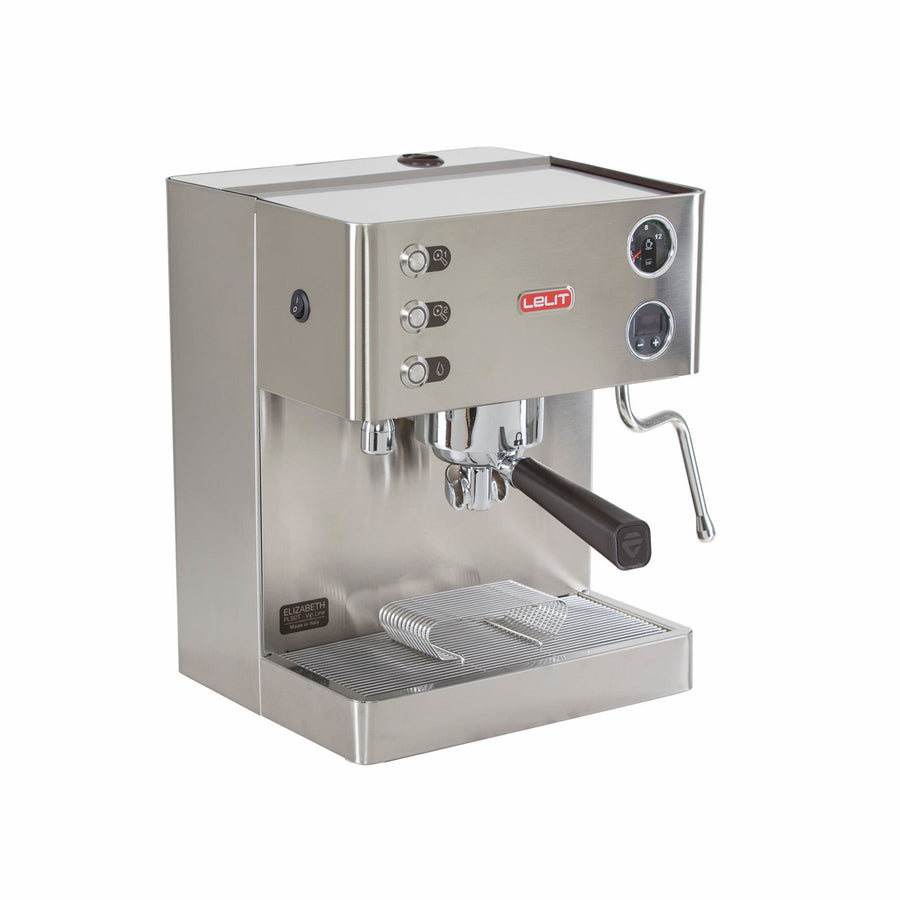
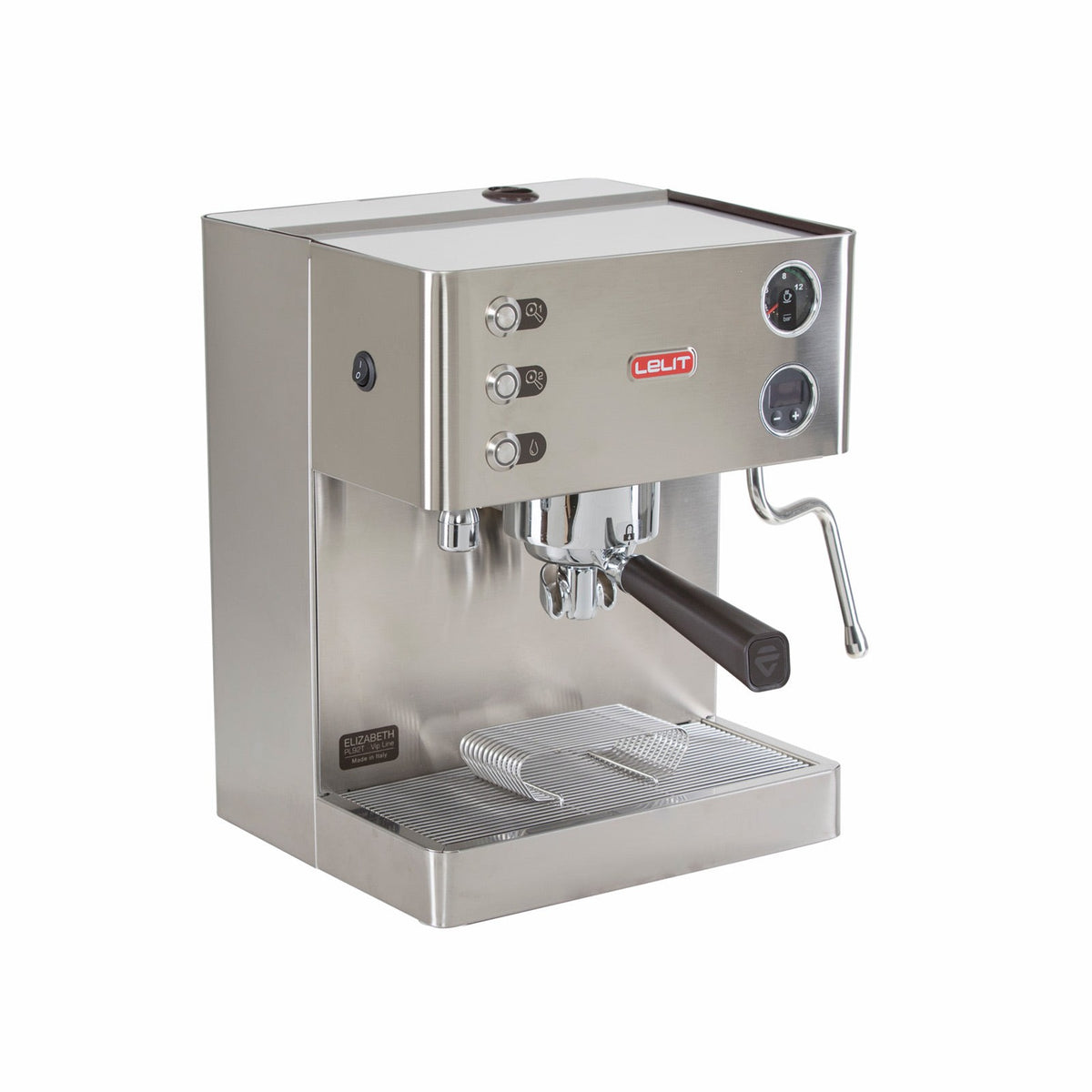
With the Elizabeth, espresso preparation and milk frothing run completely independently. You have two separate boilers: a 0.3-liter brass boiler for coffee and a 0.6-liter stainless steel boiler for steam. This means you can brew an espresso and froth milk at the same time without any temperature fluctuations or waiting. With single boilers, you always have to switch between coffee and steam mode, which takes time and patience. The Elizabeth keeps both temperatures stable; you just press the button and off you go.
How long do I have to wait before I can make the first espresso?
The Elizabeth takes 12 to 15 minutes for both boilers to reach temperature. The display shows you exactly when the machine is ready. In the meantime, you can already lock in the portafilter; it will heat up as well, and you avoid temperature loss during the first extraction. Unlike cheaper machines, you don't have to guess whether everything is warm enough here: The OLED display shows the temperature for coffee, steam, and hot water separately.








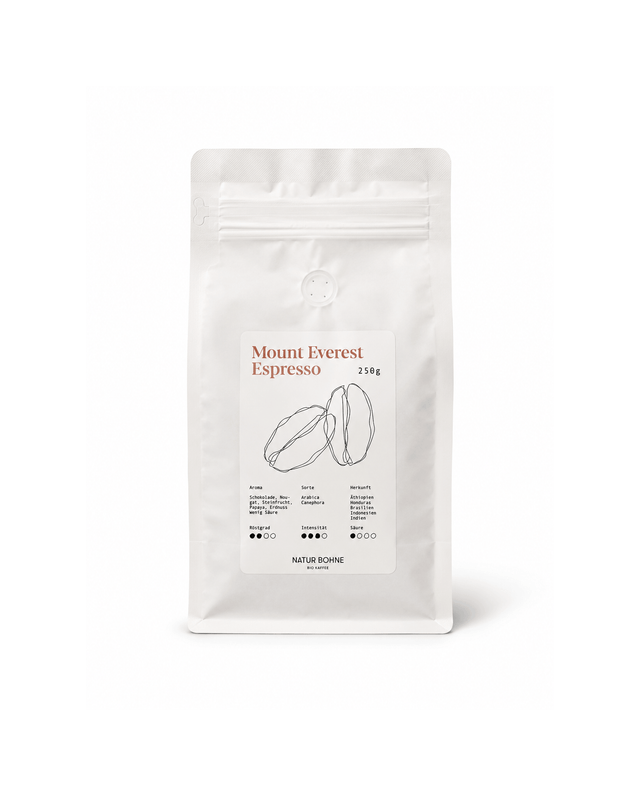 Mount Everest organic espresso blend from five origins