








Why espresso tastes chocolatey and why our beans are made exactly for that
Chocolatey espressos are among the most popular flavor profiles. Many coffee lovers look specifically for this aroma: round, pleasantly sweet, slightly nutty, sometimes like dark chocolate or cocoa powder. But what actually makes an espresso chocolatey? What role do variety, processing and roasting play, and why does artisan-roasted coffee often feel so much more harmonious than typical supermarket beans?
In this article we look at the topic holistically: from the roast profile to the bean quality to sustainability, organic farming and even chocolatey decaf varieties. And yes, there is also a little wink about cappuccinos with cocoa powder. 😉
What does “chocolatey espresso” actually mean?
A chocolatey flavor profile is created mainly by the Maillard reaction and the caramelization of the natural sugars in the coffee bean during roasting. This produces aroma compounds that we perceive as notes of:
- dark chocolate
- cocoa
- caramel
- toffee or nougat
Two things are needed for these aromas to develop:
- Suitable bean varieties (Arabica and/or Robusta) that bring enough sweetness and body
- Slow, artisanal roasting with a lot of finesse, exactly what Steffen does with great passion with us
Arabica and Robusta: both can taste chocolatey
A widespread myth: only Arabica can taste good and Robusta is automatically earthy and bitter. In practice it is much more nuanced.
Arabica brings, depending on variety and origin, fruity, floral, nutty or chocolatey aromas. Many “classically chocolatey” espressos are made mainly from Arabica because the combination of sweetness and elegance fits espresso very well.
Robusta is often underestimated. Carefully grown and processed Robusta coffees can show very pronounced notes of dark chocolate, cocoa and caramel and add a lot of body and crema to a blend.
The decisive factor is therefore not whether Arabica or Robusta ends up in the cup, but how well the beans were grown, processed and roasted.
Why many supermarket beans still taste different
The difference between specialty coffee and typical supermarket beans is not only in cultivation but very much in the roasting.
Industrial roasting (supermarket coffee)
- Batch size: often 300–500 kg per run
- Roast time: usually only 3–5 minutes
- Temperature: very high, heavily optimized for throughput
- Result: often very dark roast flavors, little transparency, many batches taste "somehow similar"
Such quick roasts can certainly produce a chocolatey profile, especially when roasted darker and when Robusta is used in the blend. At the same time, many fine nuances are lost, bitter compounds dominate and the beans often taste flat and rough in the cup.
The result: It may taste chocolatey, but it often needs sugar and a lot of milk to taste truly rounded.
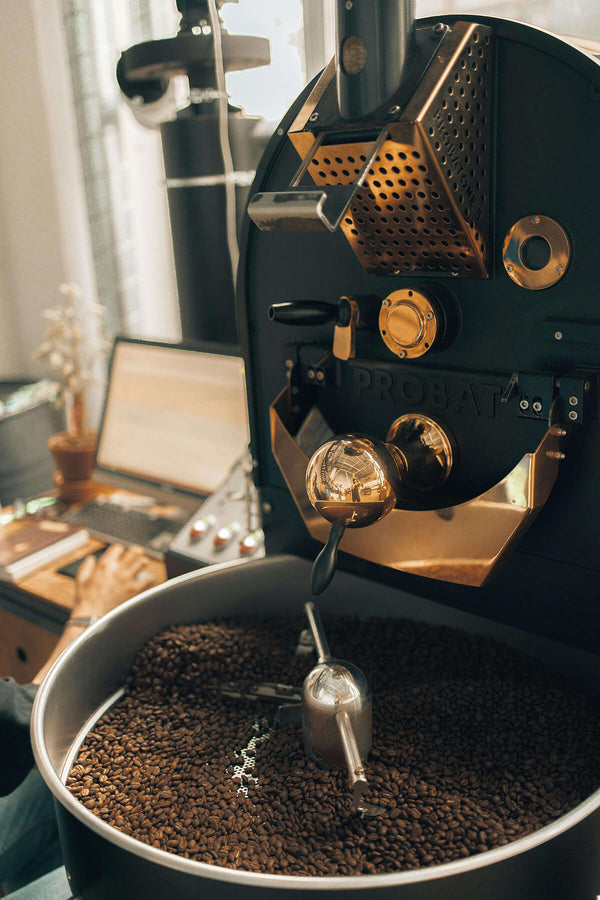
Artisanal drum roasting (like at Naturbohne)
- Batch size: small batches (with us approx. 15–30 kg)
- Roast time: approx. 10–16 minutes
- Temperature: lower & much more controlled
- Roast profile: tailored to variety and origin
Through the longer, controlled roasting the chemical reactions inside the bean have time to develop. This creates complex aroma structures: chocolatey notes, sweetness, nuttiness, sometimes also delicate fruit notes, without everything being drowned out by roast flavor.
All our coffees are created in exactly this way — not because it is faster, but because it tastes better.

Why our beans taste so chocolatey
Our varieties bring natural sweetness, fullness and a round cocoa or chocolate base. This comes from three factors:
1. Sustainable, pesticide-free organic farming
Our partner farms work ecologically, avoid pesticides and practice mixed cropping. Healthy soils, healthy beans, clearer, cleaner flavors.
2. Fair pay & direct relationships
We do not buy anonymously on commodity markets, but consciously, at stable, fair prices. That motivates farmers to produce high-quality lots. Quality always arises from appreciation.
3. Single-varietal, gentle roasting
Every bean receives its own roast profile. That way we bring out exactly the aromas that are present in the origin — without additives, flavorings or tricks.

An overview of our chocolatey varieties
Organic Espresso „Bergkraft“
Powerful, full-bodied, chocolatey, ideal for automatic machines & portafilter machines. Round and balanced with dark chocolate on the finish.

Organic Espresso „Vesuv“
Intense espresso with notes of dark chocolate, nuts and caramel. Perfect for cappuccino & latte.

Personal experience with „Vesuv" and why it reminds me of traditional Ethiopian & Eritrean coffee ceremonies
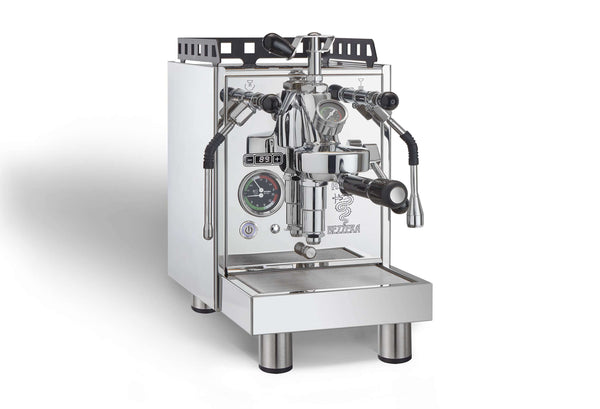
When I prepared the Vesuv for the first time in my La Marzocco Linea Mini R, 18 g in the portafilter, about 38 g yield, 27 seconds extraction, ground on the Fiorenzato Pro 64 EVO, I was surprised how intense and creamy the espresso became. The crema was incredibly dense, almost like a fine chocolate foam. But even more exciting was the taste: a deep, intense chocolate aroma that immediately took me back to a memory from my youth.
Many of my Ethiopian and Eritrean friends had parents who prepared their coffee traditionally — often roasted in a pan over the gas stove, then freshly ground and brewed in a classic jebena pot. Through the light pan-roasting and the direct contact with heat, the beans often developed a natural, dark, cocoa-forward aroma. A fine, hairy plant-fiber sieve sat in the spout and held back the particles, and although the preparation was simple, the flavor was extraordinarily deep and full.
The Vesuv reminded me exactly of that. Today, with more knowledge about origin, varieties and roast profiles, I also understand why:
- The Vesuv's roast sits in the medium-dark range and brings out strong Maillard and caramelization notes, similar to traditional pan-roasting, only much more controlled.
- Its blend composition (Arabica/Robusta) provides pronounced chocolate and cocoa notes as well as a lavish crema.
- Origin plays a big role: many coffees from East Africa have a natural depth and sweetness that are amplified by the roast.
- The extraction (18 g → 38 g, 27 seconds) pulls exactly the sweet, cocoa-like components from the coffee without slipping into bitterness.
The result is an espresso that not only tastes intensely chocolatey but also creates a connection between modern machines and traditional roasting methods, between memory and sensory precision. Today I can place this taste much better: it does not arise by chance, but is the sum of variety, origin, roast profile and the method of preparation.
Hochlandjuwel
Elegant, creamy chocolatey character with light sweetness, ideal as a straight espresso. Fine origin notes thanks to highland cultivation.

Nachtgold Decaf
Our decaffeinated specialty espresso — and yes, it really tastes chocolatey! The Mexican Water Process preserves the sweetness and the cocoa aromas, completely without chemical solvents.

Why even our decaf tastes chocolatey
When people think of decaf they often imagine flat, bitter flavors. The reason: cheap decaf is often chemically decaffeinated and thought of as functional rather than flavorful. We, on the other hand, rely on the natural Mexican Water Process. As a result the following are preserved:
- sweetness
- cocoa / chocolate aromas
- roundness & body
— only the caffeine is removed. Nachtgold is proof that decaf can taste really great.
A little wink: cocoa powder on cappuccino?
In many German cafés a little cocoa powder is sprinkled on the cappuccino before serving. Nice to look at, but taste-wise… well.
Fun fact: Among home baristas this is seen more as a "decoration trick" that makes the milk cap prettier or masks weaker espresso. In the specialty coffee scene people prefer to rely on the quality of the beans, the espresso and well-textured milk.
Our beans have enough natural chocolatey character — you do not have to dress them up. 😉
How to recognize a good chocolatey espresso
- full body
- moderate, well-integrated acidity
- notes of cocoa, dark chocolate, nuts
- pleasant sweetness without harsh bitterness
- long, creamy texture
All of this does not happen by accident but through sustainable cultivation, fair partnerships and gentle roasting.
Conclusion: Chocolatey character is no coincidence but craftsmanship
An espresso only tastes chocolatey when everything fits together: suitable varieties, careful processing, high-quality green beans, fair sourcing, organic farming, slow roasting and a lot of experience. That is exactly why our varieties taste so round, full-bodied and pleasantly sweet — with or without caffeine.
If you are looking for an espresso that "tastes like chocolate," our varieties are the right place. And if you drink it in a cappuccino — leave the cocoa powder in the cupboard. The flavor is already there.


