

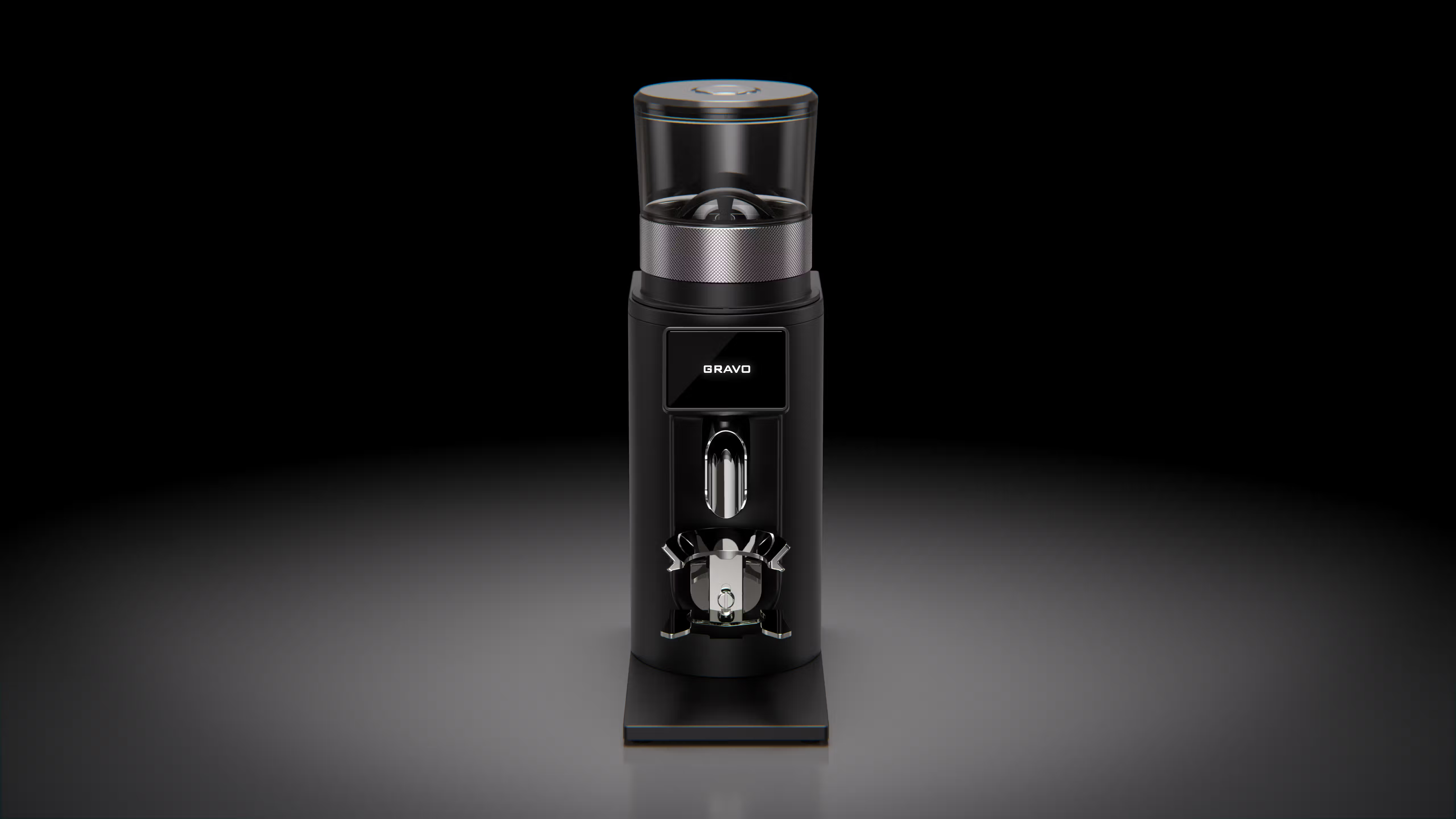



Rocket Espresso Gravo 63 – GbW espresso grinder with 63 mm flat burrs, touchscreen, and variable RPM
excl. VAT excl. shipping costs .
Finanzieren ab 7,215 € / Monat* mit
🚚 Fraktkostnader beregnes ved kassen.
Rocket Espresso Gravo 63 – GbW espresso grinder with 63 mm flat burrs, touchscreen, and variable RPM
Rocket Espresso Gravo 63 – GbW espresso grinder with 63 mm flat burrs, touchscreen, and variable RPM
The Rocket Espresso Gravo 63 is currently available for pre-order.
Scheduled delivery: from late April / early May 2026 (Germany)
Important: Delivery dates are subject to change due to production, logistics, or product optimization. We will, of course, keep you informed about the current status of your pre-order.
Some of the practical insights currently available are based on an extensively tested prototype of the Rocket Gravo 63. Rocket has already confirmed that further optimizations are planned before the market launch—particularly regarding the GbW tuning and the flapper design.
The Rocket Espresso Gravo 63 is one of the most exciting new Grind by Weight espresso grinders of 2026 and is aimed at discerning home baristas and prosumers. With 63 mm flat burrs, electronic grind adjustment, a touchscreen, a brushless 300-watt motor, and variable RPM control from 500 to 1500 rpm, the Rocket Gravo combines modern grinder technology with Rocket’s new design language.
If you want to buy a Rocket Gravo espresso grinder or pre-order the Rocket Gravo, you’ll get one of the first Rocket grinders featuring genuine GbW technology, electronic recipe logic, and practical features for flexible home barista workflows.
Key benefits at a glance
- 63 mm flat burrs in a screwless / blind design
- Grind by Weight, Grind by Time, and Single Shot in one grinder
- Electronic grind setting with storable recipes
- 900–1500 RPM standard, expandable to 2000 RPM with a long press
- 300-watt brushless motor
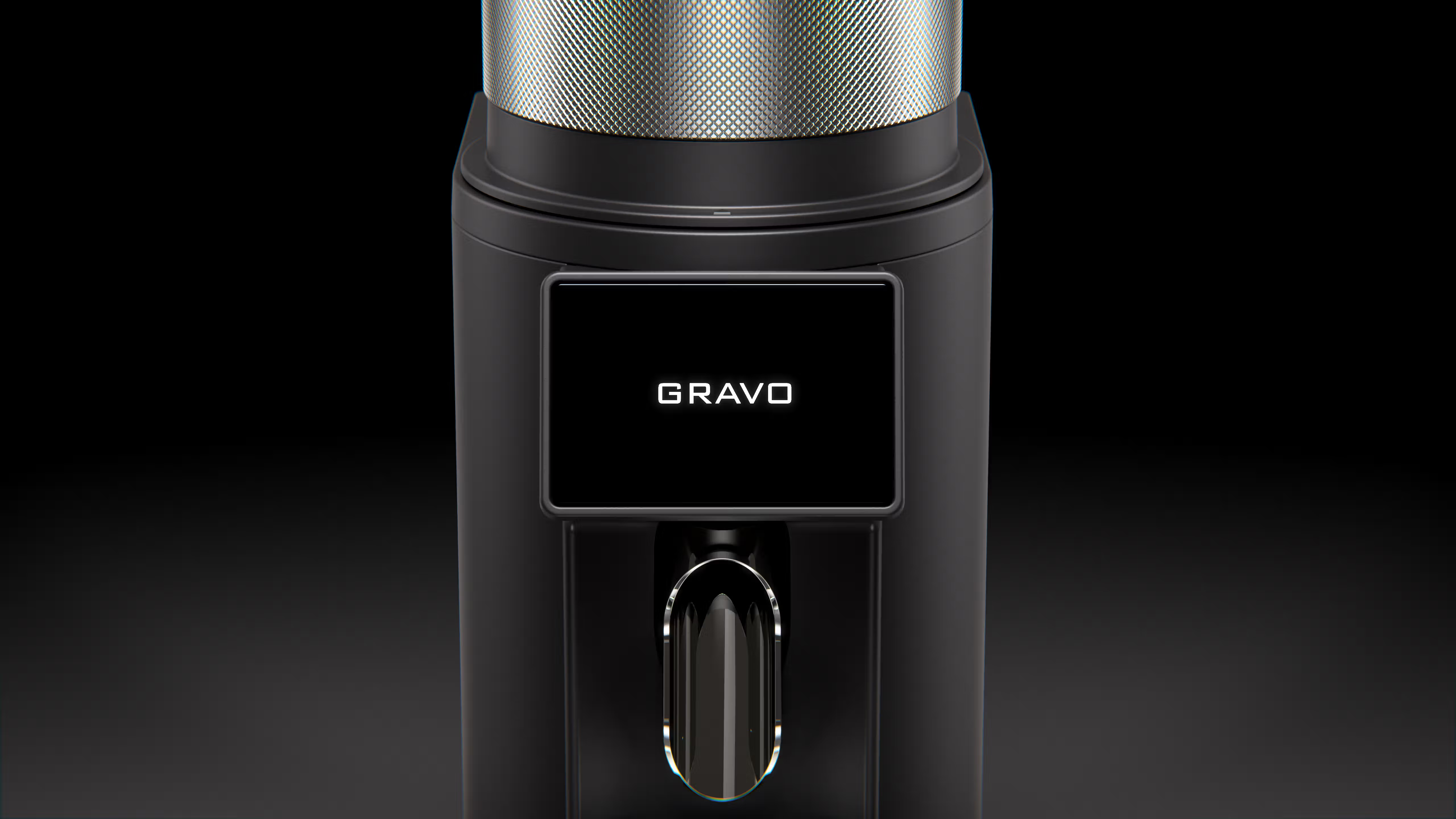
- 2.5-inch touchscreen with simple home screen operation
- Practical bean hopper system with 5 inserts
- Tool-free removable stainless steel chute and easily accessible flapper
- WiFi hardware already integrated for future sync functions
- Compact stainless steel housing with the signature Rocket premium look
Grind by Weight – precise dosing without reweighing
The heart of the Rocket Gravo 63 is its integrated real-time scale. The grinder weighs each dose live during the grinding process and stops automatically as soon as the desired target weight is reached. This reduces manual adjustments and ensures a significantly more convenient workflow.
This is a real advantage, especially in the espresso sector: instead of dosing based on time or feel, you get a clearly defined target amount for every shot. This improves reproducibility and saves time in daily use—especially if you regularly work with the same recipes.
Important to note: In the analyzed prototype, the GbW function still showed a variance of approximately ±0.5 to 0.6 g. However, Rocket has already announced that it will further optimize the algorithm before series production begins. Improved dosing accuracy is therefore expected for the final market version.
Three dosing modes in one grinder
The Rocket Gravo 63 combines three modes in one system:
- Grind by Weight (GbW) for weight-based grinding
- Grind by Time (GbT) for time-based grinding
- Single Shot for single servings or the final dose of your chosen beans
This combination makes the Gravo significantly more flexible than classic Rocket grinders from earlier generations. It is therefore suitable for both users seeking maximum consistency and those who want to switch between different coffees and recipes.
Easy bean change – ideal for decaf and multiple coffees
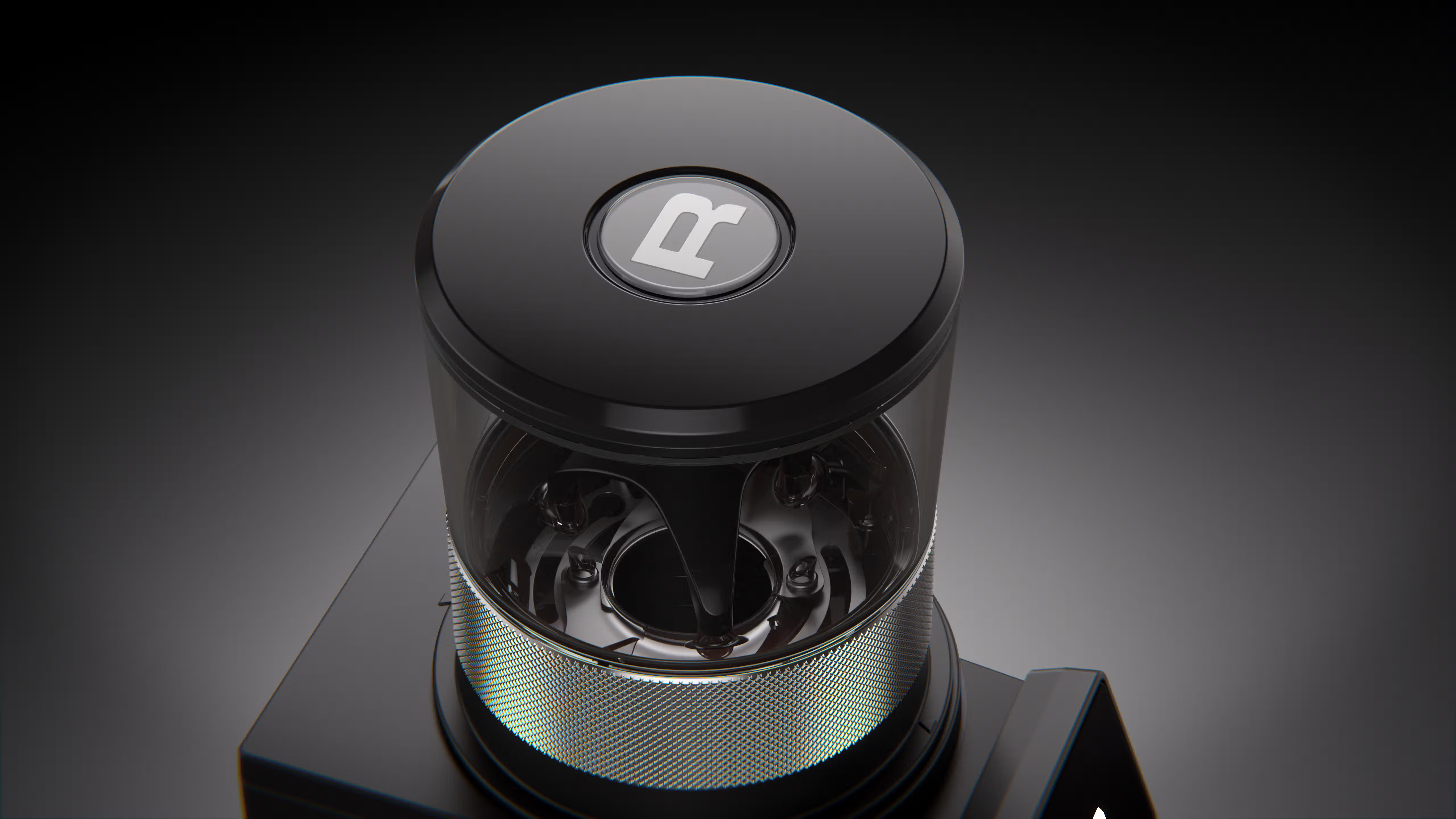
One of the most exciting practical features of the Rocket Gravo 63 is the 5-part insert system in the bean hopper. Rocket has developed a well-thought-out concept here that allows for more flexible bean changes than many classic hopper grinders.
The inserts are labeled A, B, C, D, and E, and each limits the remaining bean volume in the feed chute. The smallest insert holds approximately 15 g of remaining beans. In practice, this means:
- Grind the last dose precisely
- Close the hopper
- Remove the hopper without tools
- fill with new beans
- continue with the appropriate recipe
For home baristas who want to switch between regular beans and decaf or between two to three specific espresso roasts, this is a real advantage. While it’s not a classic single-dose system like that found in specialized single-dose grinders, it’s a very practical and everyday-friendly workflow for discerning households.
Electronic grind setting instead of classic mechanics
A key distinguishing feature from the previous generation of Rocket grinders is the electronic grind setting. The grind setting is adjusted digitally via the touchscreen and can be linked directly to recipes.
This offers clear advantages in everyday use:
- precise reproducibility
- clean operation with saved recipes
- convenient switching between different coffees
- no cumbersome menu navigation
Important to note: Based on current knowledge, the displayed values are not actual micrometer measurements but relative scale values. For the user, this is less critical in everyday use than for technical classification—what matters most is that settings can be saved and recalled consistently.
Variable speed – RPM control up to 2000 rpm
The Rocket Gravo 63 typically offers an adjustable speed range from 500 to 1500 RPM. Practical testing of the prototype also revealed that a long press can unlock speeds of up to 2000 RPM.
This feature is particularly interesting for home baristas who like to experiment. The speed influences both the extraction behavior and the flavor. Those who try out different beans, roasts, and recipe styles gain additional leeway for fine-tuning.
63 mm flat burrs in blind / screwless design
The Rocket Gravo uses 63 mm flat burrs in a blind burr design. The upper unit is designed for easy maintenance and is accessible with just a few screws. This makes it relatively easy to maintain or replace the burrs.
Another advantage is the easy access to the interior. For users who value care, cleaning, and long-term maintainability, this is a real plus.
Ease of maintenance – one of the Gravo’s major strengths
In practical testing, the Rocket Gravo 63 was particularly praised for its serviceability. Many parts can be reached quickly and easily:
- the chute is made of stainless steel and can be removed without tools
- the flapper can be removed very easily
- the grinding discs are easily accessible
- the hopper can be easily removed
This is a clear advantage over many more enclosed systems, especially for users who want to clean their grinder regularly or adapt it to new requirements later on.
Flapper, clumping, and what Rocket still wants to improve
One point of criticism regarding the tested prototype was the current flapper. During testing, the ground coffee sometimes came out of the grinder relatively clumpy. Rocket has already confirmed that a redesign of the flapper is planned.
Particularly positive: The flapper is very easy to access and should be simple to replace if needed. This isn’t just service-friendly, but also shows that Rocket responds to real-world feedback.
Quiet operation and intuitive controls
In the test, the Gravo was also described as pleasantly unpretentious to operate. Instead of nested menus, the grinder operates largely directly from the home screen. Settings for dose, RPM, and grind size are quickly accessible and feel very intuitive in everyday use.
The noise level was also mentioned positively. While an official dB value is not yet available, in practical use the brushless motor operates audibly quietly.
WiFi and Future Potential
The Rocket Gravo 63 already features WiFi hardware. Rocket plans to use this to enable features such as Grind-by-Sync, which involves coordinated communication between the grinder and a compatible machine.
This feature does not appear to be fully rolled out at launch, but it makes it clear that the Gravo is intended as a platform for future Rocket integrations.
Technical Specifications
- Grinding discs: 63 mm, flat, blind / screwless
- Motor: brushless, 300 watts
- Speed: 500–1500 RPM standard, up to 2000 RPM with a long press
- Grinding capacity: up to 2.5 g/s at 1500 RPM
- Hopper capacity: 300 g
- Display: 2.5" touchscreen
- Brewing modes: GbW, GbT, Single Shot
- Recipe memory: up to 3 recipes per mode
- Dimensions (W × D × H): approx. 135–140 × 260 × 410 mm
- Housing: Stainless steel
- WiFi: available, future sync features planned
Rocket Gravo 63 in comparison – who is this grinder best suited for?
Many users are currently comparing the Rocket Gravo 63 with models like the Eureka Mignon Libra or the Fiorenzato AllGround Sense. While these also rely on Grind by Weight, the Gravo clearly positions itself as a new-generation Rocket prosumer grinder.
- Modern Rocket design
- Variable RPM for greater control over flavor and extraction
- Electronic grind setting instead of classic mechanics
- Practical bean-changing system
- WiFi capability for future Rocket Sync features
If you’re specifically comparing the Rocket Gravo to the Eureka Mignon Libra or the Rocket Gravo to the Fiorenzato AllGround Sense, the Gravo is particularly appealing to those looking to build a modern Rocket setup with a forward-looking technical outlook.
Who is the Rocket Gravo 63 suitable for?
- Ambitious home baristas focused on espresso
- Users looking for a high-quality GBW grinder with a modern interface
- Rocket fans who want to build a visually cohesive setup
- Prosumers who want flexibility in choosing recipes and beans
- Households that switch between espresso and decaf or multiple specific beans
- Small semi-professional environments focused on consistency
Important notes regarding the data
Since this is a new product in the pre-order or early-launch stage, some specifications are still preliminary or refer to a tested prototype. These include, in particular:
- Final GbW precision of the production version
- Retention in the final market device
- Final flapper version
- Noise level in dB
- Exact width (135 or 140 mm depending on the source)
Rocket has already indicated that it plans to implement further optimizations before the start of series production.
Buy the Rocket Gravo 63 – is pre-ordering worth it?
If you want to buy a Rocket Gravo 63 or pre-order the Rocket Gravo, you’ll be getting one of the most technically exciting Rocket grinders of recent years.
It’s the combination of Grind by Weight, 63 mm grinding discs, a touchscreen, RPM control, a 300-watt motor, and a flexible bean-changing system that makes the Gravo 63 one of the most interesting new releases in the Rocket segment for 2026.
FAQ – Frequently Asked Questions About the Rocket Gravo 63
Is the Rocket Gravo 63 a single-hopper grinder?
Not in the traditional sense. The Gravo is a hopper grinder with a 300-gram bean hopper. However, thanks to its 5-part insert system and single-shot mode, it offers significantly more flexibility when changing beans than many traditional hopper grinders.
Can I switch between decaf and regular beans?
Yes, that’s exactly what makes the Gravo so useful for everyday use. Thanks to the insert system, the removable hopper, saved recipes, and single-shot mode, switching between two or three specific bean varieties is much more convenient.
Does the Rocket Gravo 63 have Grind by Weight?
Yes. The integrated real-time scale is one of the Gravo’s core features. In addition to Grind by Weight, Grind by Time and Single Shot are also available.
Is the GbW dosing precise?
In the tested prototype, the variance was still around ±0.5 to 0.6 g. However, Rocket has already announced that it will further refine the calibration before the production version is released.
How large are the grinding discs?
The Rocket Gravo 63 uses 63 mm flat burrs in a blind/screwless design.
Is the Rocket Gravo 63 quiet?
An official dB value is not currently available. In practical testing, however, the brushless motor was described as pleasantly quiet.
What does the RPM setting do?
The speed affects grind consistency, extraction, and flavor. If you use different beans or recipe styles, this gives you additional flexibility for fine-tuning.
Does the Rocket Gravo 63 have WiFi?
Yes. Wi-Fi is already built-in. Rocket plans to use this for future sync functions between the grinder and compatible machines.
Is the Rocket Gravo 63 available yet?
The Gravo is currently available for preorder. The planned delivery date in Germany is currently scheduled for late April / early May 2026. Delays are possible.
Conclusion
The Rocket Espresso Gravo 63 is not merely an evolution but a clear fresh start in the Rocket grinder segment. It combines Grind by Weight, digital controls, variable RPM, excellent serviceability, and a well-thought-out bean-switching concept in a single device clearly designed for sophisticated espresso setups.
It is particularly appealing to users looking for a Rocket grinder with modern technology, flexible recipe logic, and a practical workflow —even if they want to switch regularly between different beans, such as espresso and decaf.
Angaben zum Hersteller
* Bonität vorausgesetzt. Ratenbeispiel für PayPal Ratenzahlung: effektiver Jahreszins 12,49 % p.a., fester Sollzinssatz 11,80 % p.a., Laufzeit 24 Monate. Genaue Konditionen und Gesamtkosten werden im nächsten Schritt von PayPal angezeigt. Angebot gültig nur für Kunden mit Wohnsitz in Deutschland. Weitere Infos zur Bonitätsprüfung.
If you have any questions, please feel free to contact us at any time. We will get back to you as soon as possible, within 24 hours on weekdays.
-
Shipping info
We ship all products the same day if ordered before 1pm.
-
Support
We will also be there to support you and advise you after your purchase. If you have any questions about the product you purchased from us, please contact us.
-
Contact
Email: hello@naturbohne.de
Telefon: 07454 / 870 48 64
Frequently Asked Questions
I bought a new coffee grinder from Naturbohne and there are coffee residues in it.
Please note: Some manufacturers test their coffee grinders before shipping, which means that small coffee residues or bean residues can occasionally be found in the grinder. This procedure is used to test functionality and is considered a quality feature. Of course, we only sell new products - unless expressly stated otherwise.
Static charge – coffee grounds spray out from the side
With some coffee grinders, the ground coffee can become statically charged and spray out of the portafilter at the side. This means that not all of the ground coffee gets into the portafilter, which can lead to uneven extraction. Our recommendation: Use a dosing funnel to ensure that all of the ground coffee is precisely fed into the portafilter - for optimal espresso enjoyment.
What is dead space in coffee grinders?
Conventional coffee grinders often leave a so-called dead space in which coffee residues accumulate. These residues can not only affect the freshness, but also lead to old and fresh coffee grounds being mixed, which negatively affects the taste. In contrast, single dose grinders have a well-thought-out design that eliminates the dead space. Each portion is ground individually and precisely so that no residues are left behind - for a consistently pure and full-bodied coffee experience.
Which portafilter fits my espresso machine?
When choosing the right portafilter for your portafilter machine, it is important to know that each manufacturer develops its own brewing group - the most well-known is the Faema E61. However, this does not mean that any portafilter will fit without any problems. An incompatible portafilter can leak, which will have a direct negative impact on the quality of your espresso. We therefore recommend using either the portafilter originally supplied or one that is explicitly stated to be compatible with your machine. This will ensure that the pressure is optimally built up and the espresso is perfectly extracted.
Can I visit you or pick up the goods personally?
Yes, of course, you are welcome to come by and look at our products by appointment. We would be happy to advise you personally. The best thing to do is to send us an email with a few suggested appointment times.
We are located 5 minutes from the motorway between Stuttgart and Lake Constance on the edge of the Black Forest.
Important note, first use coffee grinders
Another little tip for the perfect start with your new mill:
You will get the best grinding result after you have ground about 1-2 kg of beans. It is best to use a few cheap beans so that the grinder can work optimally. And if you are wondering what you can do with the bean flour - it is perfect plant fertilizer! 🌿
It contains nitrogen, potassium, sulfur and phosphorus and is a real nutrient bomb for your plants.
Könnt ihr bei meiner Siebträgermaschine eine Offset Kalibrierung durchführen ?
Es gibt einige Argumente, die gegen eine Offset-Kalibrierung bei Lelit-Siebträgermaschinen sprechen, insbesondere bei Modellen wie der Lelit Bianca. Diese beziehen sich vor allem auf die Komplexität und die Limitierungen des Offsets als alleinige Lösung für Temperaturprobleme:
- Temperaturschwankungen und Instabilität. Der Offset berücksichtigt eine konstante Differenz zwischen Kesseltemperatur und Brühtemperatur. In der Praxis können jedoch Temperaturschwankungen auftreten, z. B. durch längere Standzeiten oder kontinuierliches Brühen. Dadurch ist die tatsächliche Brühtemperatur nicht immer präzise vorhersehbar.
- Abhängigkeit von Umgebungsbedingungen. Faktoren wie Raumtemperatur, Luftfeuchtigkeit und der Zustand der Maschine (z. B. Aufheizzeit) beeinflussen die Brühtemperatur erheblich. Ein fester Offset kann diese Variablen nicht dynamisch ausgleichen, was zu ungenauen Ergebnissen führen kann.
- Wärmeverlust bei Standzeiten. Nach längeren Pausen kühlt die Brühgruppe ab, und die Maschine benötigt Zeit, um wieder auf die gewünschte Temperatur zu kommen. Ein korrekt eingestellter Offset kann dies nicht kompensieren, weshalb zusätzliche Maßnahmen wie ein “Cooling Flush” nötig sind.
- Fehlkalibrierungen ab Werk. Bei einigen Lelit-Modellen wurde festgestellt, dass der Offset ab Werk oft ungenau eingestellt ist (z. B. 4–8 Grad zu niedrig bei der Lelit Bianca). Dies erfordert eine manuelle Nachkalibrierung durch Fachpersonal, was für Endnutzer kompliziert sein kann.
- Missverständnisse in der Anwendung. Viele Nutzer sind durch widersprüchliche Informationen zur Offset-Einstellung verunsichert, was zu Fehlanpassungen führen kann. Beispielsweise wird oft erwartet, dass der Offset allein alle Temperaturprobleme löst, obwohl er nur ein Teil eines komplexeren Systems ist.
Fazit
Die Offset-Kalibrierung ist ein nützliches Werkzeug, aber sie sollte nicht isoliert betrachtet werden. Eine Kombination aus präziser PID-Steuerung, regelmäßiger Wartung und angepassten Techniken (z. B. Spülshots) ist notwendig, um optimale Brühergebnisse zu erzielen.
Do you have any more questions?
Contact
If you have any questions about our products, please write to us here or use the chat function.