Bean profile
EU organic · DE-ÖKO-022
SpeciesArabica
OriginBrazil · Indonesia
Altitude800 m - 1,200 m
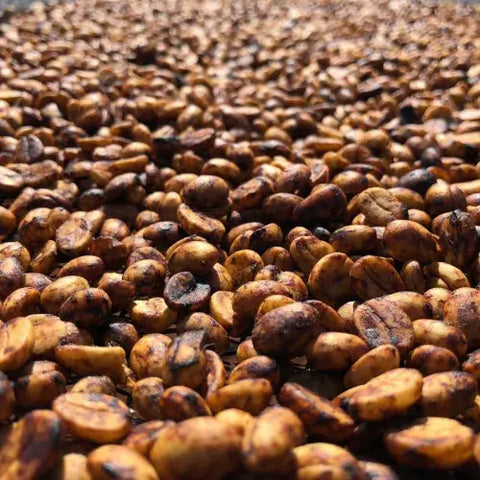
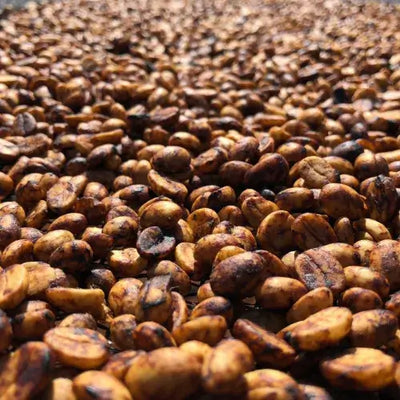
ProcessingNatural
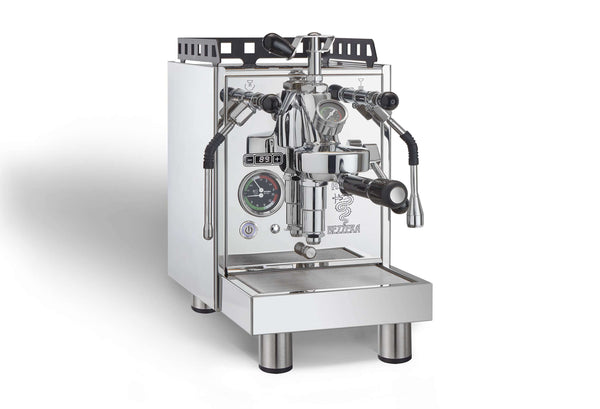
Roast levelMedium, optimized for super-automatic machines
SCA score84
What makes this coffee special

Chocolatey, nutty, full-bodied

Finally crema again in your automatic machine.

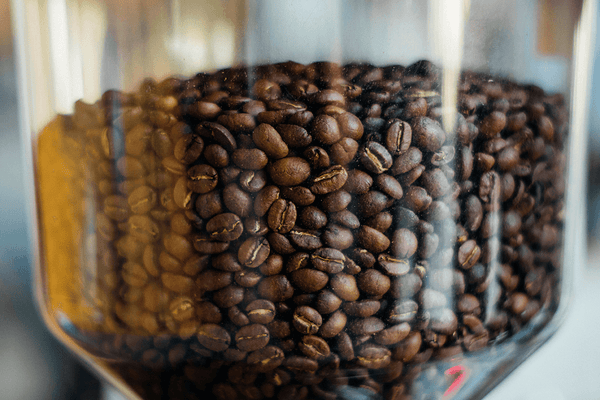
The most common problem in automatic machines is dark, oily roasts: they clog the grinder and the bean hopper. Bergkraft is intentionally medium roasted, the beans remain dry to slightly matte, without an oil film. This is not a side effect but the reason why this blend is roasted this way.

CaramelChocolateAlmond

Aromas are natural flavor associations from green coffee and roasting. Nothing is added to the coffee.

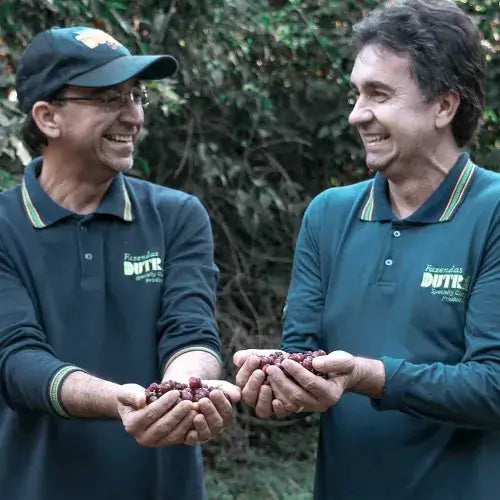
Fazenda Dutra – Matas de Minas, Brazil Fahman Yoga – Gayo, Sumatra

A good fit if you …

  • you use an automatic machine daily and want more body and crema
  • you like chocolatey, nutty and caramelly flavors, without acidity peaks
  • you drink a lot with milk, cappuccino, Latte Macchiato or Flat White
  • you are looking for a coffee that does not clog the grinder

Probably not if you …

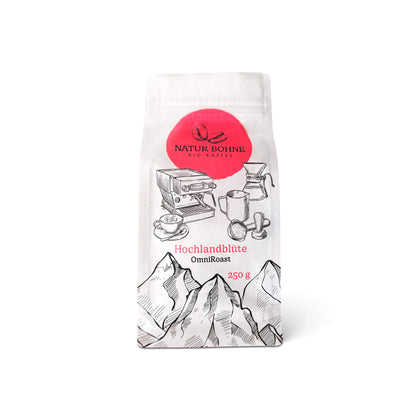
  • you are looking for fruity, lively coffees. Then choose Hochlandblüte or Hochlandjuwel
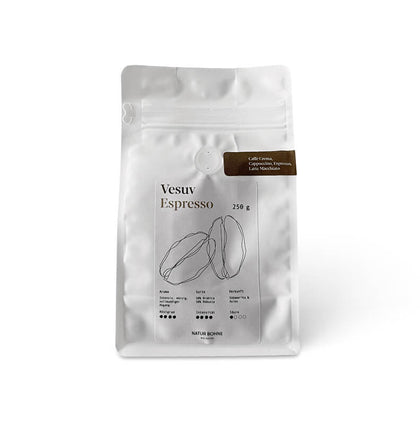
  • you are used to a very dark, smoky Italian-style roast. Then choose Vesuv
  • you primarily brew with a pour-over. This blend is not made for that
The people behind the coffee

Who grows your coffee, with names and faces.

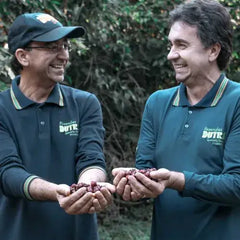
We buy in small lots and know the producers whose coffee we roast.

Fazenda Dutra – Matas de Minas, Brazil Fahman Yoga – Gayo, Sumatra
Fazenda Dutra – Matas de Minas, Brazil Fahman Yoga – Gayo, SumatraFazenda Dutra – Matas de Minas, Brazil Fahman Yoga – Gayo, Sumatra
Brazil · Indonesia

Fazenda Dutra – Matas de Minas, Brazil Fahman Yoga – Gayo, Sumatra

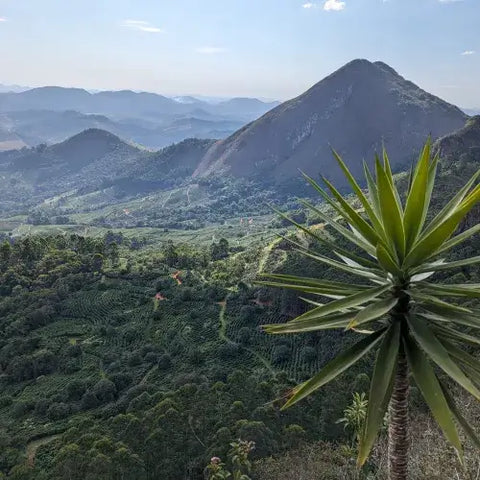
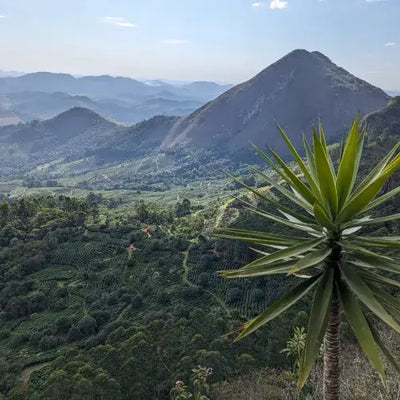
The Brazilian component comes from Matas de Minas in the east of Minas Gerais, Brazil's first protected coffee origin designation. It is grown by smallholders in shaded polycultures on slopes up to around 1,200 meters. The long harvest period from May to September allows selective picking.

The Indonesian component comes from the Gayo-Hochland in Aceh on Sumatra, from volcanic soils at around 1,400 meters. The Giling Basah method is common there: the farmers pulp the cherries themselves, dry them and hand the still-soft beans to a collection point where they are hulled. This method shapes the typical syrupy body of Indonesian coffees.

Traceable to the region. Both components come from organic farming.
How to get the most out of it

The same bean tastes different with every preparation. Here are the parameters we use to brew it ourselves.

Espresso Recipe 17g / 25 / 36

Espresso
Dose
17–18 g in the double basket
Yield
36–40 g (Brew Ratio 1:2 to 1:2.3)
Temperature
93–94 °C
Time
28–32 s

Always weigh espresso instead of estimating the volume. The crema falsifies the amount in the glass.

Vollautomat

Dose
10–11 g
Yield
26–30 g
Temperature
92–93 °C

Strength medium to high. If your machine only allows a smaller cup volume, set the coffee dose smaller as well. Otherwise the coffee will be too strong.

Cappuccino

Dose
8–9 g in the single basket
Yield
17–19 g
Milk
145–155 g
Milk temperature
60–65 °C

Cup 150 to 180 ml, 1 to 2 cm foam. Start with cold milk in the jug and do not froth above 70 °C, otherwise the sweetness is lost. For oat drink: use the barista version, the regular one curdles when frothing.

Café Crème

Dose
13–15 g
Yield
117–150 g (1:9 to 1:10)
Grind
medium, coarser than espresso
Temperature
92–93 °C
Time
25–30 s

Latte Macchiato

Dose
8–9 g in the single basket
Yield
17–19 g
Milk
225–250 ml
Milk temperature
60–65 °C

Glass 300 to 400 ml. Start with cold milk in the jug and do not froth above 70 °C, otherwise the sweetness is lost. For oat drink: use the barista version, the regular one curdles when frothing.

French Press Espresso

French Press
Dose
40 g
Water
750 ml
Yield
750 ml
Temperature
93 °C
Time
3 min

40 g for 750 ml yields three cups of 250 ml each. After one minute stir the crust, at three minutes press slowly and decant immediately.

filter coffee

Filterkaffee
Dose
15 g for 250 ml
Water
250 ml
Grind
8 (medium-fine)
Temperature
93–94 °C
Time
2:30–3:00 min

House convention: 250 ml are one cup. Large pot 20 g for 320 ml. Pour-over Hario V60, water quality total hardness 4 °dH, alkalinity 3 °dH.

Blend · Brazil · Indonesia

Where this coffee comes from

We buy in small lots and know the producers whose coffee we roast.

Fazenda Dutra – Matas de Minas, Brazil Fahman Yoga – Gayo, Sumatra, Brazil, Indonesia
Brazil · Indonesia

Fazenda Dutra – Matas de Minas, Brazil Fahman Yoga – Gayo, Sumatra

ArabicaNatural800 m - 1,200 m
Origin
Brazil · Indonesia
Altitude
800 m - 1,200 m
Processing
Natural
Transparency

From green coffee to your bag, every step verifiable.

We have the green coffee analyzed and roast it ourselves. All values here belong to the batch you order.

Vöhringen, Black Forest
Roasted in Vöhringen, Black Forest
More about the roastery →
  1. 1
    Green coffee · intake analysis

    Checked before a bean goes into the roaster

    Each batch comes with lab values from the importer. We present them here unchanged.

    84score
  2. 2
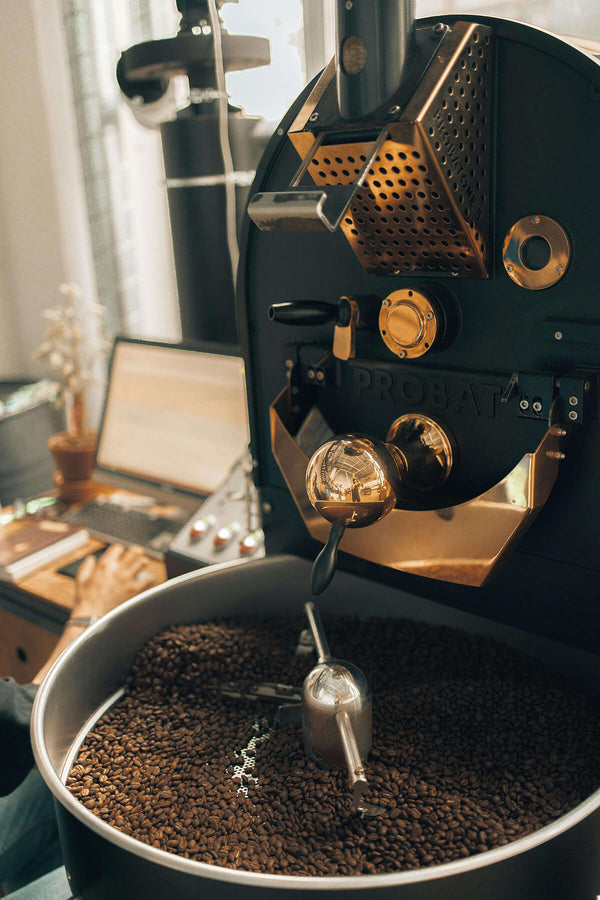
    Roasting · Vöhringen

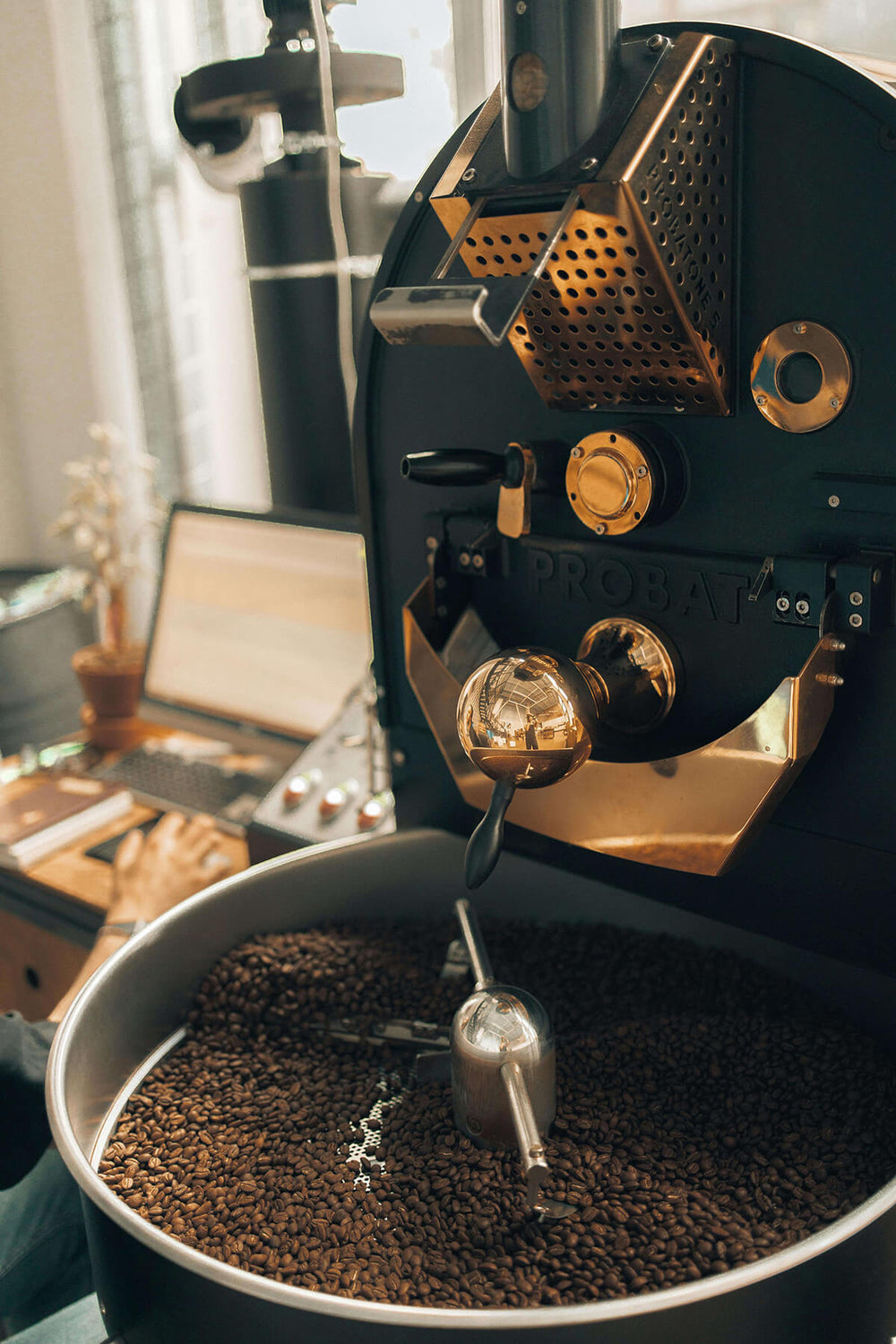
    Gentle rather than fast

    A roast in which the delicate aromas come to the fore. Large roasteries roast hotter and shorter, which darkens the bean and strips its nuances.

    bis 220 °CRoast temperature
    10 to 15 minutesRoast time
    Medium, optimized for super-automatic machinesRoast level
  3. 3
    Freshness · filling

    Your bag is only filled just before shipping

    Until you order, the roast batch is stored sealed in bulk packaging. The roast date is printed on each package.

    10–14 daysResting time, then at its best
    around 4 monthsBest within
    On the bagRoast date
    Before shippingFilling
Customer reviews

No reviews yet

Questions & answers

What customers ask about Bergkraft

If your question is not listed, write to us. We reply personally, usually on the same business day.

Ask your own question →
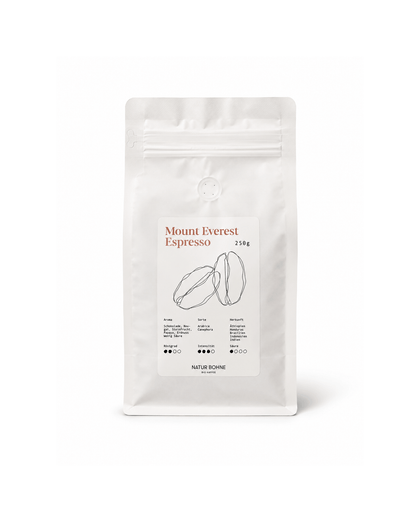
Was unterscheidet Mount Everest von eurem Bergkraft, beide sind doch für Vollautomaten?

Mount Everest ist unser Blend aus fünf Ländern mit 90 % Arabica und 10 % Canephora. Er schmeckt intensiv, komplex und bietet Noten von Schokolade, Nougat, Steinfrucht und Papaya. Bergkraft stammt aus zwei Kooperativen. Er ist milder und ausgewogen. Beide sind für Vollautomaten geeignet. Bevorzugen Sie kräftige, vielschichtige Tassen, empfehlen wir Mount Everest. Für harmonische, sanfte Tassen ist Bergkraft die bessere Wahl.

Für welche Kaffeemaschine ist Bergkraft am besten geeignet?

Bergkraft eignet sich besonders für Vollautomaten und funktioniert auch in Siebträgermaschinen. Die mittlere Röstung sorgt für eine haselnussbraune Crema. Du kannst Bergkraft für Cappuccino, Latte Macchiato oder Café Crema nutzen. Der Geschmack ist kräftig, aber nicht bitter.

Wie schmeckt Bergkraft und ist er sehr stark?

Bergkraft schmeckt nach Milchschokolade, Mandel und Karamell, weich, vollmundig und leicht süß im Abgang. Er ist kräftig im Körper, aber nicht bitter oder übermäßig stark. Die Säure ist niedrig bis mittel und angenehm mild, was ihn sehr bekömmlich macht. Mit einem SCA-Score von 84 Punkten zählt er zu Specialty Coffee (über 80 Punkte). Die mittlere Röstung sorgt für ein ausgewogenes Aroma. Du kannst ihn pur genießen oder mit Milch kombinieren.

84 SCA-Punkte für einen Blend, wie wurde der Bergkraft gecuppt und was bedeutet das sensorisch?

Der Bergkraft wurde gemäß SCA-Protokoll cupped und mit 84 Punkten bewertet. Damit zählt er zum Specialty-Segment ab 80 Punkten. Die brasilianischen Bohnen (Natural) aus Matas de Minas machen etwa 60–70 % des Blends aus. Sie bringen fruchtige Komplexität sowie Noten von Milchschokolade und Karamell. Sumatra Gayo Mandheling (Wet-Hulled) sorgt für erdige Tiefe und unterstreicht den vollen Körper. Die mittlere Röstung hebt die Süße hervor und hält die Säure mild. Das Aroma bleibt dadurch im Vollautomaten klar. Die schonende Trommelröstung verleiht eine dezente Mandel-Note. Jede Bohne lässt sich bis zur Farm oder Kooperative zurückverfolgen (Fazenda Dutra, Fahman Yoga).

Ist der Bergkraft-Blend für Pour-Over/V60 geeignet oder strikt auf Espresso-Extraktion ausgelegt?

Der Bergkraft-Blend ist auf Espresso im Vollautomaten oder Siebträger ausgelegt. Die mittlere Röstung bringt Noten von Milchschokolade, Mandel und Karamell hervor. Im Pour-Over-Verfahren wie V60 ist das Geschmacksprofil weniger intensiv. Für ausgewogene Filterkaffees empfehlen wir eine hellere Röstung.

Wie unterscheidet sich die Extraktion von Bergkraft im Vollautomaten gegenüber klassischen Blends?

Bergkraft ist speziell auf die Extraktion in Vollautomaten abgestimmt. Die mittlere Röstung sorgt für optimale Extraktion und stabile Crema, auch bei kürzeren Kontaktzeiten. Der Blend vereint Bohnen aus Brasilien (Matas de Minas) und Honduras (Hochland) und bietet ein ausgewogenes Geschmacksprofil mit Noten von Milchschokolade, Mandel und Karamell. Im Unterschied zu klassischen Blends entfaltet sich das Aroma auch bei gröberem Mahlgrad vollständig.

Welcher Mahlgrad bringt bei Bergkraft die beste Crema-Stabilität?

Für eine stabile Crema bei Bergkraft empfehlen wir einen mittleren bis feineren Mahlgrad. Starte bei Stufe 3–4 deines Vollautomaten-Mahlwerks und passe den Mahlgrad nach Geschmack und gewünschtem Ergebnis an. Ist die Crema zu dünn, kann ein feinerer Mahlgrad helfen.

Ist die mittlere Röstung von Bergkraft kompatibel mit superautomatischen Mahlwerken wie dem Jura ENA oder DeLonghi Magnifica?

Die mittlere Röstung von Bergkraft eignet sich grundsätzlich für viele superautomatische Kaffeemaschinen, darunter Modelle wie Jura ENA oder DeLonghi Magnifica. Durch das mittlere Röstprofil entstehen weniger ölige Rückstände auf den Bohnen, was zur Langlebigkeit von Mahlwerken beiträgt. Für ein ausgewogenes Ergebnis empfiehlt sich ein mittlerer Mahlgrad und heißes Brühwasser.

How fresh is the coffee when it arrives?

We roast in Vöhringen and only fill your bag immediately before shipping. Until then the roast batch is stored sealed in bulk packaging. The roast date is printed on every package. After 10 to 14 days of resting the sweetness and body are just right, after that the coffee remains aromatic for about four months.

Whole bean or ground?

Both. In addition to whole bean we grind on request for portafilter (fine), drip coffee maker, moka pot or French Press (coarse). Freshly ground tastes best, ground coffee loses aroma faster.

What package sizes are available?

250 g and 500 g, most varieties also as 1 kg. The larger the package, the cheaper the price per kilo. We display the price per kilo directly at the size selection.

Is the coffee really organic?

Yes. All our coffees are EU organic certified, Naturgold and Naturharmonie are additionally Demeter certified. The responsible organic control body is shown on each product page in the bean profile, together with the note non-EU agriculture.

Can I get the coffee on a subscription?

Yes. With a subscription you save 10 % compared to a single order. You set delivery frequency and quantity directly at purchase.

Packaging

Organic packaging made from renewable raw materials

Bio-based PLA film made from sugarcane or corn starch instead of petroleum, FSC® paper, manufactured in the EU. Protects against UV, oxygen and moisture, and is resealable after opening.

OK biobasedFSC® paperMade in EU
  • Degassing valve Lets CO₂ out, no oxygen in.
  • Resealable Hygienically sealed once, then resealable with a zipper.
  • Light protection Laboratory tested, even for high UV protection requirements.
  • Roast date Is printed on every package. Filled only before shipping.

Or write to us

Subject: Bergkraft Organic Espresso Blend for automatic machines, we add that automatically

No newsletter. We reply personally.