








When is a coffee grinder (or an upgrade) really worth it?
Clear signals instead of impulse buying
Many customers ask exactly two questions: "Do I really need my own grinder?" and "Is my old grinder still good enough—or is it slowing me down?" This article gives you clear, verifiable signals as to when a purchase makes sense and when an upgrade really pays off. In addition: typical mistakes, a use case matrix, and an honest setup check.
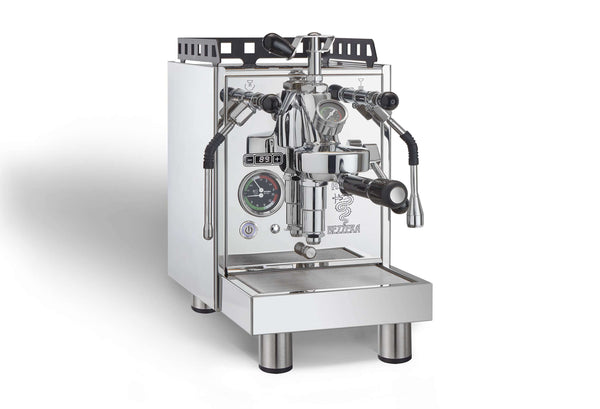
Principle: In most cases, a good, solidly built portafilter machine does not need to be replaced. Even a 30-year-old Gaggia with little technology can stay if the grinder, beans, and workflow are right. In the end, the machine does one thing above all else: it presses water through ground coffee under pressure.
Contents
- 1. Five signs: Time for your first grinder
- 2. Five signs: Your grinder is slowing you down
- 3. Typical mistakes
- 4. Recommendations based on use case and budget
- Setup check: Honest feedback
- FAQ
1. Five signs that you should switch from pre-ground coffee to your own grinder
Sign 1: The coffee tastes different every day, even though you haven't changed anything
If you use the same variety and still experience significant fluctuations (sometimes flat, sometimes bitter, sometimes sour), this is often a sign of a lack of freshness and a grind that does not suit your brewing method. Your own grinder gives you control and consistency.
Available in the shop: Coffee grinders and fresh beans.
Signal 2: Espresso sometimes runs too fast, sometimes too slow—without you being able to control it
Espresso is a controlled extraction. Without an adjustable grind, it quickly becomes a matter of chance. With your own grinder, you can specifically influence the flow time and readjust it when using new beans.
Available in our shop: espresso grinders and accessories (scales, timers).
Signal 3: Your beans smell fantastic, but taste disappointing
If the aroma from the bag is strong but little comes through in the cup, the suspicion is obvious: the coffee was ground too early and the volatile aromas have been lost. Grinding fresh just before brewing is the simplest solution.
Signal 4: You switch between French press, filter, and Bialetti—but always with a single grind size
Each method requires its own grind size. Pre-ground coffee is always a compromise. A grinder with a clear scale or stable clicks makes it easier to switch between brewing methods.
Signal 5: You invest in high-quality beans, but not in the setup
If you spend $35–$50 per kilogram on beans but don't control the grind properly, a lot of potential remains untapped. In many setups, a better grinder brings more quality gains than a machine upgrade.
2. Five signs that your current grinder is holding you back
Sign 1: Even at the finest grind setting, you can't get a consistent espresso
If your espresso consistently runs too fast despite a clean workflow, the grinder may simply not be grinding finely enough or the steps may be too coarse. An upgrade is usually the most logical next step.
Sign 2: The grind is very uneven (lots of dust, lots of coarse particles)
Inconsistent grind can lead to bitter and sour results. Consistency is a key quality factor, especially for espresso and lighter roasts.
Signal 3: The grind setting drifts or changes – you have to constantly readjust it
A stable adjustment is a prerequisite for reproducibility. If you are constantly "playing catch-up," upgrading to a mechanically more stable grinder makes sense.
Signal 4: The grinder is too slow or gets hot with normal quantities
Long grinding times and heat can affect workflow and taste, especially when making several drinks in a row. If you regularly make several drinks, you will benefit from a solid motor and efficient grinding geometry.
Signal 5: You consciously want a higher level of quality – not just "different"
The best reason for an upgrade is a setup that has reached its limits: you are already getting stable results, but want more precision, finer control, and greater consistency. In this case, the upgrade is not an impulse, but the next level.
Practical observation: If you find profiling and technical innovations on the machine exciting, you should first check whether the grinder can keep up with the level. The machine can only show what the bean quality and ground coffee allow it to do.
3. Typical mistakes (short and clear)
Mistake 1: Expensive machine, cheap grinder
This is the most common imbalance: a large budget for the machine, but little for the grinder. In practice, the grinder then limits the taste, not the machine.
Mistake 2: Upgrading even though the problem lies in technology and workflow
Without scales, a clear recipe, and reproducible puck preparation, even the next grinder won't "conjure up" stability. Often, small, consistent steps are more effective than a spontaneous upgrade.
Minimum check before every purchase decision
- How much coffee do you dose (weighing) and how much goes into the cup (yield)?
- Is your recipe stable (e.g., fixed ratio and target time) and repeatable?
- Do you use scales? Integrated scales or precise espresso scales significantly reduce fluctuations.
Available in the shop: Accessories (scales, tampers, leveling, workflow tools).
4. Specific recommendations for your scenario
Use this mini matrix as a quick guide. The goal is to buy what measurably improves your results.
| Use case | Budget | Recommendation | Addition |
|---|---|---|---|
| Filter only | Approx. $150–250 | Solid filter grinder with easy-to-understand settings | Fresh filter beans, optional dosing or brewing scales |
| Espresso only (portafilter) | Approx. $300–500 | Espresso grinder with finely adjustable settings | Espresso scale, reproducible recipe, suitable beans |
| Mixed (espresso + filter) | Approx. $400–700 | All-round grinder that really covers espresso | Clear routine for changing the grind, scale for stability |
| Upgrade | From approx. $700 | Greater precision, greater stability, more consistent grind | Workflow optimization, optional single-dose approach, accessories |
Godirectly to selection: View coffee grinders
Setup check: We give you honest feedback
Are you unsure whether you really need a new grinder, whether an upgrade makes sense, or whether your setup would run much better with a few adjustments?
Send us a quick message with:
- Machine (model, age)
- Grinder (model)
- Beans (type, roast level)
- Your preparation (espresso, filter, mixed)
- If espresso: weight, yield, target time (if available)
We'll tell you honestly what works best: keep, adjust, or upgrade.
For a setup check, contact us or write directly in the chat
FAQ
Do I really need my own coffee grinder?
If the taste and results vary, you want to get reproducible espresso, or you invest in high-quality beans, having your own grinder is usually the biggest quality lever. Without proper grind control, extraction remains a compromise.
When is it worth upgrading my current grinder?
An upgrade is worthwhile if, despite a clean workflow, you cannot achieve stable extraction, your grinder does not grind finely enough for espresso, the grind varies greatly, or the adjustment is unstable. Before doing so, you should check whether the problem is due to technology or the recipe.
Do I need to replace my portafilter machine to get better espresso?
In many cases, no. A solidly built machine can remain useful for a very long time. Even a 30-year-old Gaggia with little technology can deliver good results if the grinder, beans, and workflow are right.
Why is a scale so important for espresso?
A scale stabilizes the result because it makes weighing and yield measurable. This makes adjustments to the grind size traceable. An integrated scale or a precise espresso scale reduces fluctuations and simplifies the workflow.


