

- Grinder type
- hopper grinders (on-demand grinders)
- Grinder
- 65 mm
- Burrs
- flat, 65 mm, hardened steel
- Grind size adjustment
- stepless, micrometric
- Dosing
- dose control by scale
- Grinding capacity
- 2.3 g/s
- Bean hopper
- 1200 g
- Burr lifespan
- 500 kg
- Recommended daily throughput
- 2.3 kg
- Motor power
- 280 W
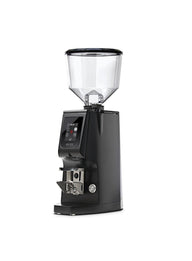
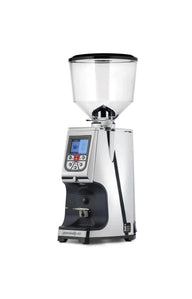
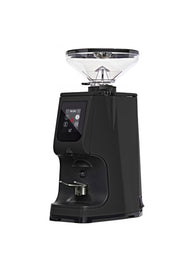
The beans sit in the hopper and are ground on demand. This is the faster way in everyday life, especially if the same coffee is used all the time. A full hopper, however, means that the beans at the bottom are exposed to the air for longer.
The diameter of the grinding burrs determines how many revolutions are needed for the same amount of coffee. Larger burrs need fewer revolutions, the grind warms up less, and heat in the grind reduces aroma.
Flat burrs grind with two parallel rings and deliver a tight particle size distribution. You do not recognize dull burrs by appearance but by the fact that the shot runs faster than usual.
The grinder weighs itself and grinds until the set amount is in the portafilter. That stays the same even when the bean changes or the bag gets emptier, where a time-based control would need readjusting.
A large hopper means less frequent refilling. Bear in mind that beans age in it: anything that stays in the hopper for longer than a few days loses aroma, no matter how good the grinder is.
The grinder output indicates how much ground coffee comes out per second. For a single drink you hardly notice it, as extraction and milk determine the time. You only feel it when many drinks are made back to back.
A large hopper means less frequent refilling. Bear in mind that beans age in it: anything that stays in the hopper for longer than a few days loses aroma, no matter how good the grinder is.
The manufacturer's guideline for how much coffee the burrs can handle before they should be replaced. You do not notice dull burrs by their appearance but because the extraction runs faster than usual at the same setting.