


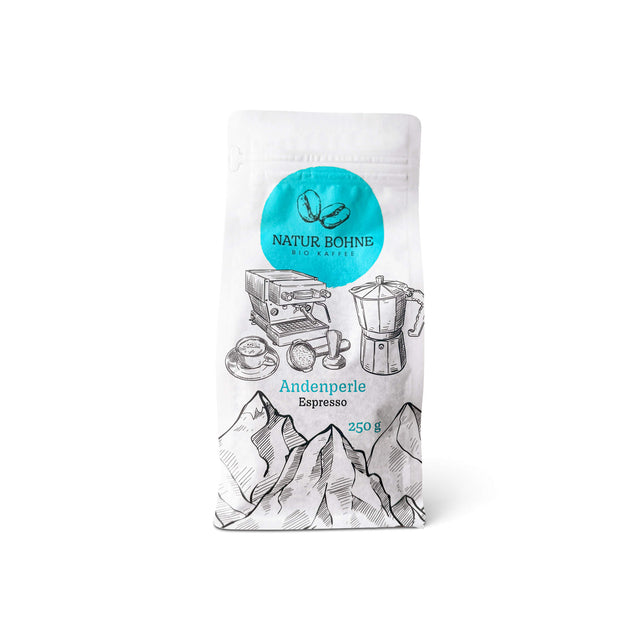
 Andenperle Bio Espresso aus Peru, Villa Rica
Mild and nutty on the first sip, with almond and caramel, followed by a fine citrus note.
Start recipe: 17-18 g → 34-43 g (1:2 to 1:2.5) in 27-30 s
1
By flavour
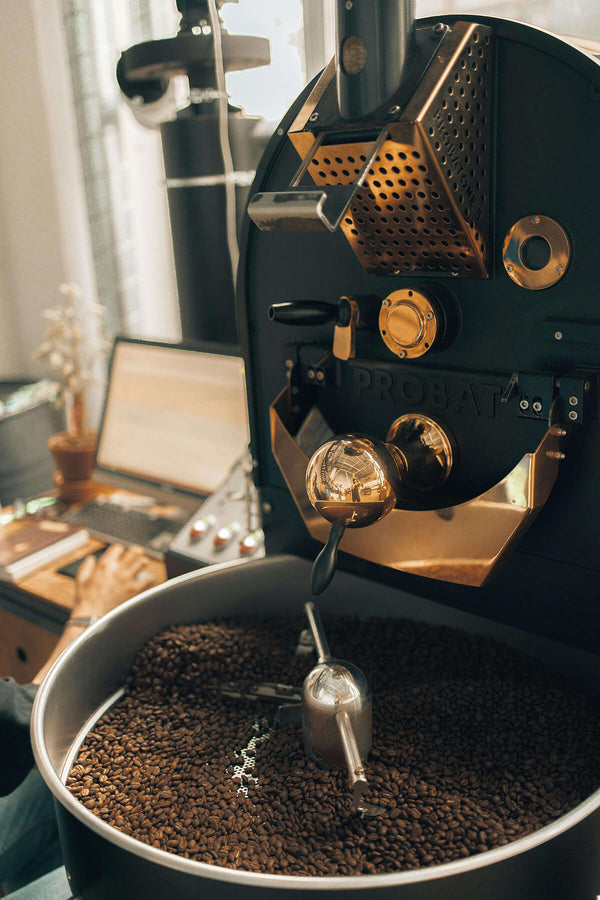 Always freshCoffee subscriptionFreshly roasted and delivered automatically.View →
By use
More affordable
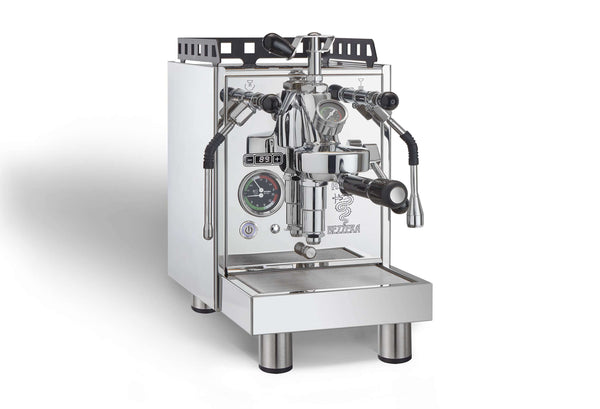 Inspected & discountedDisplay items & B-stockInspected machines at a discount.View →
By use
By technology
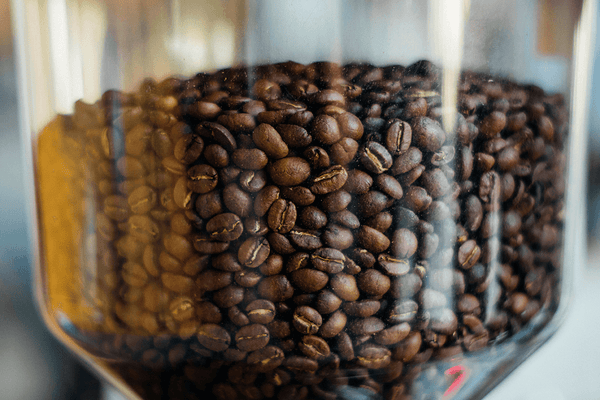 From the magazineThe best grinders up to €500Hopper grinders for espresso compared.View →
Popular
Care & water
Refine
 New: setsWiedemann SetsBarista and finishing sets in a single wood type, up to 7% cheaper.View →
Who it's for
Terms
PersonalOffer for your teamMachine, grinder and beans from a single source.View →

Product recommendations
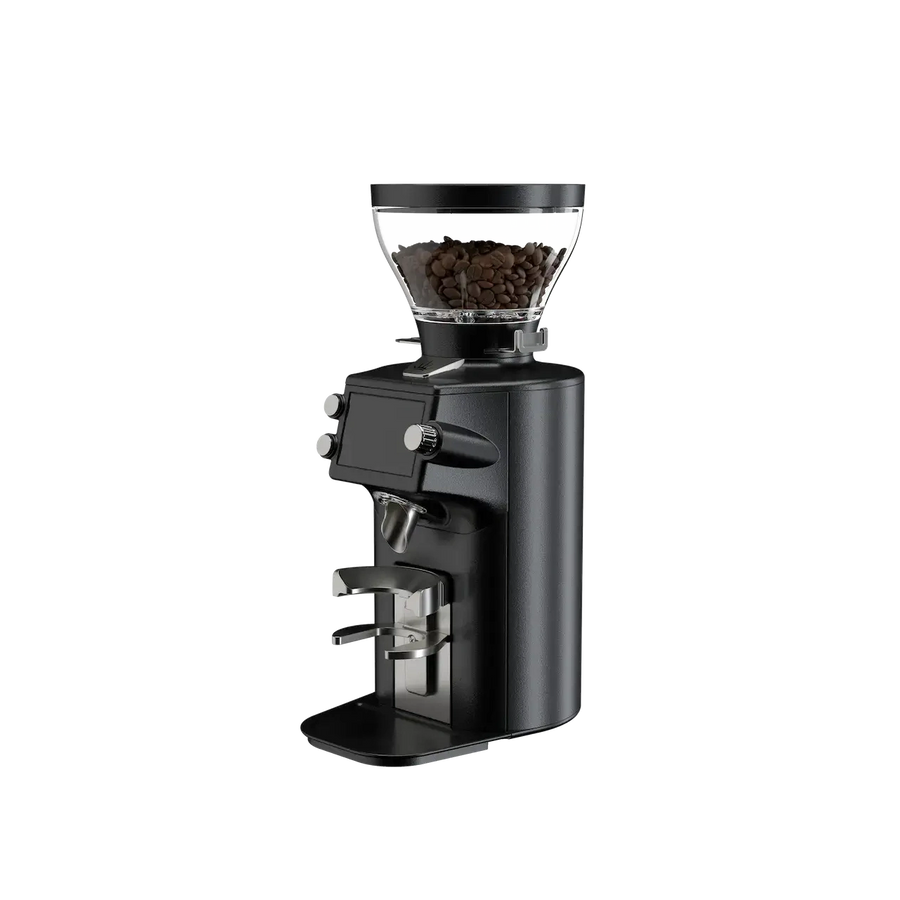
The beans sit in the hopper, ground on demand. This is the faster way when the same variety is always running.
The diameter of the grinding burrs determines how many revolutions are needed for the same amount of coffee.
Flat burrs grind with two parallel rings and deliver a tight particle size distribution.
The adjustment is done by a motor instead of a manual ring.
The grinder weighs itself and grinds until the set amount is in the portafilter.
A large hopper means less frequent refilling.
The beans sit in the hopper and are ground on demand.
The grinder output indicates how much ground coffee comes out per second.
The manufacturer's guideline for how much coffee the burrs can handle before they should be replaced.
The numbers from the data sheet, in the order that matters. A faster grinder does not grind better, it only grinds more.
The larger the burrs, the fewer revolutions are needed for the same amount of coffee. The grounds heat up less, and heat in the ground coffee costs aroma. Installed are special steel.
Manufacturer specification for when the burrs should be replaced. Dull burrs are not noticeable by the grind appearance, but only by taste.
For 18 g of coffee, calculated from 2 g per second. For a single drink you hardly notice it: brewing and milk foam take longer than grinding.
These are 330 square centimeters of counter that are permanently occupied. At 39 cm height you need space above it for refilling.
That would be about 130 espressos per day at 18 g per shot. The maximum performance quoted by the manufacturer, not a recommendation for everyday use. If you regularly operate in this range, schedule maintenance more frequently.
All values come from the data sheet of this device. If a specification is missing, it is not listed here.
The same values by which you filter and compare in the shop. Is something missing? Write to us, we'll add it.
User manual (PDF) opens the page of MahlkönigThe beans sit in the hopper and are ground on demand. This is the faster way in everyday life, especially if the same coffee is used all the time. A full hopper, however, means that the beans at the bottom are exposed to the air for longer.
The diameter of the grinding burrs determines how many revolutions are needed for the same amount of coffee. Larger burrs need fewer revolutions, the grind warms up less, and heat in the grind reduces aroma.
Flat burrs grind with two parallel rings and deliver a tight particle size distribution. You do not recognize dull burrs by appearance but by the fact that the shot runs faster than usual.
The adjustment is done by a motor instead of a manual ring. Settings can therefore be reproduced exactly, which saves you time in daily operations when switching varieties.
The manufacturer's guideline for how much coffee the burrs can handle before they should be replaced. You do not notice dull burrs by their appearance but because the extraction runs faster than usual at the same setting.
The grinder weighs itself and grinds until the set amount is in the portafilter. That stays the same even when the bean changes or the bag gets emptier, where a time-based control would need readjusting.
The grinder output indicates how much ground coffee comes out per second. For a single drink you hardly notice it, as extraction and milk determine the time. You only feel it when many drinks are made back to back.
A large hopper means less frequent refilling. Bear in mind that beans age in it: anything that stays in the hopper for longer than a few days loses aroma, no matter how good the grinder is.
Manufacturer: Mahlkönig · Hemro Manufacturing Germany GmbH, Tilsiter Strasse 144, 22047 Hamburg, www.mahlkoenig.com, [email protected]
Three varieties that we have dialed in on exactly this machine. Start recipe included.
All coffee beans in our range are organic.
Andenperle Bio Espresso aus Peru, Villa RicaMild and nutty on the first sip, with almond and caramel, followed by a fine citrus note.
Start recipe: 17-18 g → 34-43 g (1:2 to 1:2.5) in 27-30 s
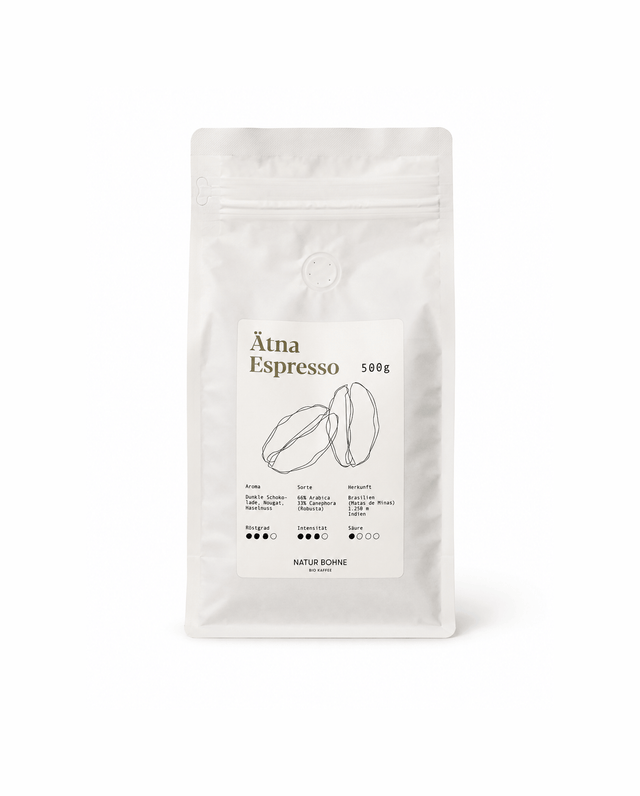 Ätna Organic Espresso, dark roasted
Dark chocolate, nougat and roasted hazelnut. Full, syrupy body, dense hazelnut-brown crema, very low acidity.
Start recipe: 17-18 g in the double basket → 34-38 g in 25-28 s
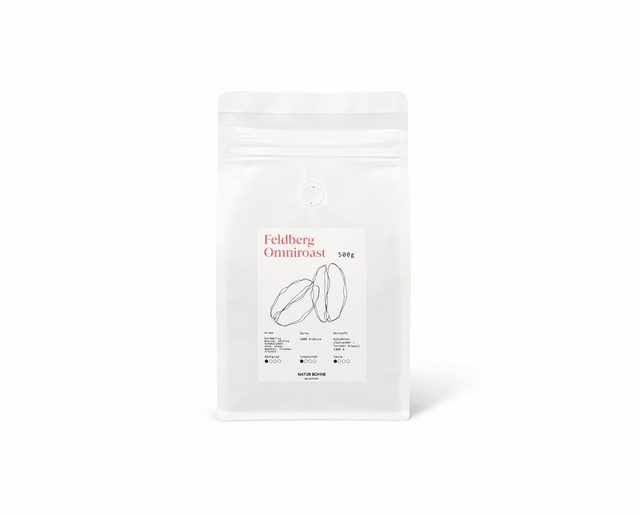 Feldberg organic coffee Colombia, Omniroast Single Origin
Panela and caramel on the first sip, followed by almond and dark chocolate, plus a distinct dried fruit note and a lively, juicy acidity.
Start recipe: 17-18 g in the double basket → 36-40 g (Brew Ratio 1:2 to 1:2.3) in 28-32 s
Beans ship free with the machine and come from the same roast week.
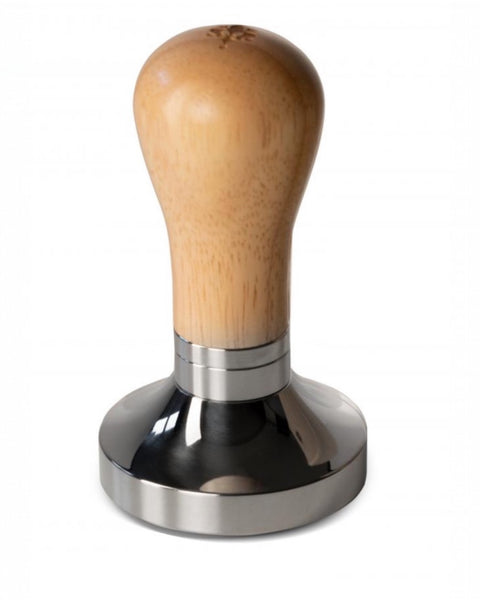 Eureka tamper adjustable 58.3 mm with oak handle
Adjustable in height so that it fits the basket of your machine. Even pressure across the whole surface is what makes the extraction repeatable.
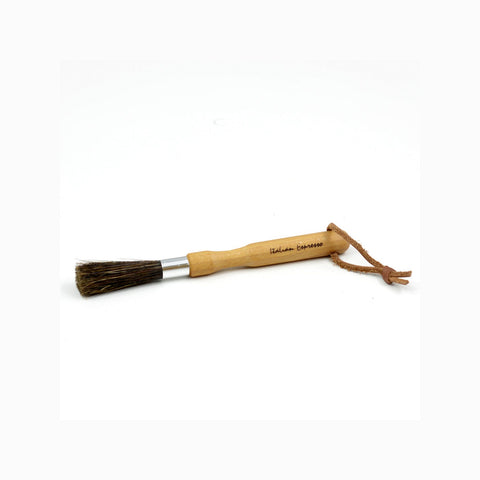 Grinder brush for coffee grinder
Ground coffee stays in the grind chute and goes stale there. A quick pass with the brush after each grind is enough.
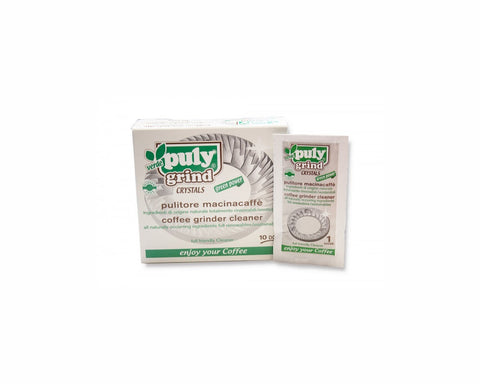 Puly Grind Grinder Cleaner 10x15g
Coffee oils coat the burrs and shift the grind size without you seeing it. Every few weeks, run a bag through the grinder.
You write to us, not the manufacturer. We organize pickup, repair and return shipping.
Seals, shower screens, pumps in stock. Maintenance service recommended after two years.
* Creditworthiness required. Installment example PayPal Installments: effective annual interest rate 12,49 % p. a., fixed nominal interest rate 11,80 % p. a., term 24 months. PayPal shows terms and total costs in the next step. Only for customers resident in Germany.
Die Mahlkönig E64 WS V4 Home GbW Kaffeemühle ist für die Espressovermahlung konzipiert und bietet Funktionen wie App-Steuerung und Cloud-Konnektivität. Obwohl sie auf die Bedürfnisse von Home-Baristas abzielt, ist sie nicht speziell für die Zubereitung von Filterkaffee optimiert. Laut verschiedenen Quellen ist sie jedoch vielseitig einsetzbar und könnte auch für kleinere Mengen Filterkaffee verwendet werden, doch dies erfordert möglicherweise eine Anpassung des Mahlgrades.
Officially, the manufacturer Mahlkönig does not use designations like V3 or V4 for the E64 WS. Dealers and the coffee scene often use these to describe the internal model development. However, you can recognize the current state of the grinder by specific components and functions:
1. Discharge chute and flapper: The latest devices feature a revised version of the discharge chute. This is firmly mounted and uses an improved flapper that significantly reduces clumping and static charge of the coffee grounds.
2. Firmware updates: The newer revisions (partly referred to as V4) have OTA capability (Over-The-Air) and cloud connectivity. They can be synchronized with compatible espresso machines (e.g., Xenia) via the official app.
3. Weight & stability: Grinders of the very first generation sometimes suffered from an inaccurate scale and slight play in the components. The revised versions weigh the coffee grounds more consistently and precisely.
4. From version V2 onwards, metal flappers were installed. The metal flappers are already available as spare parts.
Model history and naming
The designations V1, V2, V3, or V4 usually come from testers (such as the coffee makers) to distinguish iterations in the software and minor hardware adjustments (like the new discharge).
There is lively discussion on Kaffee-Netz and Reddit about which batch has which firmware or fixes (such as factory-aligned grinding discs).
The E64 WS Home (64 mm, Grind-by-Weight) is primarily designed for ambitious home baristas and small setups with low volume. The E65W GbS (65 mm, Grind-by-Sync) is aimed at small to medium cafés with 80–120 extractions/day and offers direct communication with the espresso machine as well as automatic grind adjustment. GbS (Grind-by-Sync) is increasingly replacing the older GbW technology in the professional sector, as it autonomously compensates for fluctuations due to bean age or humidity and reduces the need for manual adjustments. For commercial continuous operation with consistency requirements, the E65W GbS is the more robust choice; the E64 WS is suitable for prosumer applications or low-volume scenarios.
Die Mahlkönig Sync App (iOS/Android) ermöglicht Steuerung, Extraktionsanalyse und automatische Firmware-Updates der E64 WS Home. Die App ist für Consumer-/Prosumer-Workflows optimiert, nicht für ERP- oder POS-Integration. Im Gegensatz zu GbS-Modellen (E65W, E80W), die direkt mit professionellen Espressomaschinen kommunizieren, arbeitet die E64 WS als Stand-alone-Einheit mit App-Interface. Für B2B-Umgebungen, die Rezept-Synchronisation über mehrere Standorte, Verbrauchslogistik oder HACCP-Dokumentation erfordern, bietet die E64 WS keine native Schnittstelle. Prüfen Sie für gewerbliche Anforderungen die GbS-Plattform (E65W/E80W) oder kontaktieren Sie Mahlkönig bezüglich API-Verfügbarkeit für Custom-Integrationen.
Die E64 WS Home verfügt über 64 mm Mahlscheiben, Grind-by-Weight-Technologie mit integrierter Waage, App-Steuerung via Mahlkönig Sync (iOS/Android) und Cloud-Konnektivität. Abmessungen: 21 cm Breite × 48 cm Tiefe × 34 cm Höhe. Die Mühle ist für den Home-Barista-Bereich konzipiert (ca. 10–30 Bezüge/Tag), nicht primär für gewerblichen Dauerbetrieb. Ein vollständiges technisches Datenblatt mit Leistungsaufnahme, Motorspezifikation, Mahlscheiben-Typ (SSP/SSMB) und länderspezifischen Zertifizierungen (CE, UL, NSF) erhalten Sie direkt beim Hersteller oder autorisierten Fachhändler. Für B2B-Beschaffung empfehlen wir die gewerblichen Modelle E65W GbS oder E80W GbS mit robusteren Motoren und höherer Durchsatzrate.
Nein, die E64 WS ist Produkt für Home Barista. Die Kaffeemühle E64 WS empfehlen wir nicht für den gewerblichen Einsatz. Dafür ist sie nicht ausgelegt. Wir empfehlen die E65 GbS als gute Alternative. Diese ist für den gewerblichen Einsatz entwickelt worden
Die E64 WS Home nutzt 64 mm Mahlscheiben und Grind-by-Weight (GbW), während E65W GbS (65 mm) und E80W GbS (80 mm) mit Grind-by-Sync (GbS) arbeiten, letzteres kommuniziert direkt mit der Espressomaschine und justiert Mahlgrad automatisch, wodurch manuelles Nachjustieren entfällt. E65W ist für 80–120 Bezüge/Tag ausgelegt, E80W für High-Volume (150+ Bezüge/Tag). Die E64 WS Home ist kompakter, günstiger, aber nicht für gewerblichen Dauerbetrieb konzipiert: geringerer Motor-Duty-Cycle, eingeschränkte Serviceintervalle, keine professionelle Ersatzteil-Logistik. Für B2B-Projekte mit Compliance- und TCO-Anforderungen sind E65W/E80W GbS die korrekte Wahl, höhere Anschaffung, aber niedrigere Ausfallkosten und längere Lebensdauer.
Für Espresso sind Modelle mit 64 mm oder 65 mm Mahlscheiben ideal. Die E65W GbS ist aktuell die wichtigste Café-Mühle von Mahlkönig und schafft 80-120 Bezüge täglich mit konstanter Qualität. Für zu Hause ist die X64 SD perfekt: Sie mahlt einzelne Portionen frisch, hat ein 64 mm Scheibenmahlwerk aus gehärtetem Stahl und du kannst den Mahlgrad stufenlos von 120 bis 1.500 µm einstellen. Das Mahlgut ist sehr gleichmäßig verteilt, dadurch schmeckt der Espresso klarer und weniger bitter.
Die X64 SD ist speziell für Single Dose gebaut. Du füllst nur die Bohnen ein die du brauchst, sie mahlt alles durch und es bleibt fast nichts in der Mühle zurück. Das ist perfekt wenn du verschiedene Kaffeesorten ausprobieren willst ohne dass sich Reste vermischen. Die E64 WS kann mit Grind-by-Weight auch einzelne Portionen abwiegen. Klassische Café-Mühlen wie die E65W haben einen Bohnenbehälter und sind für durchgehenden Betrieb gedacht.
Die X64 SD ist ideal für zu Hause. Sie ist kompakt, mahlt frisch pro Tasse und arbeitet leise unter 65 dB. Die E64 WS ist die Brücke zwischen Heimanwendung und kleinem Café: präziser mit Grind-by-Weight aber teurer. Beide haben 64 mm Mahlscheiben was für Espresso vollkommen ausreicht. Wichtig: Mahlkönig-Mühlen sind eine Investition. Wenn du vorher eine günstige Einstiegsmühle hattest wirst du den Unterschied im Geschmack sofort merken.
Write to us if you are unsure about the selection. We roast ourselves and drink what we sell.