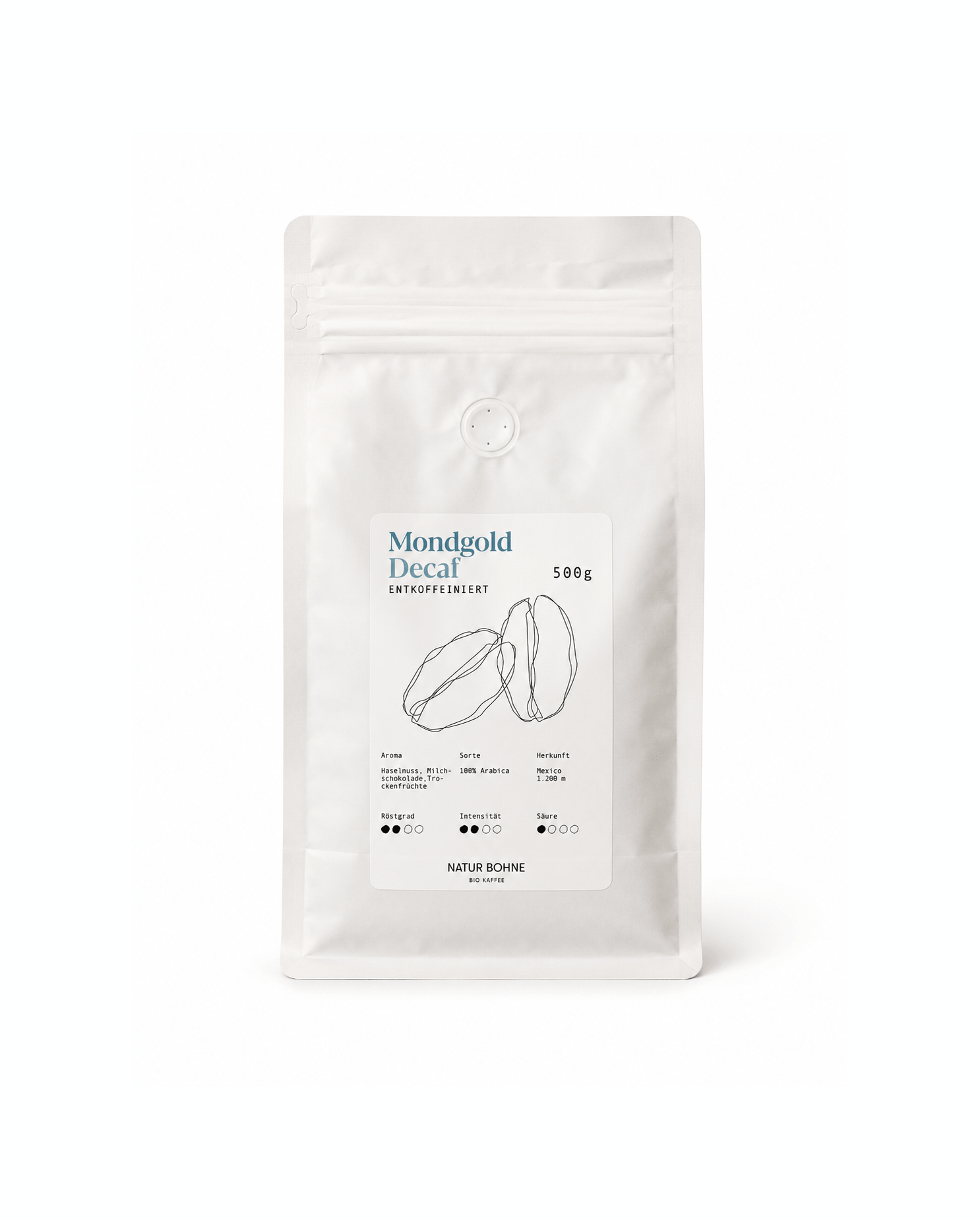
Bohnenprofil

Eine Farm, eine Varietät, sorgfältig geröstet.

EU organic · DE-ÖKO-022
SpeciesArabica
VarietyCatimor, Sarchimor, Roter Caturra
OriginMexico
Altitude1,225 m
ProcessingWashed
HarvestDecember 2025
Roast levelMedium, Omniroast
SCA score82
Was diesen Kaffee besonders macht

Sweet, nutty, round

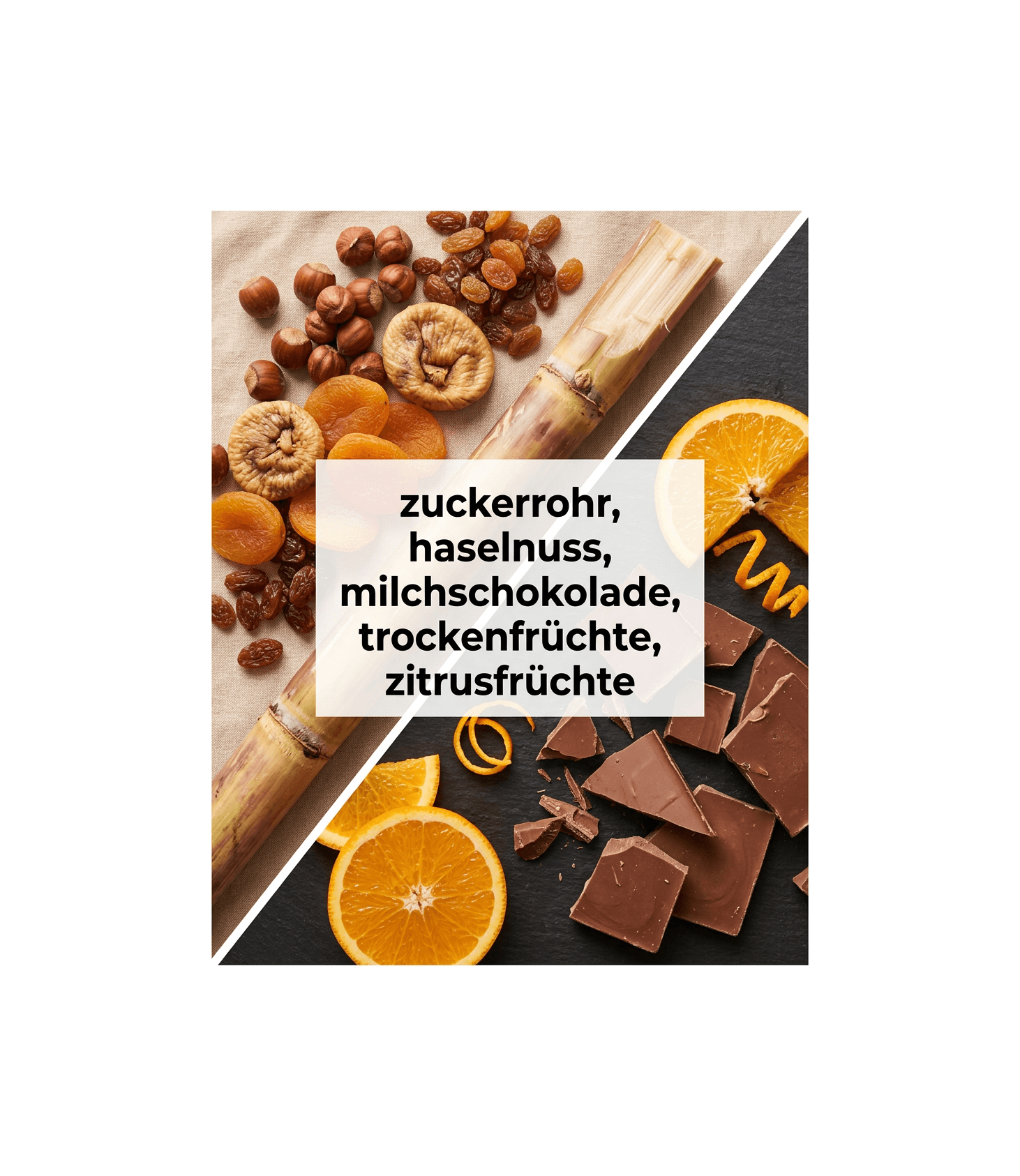
Sugarcane sweetness on the initial sip, followed by hazelnut and milk chocolate, in the finish dried fruit and a light citrus note. The acidity is mild and well integrated, the body soft and round.

SugarcaneHazelnutMilk chocolateDried fruitCitrus fruits

Aromen sind natürliche Geschmacksassoziationen aus Rohkaffee und Röstung. Dem Kaffee wird nichts zugesetzt.

Jorge Arreola Nava, Santa Fe, Chiapas (grown in the shade of Inga trees, patio and mechanical drying)

A good fit if you …

  • you want another cup in the evening without it affecting your sleep
  • you want to drink a second or third cup during the day without a caffeine boost
  • you deliberately reduce caffeine but don't want to compromise on taste
  • you want to know who produced a decaf and where it comes from

Probably not if you …

  • you need guaranteed completely caffeine-free coffee
  • you are looking for a strong, dark espresso. Then choose Ätna or Vesuv
  • you expect a decaf to taste exactly like your caffeinated favorite coffee
Die Menschen hinter dem Kaffee

Wer deinen Kaffee anbaut – mit Namen und Gesicht.

Wir kaufen in kleinen Mengen und kennen die Betriebe, von denen wir rösten.

Jorge Arreola Nava, Santa Fe, Chiapas (grown in the shade of Inga trees, patio and mechanical drying)
Jorge Arreola Nava, Santa Fe, Chiapas (grown in the shade of Inga trees, patio and mechanical drying)Jorge Arreola Nava, Santa Fe, Chiapas (grown in the shade of Inga trees, patio and mechanical drying)
Mexico

Jorge Arreola Nava, Santa Fe, Chiapas (grown in the shade of Inga trees, patio and mechanical drying)

Behind Mondgold is not an anonymous green coffee, but the work of Jorge Arreola Nava from the region Motozintla in Chiapas, Mexico. Together with local producers he develops coffees that are convincing in quality and are grown under stable conditions. From this arose the varietal mix of Catimor, Sarchimor and Roter Caturra, adapted to the climatic conditions of the region.

The coffee grows at 1,200 to 1,320 meters in the shade of Inga trees. This cultivation method protects the plants, promotes biodiversity and ensures a slower ripening of the cherries. Harvested in December by hand, processed as washed, dried on patios and mechanically.

Chiapas is one of the most important coffee growing regions of Mexico and borders the Guatemalan region of Huehuetenango. In addition to coffee, cocoa, honey, maize and tropical fruits are grown here. Many farms are family-run and closely linked with the local communities, including indigenous groups such as Tseltal and Tzotzil.

The coffee is decaffeinated in Mexico by Descamex in the patented Mountain Water Process. That means: It is decaffeinated in the country of origin, not only after transport to Europe.

So holst du alles raus

Dieselbe Bohne schmeckt in jeder Zubereitung anders. Hier stehen die Werte, mit denen wir sie selbst brühen.

Decaf Espresso

Espresso
Dose
18 g
Yield
36 g
Temperature
92 °C
Time
25 s

Vollautomat

Dose
10–11 g
Yield
25–28 g
Temperature
92–93 °C

Stärke mittel. Entkoffeinierte Bohnen mahlen leichter, deshalb den Mahlgrad eine Stufe gröber stellen.

filter coffee

Filterkaffee
Dose
15 g auf 250 ml
Water
250 ml
Grind
8 (mittelfein)
Temperature
93–94 °C
Time
2:30–3:00 min

Hauskonvention: 250 ml sind eine Tasse. Große Kanne 20 g auf 320 ml. Handfilter Hario V60, Wasserqualität Gesamthärte 4 °dH, Alkalinität 3 °dH.

French Press Espresso

French Press
Dose
40 g
Water
750 ml
Yield
750 ml
Temperature
93 °C
Time
3 min

40 g auf 750 ml ergeben drei Tassen à 250 ml. Nach einer Minute die Kruste umrühren, bei drei Minuten langsam drücken und sofort umfüllen.

Cappuccino

Dose
8–9 g im Einzelsieb
Yield
17–19 g
Milk
135–145 g
Milk temperature
60–65 °C

Tasse 150 bis 180 ml, 1 bis 2 cm Schaum. Milch kalt in die Kanne und nicht über 70 °C aufschäumen, sonst geht die Süße verloren. Mit Haferdrink: Barista-Variante nehmen, die normale flockt beim Aufschäumen.

Single origin · Mexico

Wo dieser Kaffee herkommt

Wir kaufen in kleinen Mengen und kennen die Betriebe, von denen wir rösten.

Weltkarte – Herkunft Natural Earth I (wie d3.geoNaturalEarth1), Antarktis entfernt. Punkt = [1000.00 + x·365.58, 569.06 − y·365.58] mit x,y aus der Natural-Earth-Formel (Bogenmaß), siehe weltkarte-README.md. Referenz: 0°,0° → 1000.00,569.06; −42.2°,−20.7° → 770.26,702.34; 75.8°,12.9° → 1417.86,486.10.
Jorge Arreola Nava, Santa Fe, Chiapas (grown in the shade of Inga trees, patio and mechanical drying), Mexico
Mexico

Jorge Arreola Nava, Santa Fe, Chiapas (grown in the shade of Inga trees, patio and mechanical drying)

ArabicaWashed1,225 m
Origin
Mexico
Altitude
1,225 m
Processing
Washed
Harvest
December 2025
Transparenz

Vom Rohkaffee bis in deine Tüte, jeder Schritt nachprüfbar.

Wir lassen den Rohkaffee analysieren und rösten selbst. Alle Werte hier gehören zur Charge, die du bestellst.

Vöhringen, Schwarzwald
Roasted in Vöhringen, Schwarzwald
Mehr zur Rösterei →
  1. 1
    Green coffee · intake analysis

    Geprüft, bevor eine Bohne in den Röster kommt

    Jede Charge kommt mit Laborwerten vom Importeur. Wir übernehmen sie hier unverändert.

    82score
  2. 2
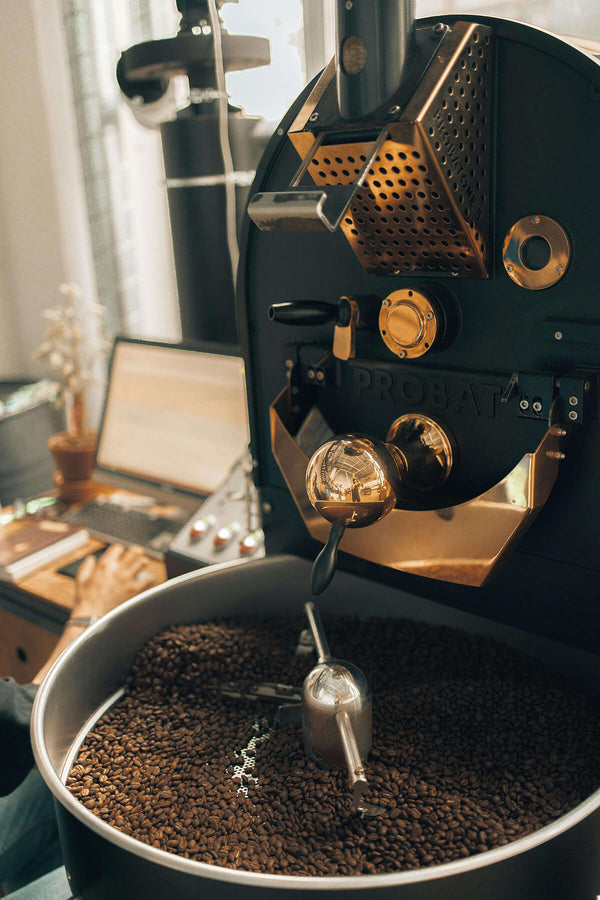
    Roasting · Vöhringen

    Schonend statt schnell

    Eine Röstung, in der die feinen Aromen zur Geltung kommen. Große Röstereien arbeiten heißer und kürzer, das macht die Bohne dunkler und nimmt ihr Nuancen.

    210 °CRoast temperature
    13 to 16 minRoast time
    Medium, OmniroastRoast level
  3. 3
    Freshness · filling

    Deine Tüte wird erst vor dem Versand befüllt

    Bis zur Bestellung lagert die Röstcharge verschlossen im Großgebinde. Das Röstdatum steht auf jeder Packung.

    10–14 daysResting time, then at its best
    around 3 monthsBest within
    On the bagRoast date
    Before shippingFilling
Customer reviews

No reviews yet

Fragen & Antworten

What customers ask about Mondgold Decaf

Steht deine Frage nicht dabei, schreib uns. Wir antworten persönlich, meist am selben Werktag.

Eigene Frage stellen →
How much caffeine is still in it?

Decaffeinated roasted coffee may contain at most 0.1% caffeine in the dry matter in Germany. Mondgold is marketed as decaffeinated roasted coffee and complies with this requirement. It is therefore not completely caffeine-free; a small residual content remains. That is the case with every decaffeinated coffee.

How is Mondgold decaffeinated?

Mondgold is decaffeinated in the Mountain Water Process, a patented water-based method, without conventional chemical solvents such as dichloromethane or ethyl acetate. It is carried out by Descamex in Mexico. The concrete advantage is that the coffee is decaffeinated in the country of origin and not only after transport to Europe. The process: The beans are steamed and softened, the caffeine transfers into a saturated, caffeine-free solution, is filtered out through activated carbon, and the beans are subsequently dried and polished. Because the solution remains saturated with the flavor compounds, these are hardly lost.
How fresh is the coffee when it arrives?

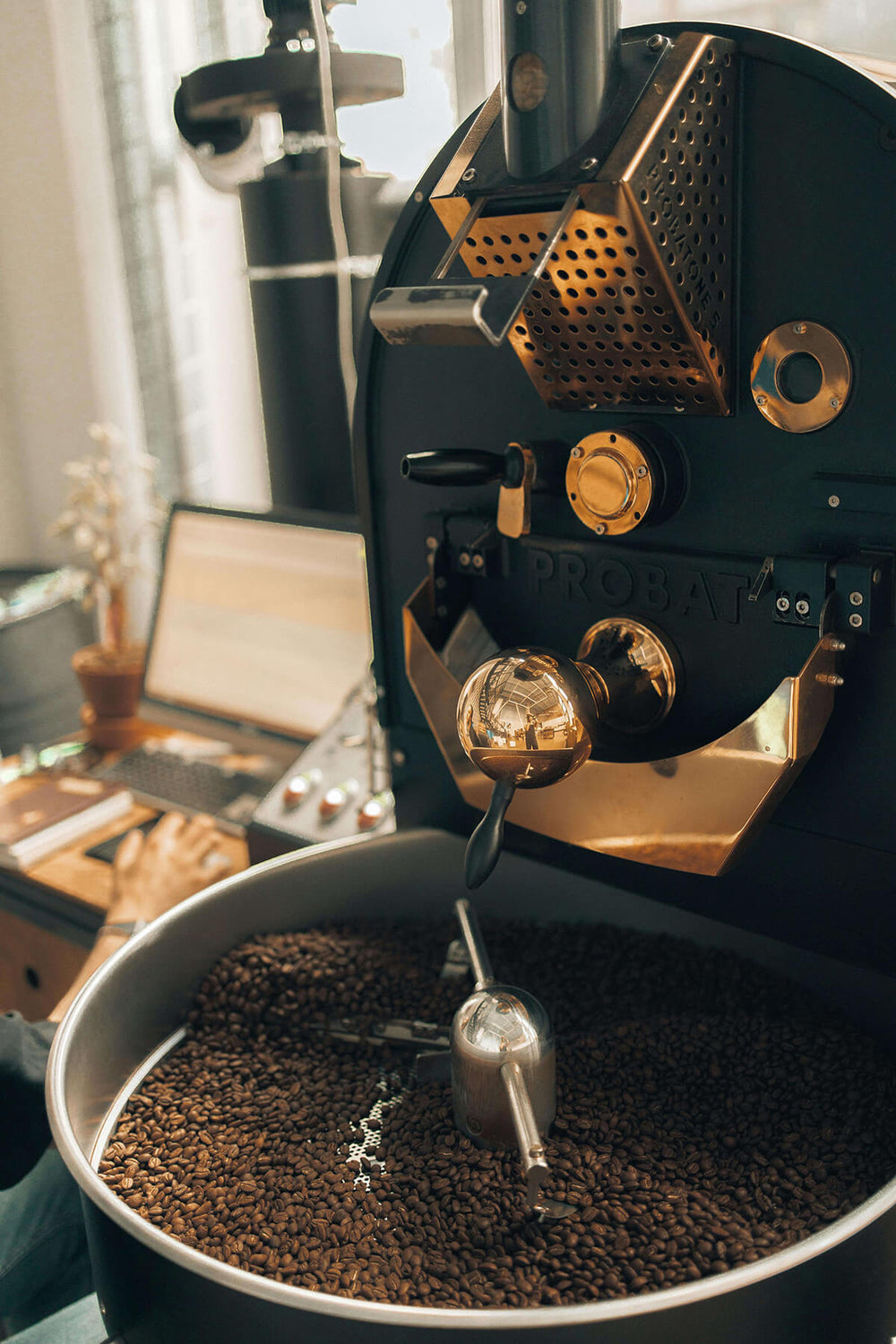
We roast in Vöhringen and only fill your bag immediately before shipping. Until then the roast batch is stored sealed in bulk packaging. The roast date is printed on every package. After 10 to 14 days of resting the sweetness and body are just right, after that the coffee remains aromatic for about four months.

Whole bean or ground?

Both. In addition to whole bean we grind on request for portafilter (fine), drip coffee maker, moka pot or French Press (coarse). Freshly ground tastes best, ground coffee loses aroma faster.

What package sizes are available?

250 g and 500 g, most varieties also as 1 kg. The larger the package, the cheaper the price per kilo. We display the price per kilo directly at the size selection.

Is the coffee really organic?

Yes. All our coffees are EU organic certified, Naturgold and Naturharmonie are additionally Demeter certified. The responsible organic control body is shown on each product page in the bean profile, together with the note non-EU agriculture.

Can I get the coffee on a subscription?

Yes. With a subscription you save 10 % compared to a single order. You set delivery frequency and quantity directly at purchase.

Verpackung

Bio-Verpackung aus nachwachsenden Rohstoffen

Biobasierter PLA-Film aus Zuckerrohr oder Maisstärke statt Erdöl, FSC®-Papier, gefertigt in der EU. Schützt vor UV, Sauerstoff und Feuchtigkeit – und ist nach dem Öffnen wieder verschließbar.

OK biobasedFSC® paperMade in EU
  • Degassing valve Lets CO₂ out, no oxygen in.
  • Resealable Hygienically sealed once, then resealable with a zipper.
  • Light protection Laboratory tested, even for high UV protection requirements.
  • Roast date Is printed on every package. Filled only before shipping.

Oder schreib uns

Betrifft: Mondgold Decaf, decaffeinated organic coffee from Chiapas, das hängen wir automatisch an

Kein Newsletter. Wir antworten persönlich.