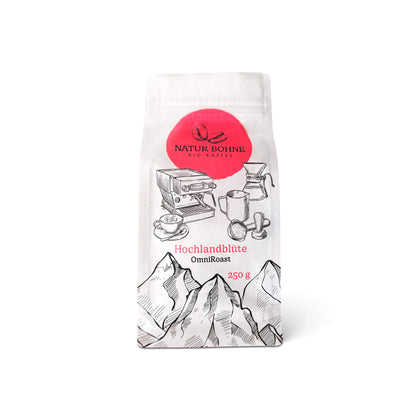
Bean profile Hochlandsonne

EU organic · DE-ÖKO-022
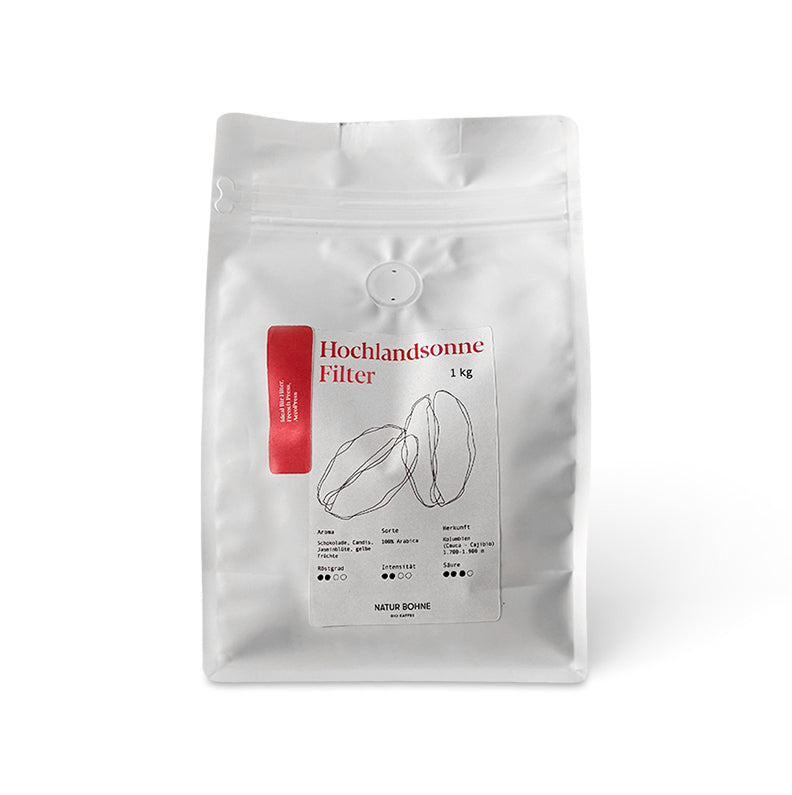
SpeciesArabica
VarietyColombia, Castillo, Typica, Caturra
OriginColombia
Altitude1,700 m - 1,900 m
ProcessingWashed
HarvestMay to July, hand-picked
Roast levelMedium
SCA score83
What makes this coffee special

Floral, clean, sweet

Jasmine blossom and citrus on the entry, behind them the sweetness of Panela and yellow stone fruit, with cocoa in the finish. The body is velvety and balanced, the acidity clear and lively. A clean, elegant filter coffee from the Colombian Andes.

CitrusPanelaJasmine blossomDark chocolate

Aromas are natural flavor associations from green coffee and roasting. Nothing is added to the coffee.

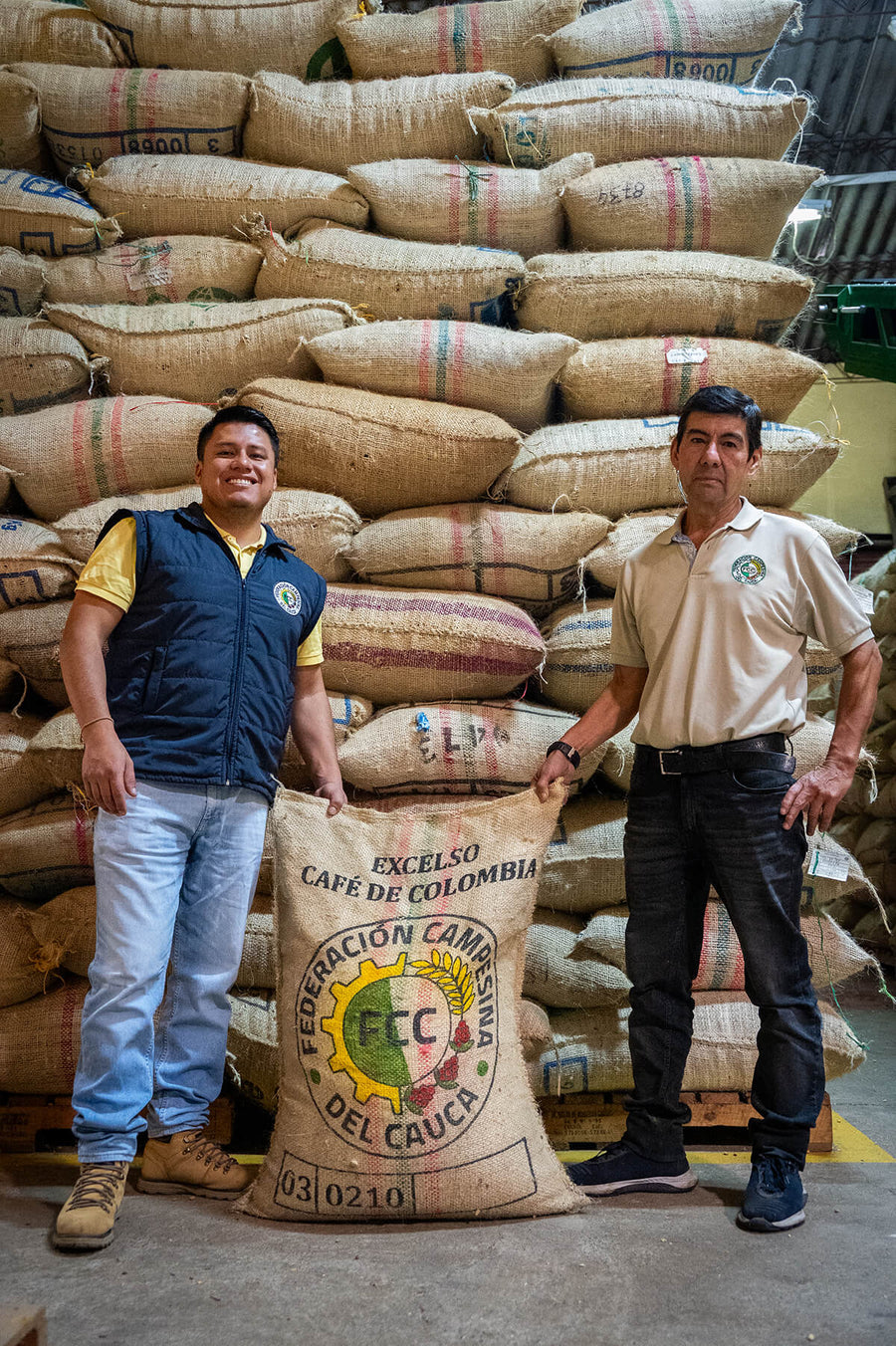
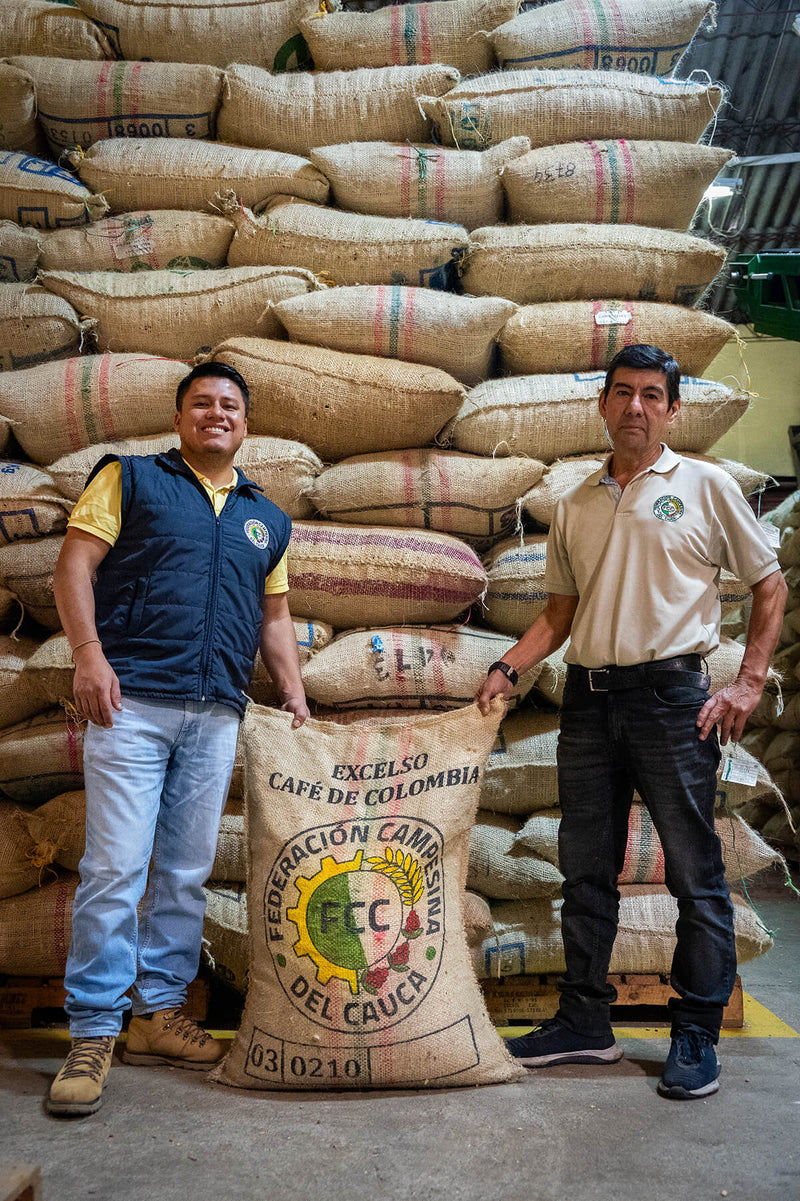
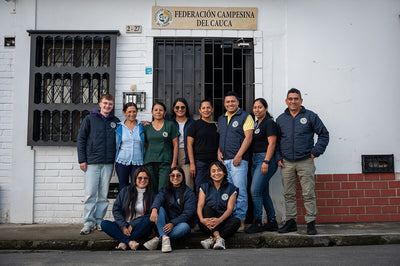
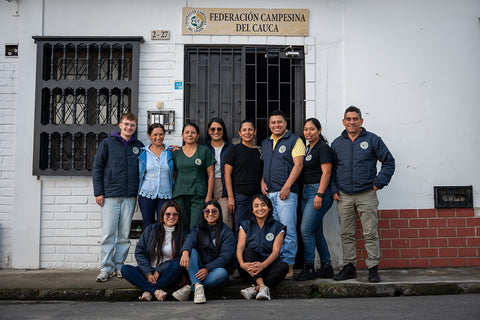
Federación Campesina del Cauca (FCC) smallholder cooperative from the Cauca region

A good fit if you …

  • you drink filter coffee and like clear, floral profiles
  • you value acidity as a quality, here lively and slightly sweet, not sharp
  • you want to know how your coffee came to Europe
  • you are looking for a coffee that is only available in small quantities

Probably not if you …

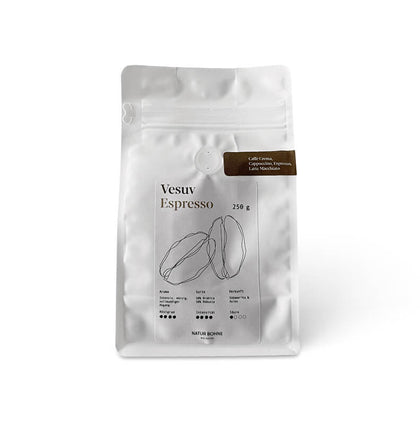
  • you are looking for a strong, dark espresso. Then choose Vesuv or Hornisgrinde
  • you mainly drink milk-based drinks. The floral notes fade in that case
  • you want a mild, restrained everyday coffee. Then Sonnental fits better
The people behind the coffee

Who grows your coffee, with names and faces.

We buy in small lots and know the producers whose coffee we roast.

Federación Campesina del Cauca (FCC) smallholder cooperative from the Cauca region
Federación Campesina del Cauca (FCC) smallholder cooperative from the Cauca regionFederación Campesina del Cauca (FCC) smallholder cooperative from the Cauca region
Colombia

Federación Campesina del Cauca (FCC) smallholder cooperative from the Cauca region

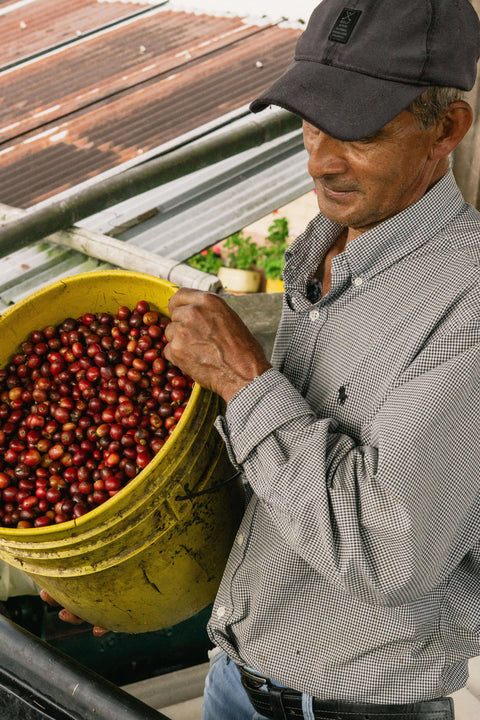
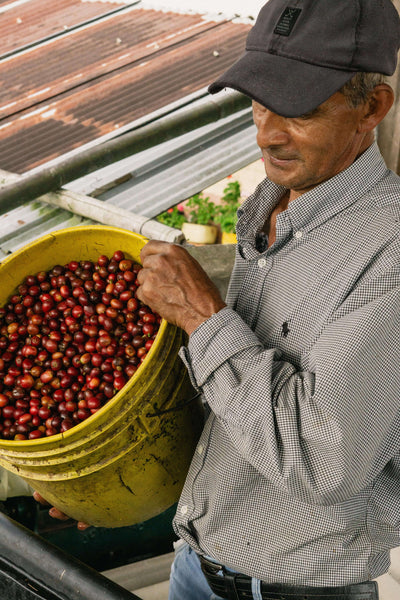
Hochlandsonne grows in the Cajibío terroir in the Cauca region of Colombia, cultivated by smallholder farmers of Federación Campesina del Cauca. Coffee there is more than a beverage: it is a symbol for peace and a rejection of violence and illegal cultivation. The farms are rooted in a history of struggle for peace.

The farmers have consciously chosen the varieties Caturra, Colombia, Typica and Castillo because these thrive in harmony with nature, adapt well to the region and develop particularly well under the local conditions. Grown at 1,700 to 1,900 meters, washed and dried on raised beds.

The route to Europe goes via the French green coffee importer BELCO, which organizes the sail freight. Traceable to the cooperative and to the lot.
How to get the most out of it

The same bean tastes different with every preparation. Here are the parameters we use to brew it ourselves.

filter coffee

Filterkaffee
Dose
15 g for 250 ml
Water
250 ml
Grind
8 (medium-fine)
Temperature
93–94 °C
Time
2:30–3:00 min

House convention: 250 ml are one cup. Large pot 20 g for 320 ml. Pour-over Hario V60, water quality total hardness 4 °dH, alkalinity 3 °dH.

French Press Espresso

French Press
Dose
40 g
Water
750 ml
Yield
750 ml
Temperature
93 °C
Time
3 min

40 g for 750 ml yields three cups of 250 ml each. After one minute stir the crust, at three minutes press slowly and decant immediately.

Single origin · Colombia

Where this coffee comes from

We buy in small lots and know the producers whose coffee we roast.

Federación Campesina del Cauca (FCC) smallholder cooperative from the Cauca region, Colombia
Colombia

Federación Campesina del Cauca (FCC) smallholder cooperative from the Cauca region

ArabicaWashed1,700 m - 1,900 m
Origin
Colombia
Altitude
1,700 m - 1,900 m
Processing
Washed
Harvest
May to July, hand-picked
Transparency

From green coffee to your bag, every step verifiable.

We have the green coffee analyzed and roast it ourselves. All values here belong to the batch you order.

Vöhringen, Black Forest
Roasted in Vöhringen, Black Forest
More about the roastery →
  1. 1
    Green coffee · intake analysis

    Checked before a bean goes into the roaster

    Each batch comes with lab values from the importer. We present them here unchanged.

    83score
  2. 2
    Roasting · Vöhringen

    Gentle rather than fast

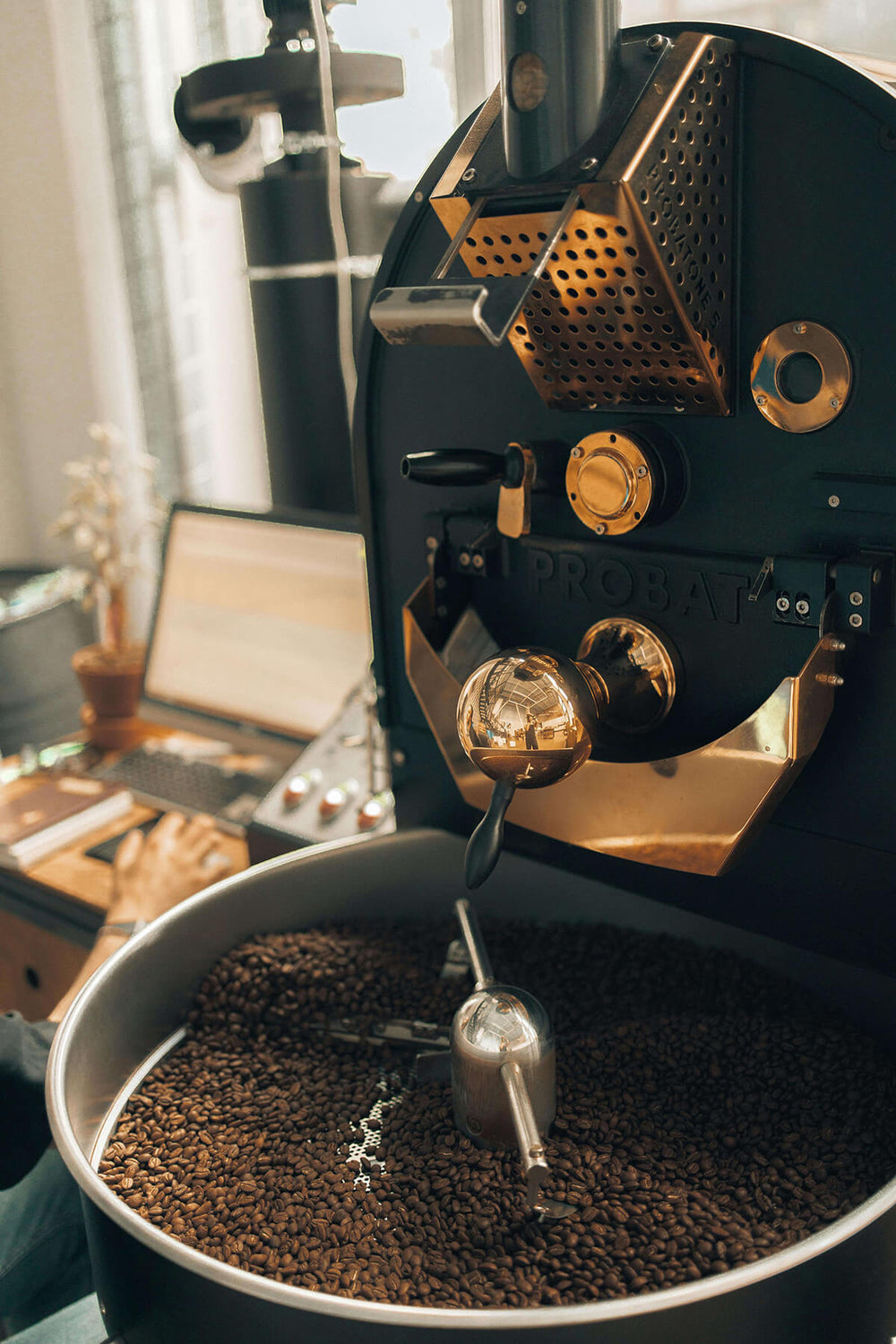
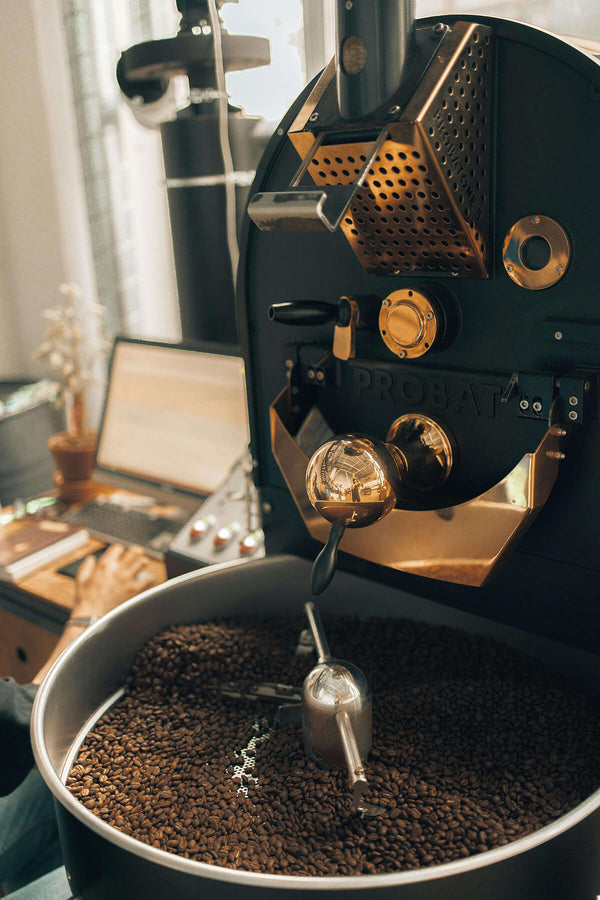
    A roast in which the delicate aromas come to the fore. Large roasteries roast hotter and shorter, which darkens the bean and strips its nuances.

    bis 220 °CRoast temperature
    10 to 15 minutesRoast time
    MediumRoast level
  3. 3
    Freshness · filling

    Your bag is only filled just before shipping

    Until you order, the roast batch is stored sealed in bulk packaging. The roast date is printed on each package.

    10–14 daysResting time, then at its best
    around 4 monthsBest within
    On the bagRoast date
    Before shippingFilling
Customer reviews

No reviews yet

Questions & answers

What customers ask about Hochlandsonne

If your question is not listed, write to us. We reply personally, usually on the same business day.

Ask your own question →
Ist die Hochlandsonne auch für meine Filterkaffeemaschine geeignet oder nur für Espresso?

Die Hochlandsonne ist ein Omniroast, das bedeutet: mittlere Röstung, die sowohl für Filterkaffee als auch für French Press funktioniert. Für die Filterkaffeemaschine empfehlen wir 25 g Kaffee auf 400 ml Wasser bei 92–95 °C. Der Mahlgrad sollte mittel sein. Das Ergebnis: Schokolade, Jasmin, ein Hauch Zitrus, samtig und weich, ohne Bitterkeit.

Kleben die Hochlandsonne-Bohnen das Mahlwerk meines Vollautomaten zu?

Mittelhelle Röstungen wie die Hochlandsonne haben eine matte Oberfläche, kein Ölfilm, der sich in Mahlwerk-Schächten absetzt. Die Bohne ist bei 210 °C für 13–16 Minuten geröstet, das ergibt eine trockene, nicht fettig-glänzende Oberfläche. Genau das ist der Unterschied zu dunkelgerösteten Bohnen mit sichtbarem Ölfilm. Für Vollautomaten ist das der richtige Röstgrad.

Der Kaffee aus meinem Vollautomaten schmeckt oft sauer oder spitz, passiert mir das mit der Hochlandsonne auch?

Die Hochlandsonne hat eine fruchtige Säure, das ist eine klare Zitrus-Note, keine spitze Fehlextraktion. Wenn dein Vollautomat zu grob mahlt oder zu wenig Pulver dosiert, kann jede Arabica dünn und sauer klingen. Stell den Mahlgrad feiner und prüf die Dosierung. Die Bohne selbst hat einen SCA-Score von 83 und ein ausgewogenes Profil mit Schokolade, Panela und Jasmin, das kommt im Vollautomaten bei richtiger Einstellung deutlich durch.

Taugt die Hochlandsonne auch für Cappuccino aus dem Vollautomaten oder schmeckt sie dann zu blumig-dünn?

Die Hochlandsonne ist als Omniroast mittelhell geröstet. Jasmin und Zitrus kommen pur deutlich durch, mit Milch dominiert die dunkle Schokolade und Panela-Süße. Das ergibt einen runden Cappuccino ohne Bitterkeit. Wer es kräftiger und klassisch-schokoladig mag, schaut sich unser Bio Espresso Spezialitäten Bundle an, da ist mit dem Vesuv eine dunklere Espresso-Mischung dabei.

Was sagt der SCA-Score von 83 Punkten konkret über die Cup-Qualität der Hochlandsonne aus, und wie wurde dieser bewertet?

Der SCA-Score von 83 Punkten kennzeichnet Hochlandsonne als Spezialitätenkaffee. Die Bewertung orientiert sich am SCA-Protokoll und prüft Kriterien wie Aroma, Geschmack, Nachgeschmack, Säure, Körper, Balance, Sauberkeit, Süße und Gesamtwert. Mit 83 Punkten zeigt der Kaffee ein sauberes, ausgewogenes Geschmacksprofil ohne erkennbare Defekte. Hochlandsonne steht damit für zuverlässig solide Qualität und spürbaren Ursprungscharakter.

Welche Varietäten stecken in der Hochlandsonne, und wie prägen Colombia, Castillo, Typica und Caturra das Tassenprofil?

In Hochlandsonne vereinen sich vier Arabica-Varietäten: Typica sorgt für milde Süße, Caturra als Bourbon-Mutation bringt florale Noten ein. Colombia und Castillo geben Struktur und schokoladige Nuancen. Das Ergebnis ist eine ausgewogene Tasse, charakteristisch für FCC-Kooperativen, mit klarer Qualität und 83 Punkten.

Wie extrahiere ich die Hochlandsonne optimal im Hario V60, um Jasmin und Panela herauszuarbeiten, ohne die Zitrusnoten zu überbetonen?

Mahle die Hochlandsonne mittel, um Jasmin und Panela im V60 gut herauszuholen. Verwende Wasser bei etwa 92 °C und gieße langsam und gleichmäßig in kreisenden Bewegungen auf. Bleibe bei einer Brühzeit von etwa 2:45 Minuten, so bleiben die Zitrusnoten dezent im Hintergrund.

Was unterscheidet die Hochlandsonne von der 24% Sparen mit dem Bio Espresso Spezialitäten Bundle?

Die Hochlandsonne ist ein Specialty Kaffee mit einem einzigartigen Geschmacksprofil, das florale Jasminnoten, dunkle Schokolade und eine feine Zitrusfrische kombiniert. Sie stammt aus den kolumbianischen Anden und wird CO₂-arm per Segelschiff importiert, was ihren ökologischen Fußabdruck reduziert. Im Vergleich dazu beinhaltet das Bio Espresso Spezialitäten Bundle eine Auswahl an verschiedenen Espressobohnensorten, die für eine tiefere, kräftigere Espresso-Extraktion optimiert sind. Beide Produkte sind Bio-zertifiziert, haben jedoch unterschiedliche Geschmacksprofile und Zubereitungsmöglichkeiten.

How fresh is the coffee when it arrives?

We roast in Vöhringen and only fill your bag immediately before shipping. Until then the roast batch is stored sealed in bulk packaging. The roast date is printed on every package. After 10 to 14 days of resting the sweetness and body are just right, after that the coffee remains aromatic for about four months.

Whole bean or ground?

Both. In addition to whole bean we grind on request for portafilter (fine), drip coffee maker, moka pot or French Press (coarse). Freshly ground tastes best, ground coffee loses aroma faster.

What package sizes are available?

250 g and 500 g, most varieties also as 1 kg. The larger the package, the cheaper the price per kilo. We display the price per kilo directly at the size selection.

Is the coffee really organic?

Yes. All our coffees are EU organic certified, Naturgold and Naturharmonie are additionally Demeter certified. The responsible organic control body is shown on each product page in the bean profile, together with the note non-EU agriculture.

Can I get the coffee on a subscription?

Yes. With a subscription you save 10 % compared to a single order. You set delivery frequency and quantity directly at purchase.

Packaging

Organic packaging made from renewable raw materials

Bio-based PLA film made from sugarcane or corn starch instead of petroleum, FSC® paper, manufactured in the EU. Protects against UV, oxygen and moisture, and is resealable after opening.

OK biobasedFSC® paperMade in EU
  • Degassing valve Lets CO₂ out, no oxygen in.
  • Resealable Hygienically sealed once, then resealable with a zipper.
  • Light protection Laboratory tested, even for high UV protection requirements.
  • Roast date Is printed on every package. Filled only before shipping.

Or write to us

Subject: Hochlandsonne organic coffee Colombia, by sail freighter, we add that automatically

No newsletter. We reply personally.