Bohnenprofil

Eine Farm, eine Varietät, sorgfältig geröstet.

EU organic · DE-ÖKO-022
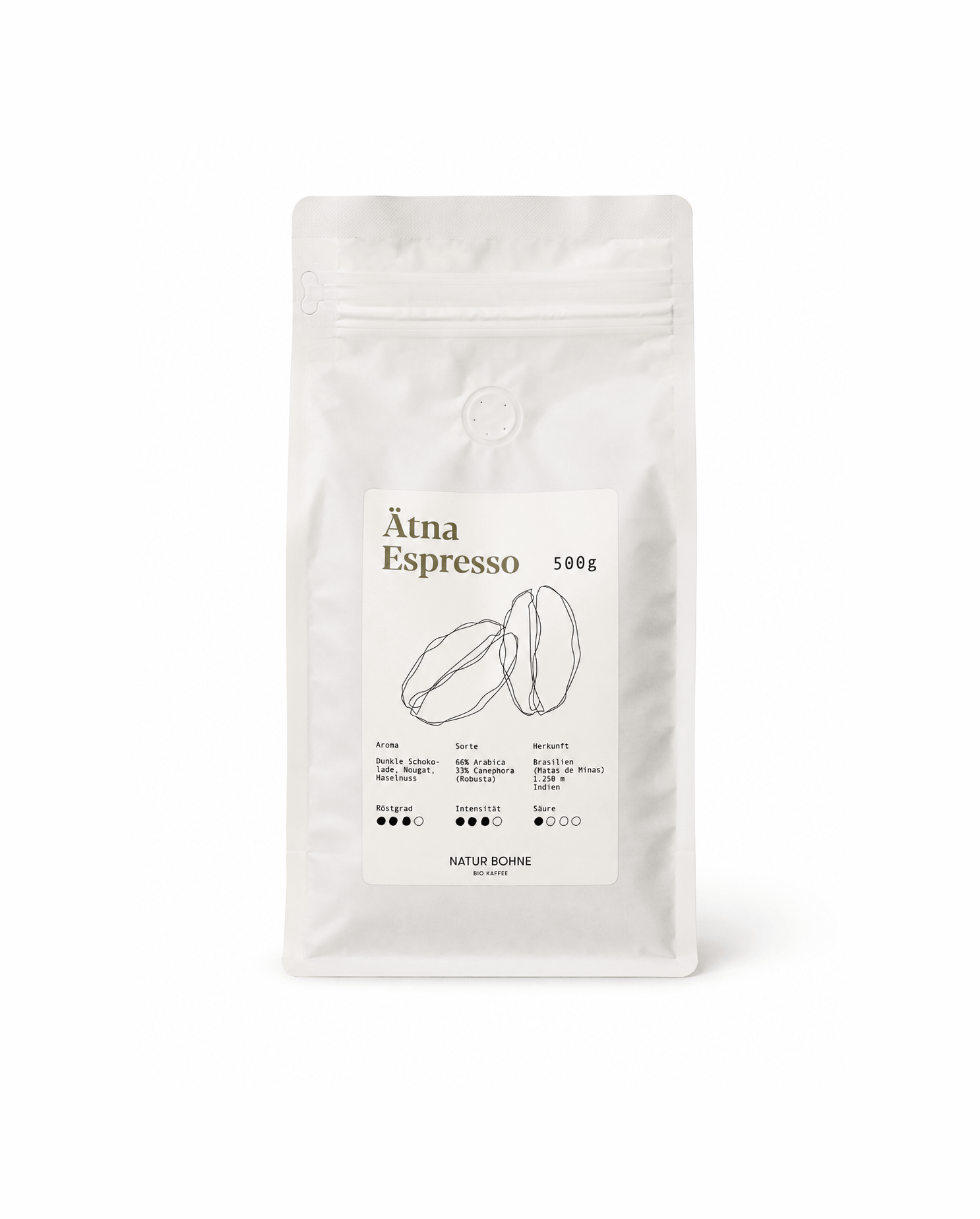
SpeciesArabica und Robusta
VarietyBrazil: Roter Catuai. India: Canephora
OriginBrasilien · Indien
Altitude800 m - 1,200 m
ProcessingNatural, Washed and Wet Hulled
Roast levelMedium
SCA score82
Was diesen Kaffee besonders macht

Dark, chocolaty, full-bodied

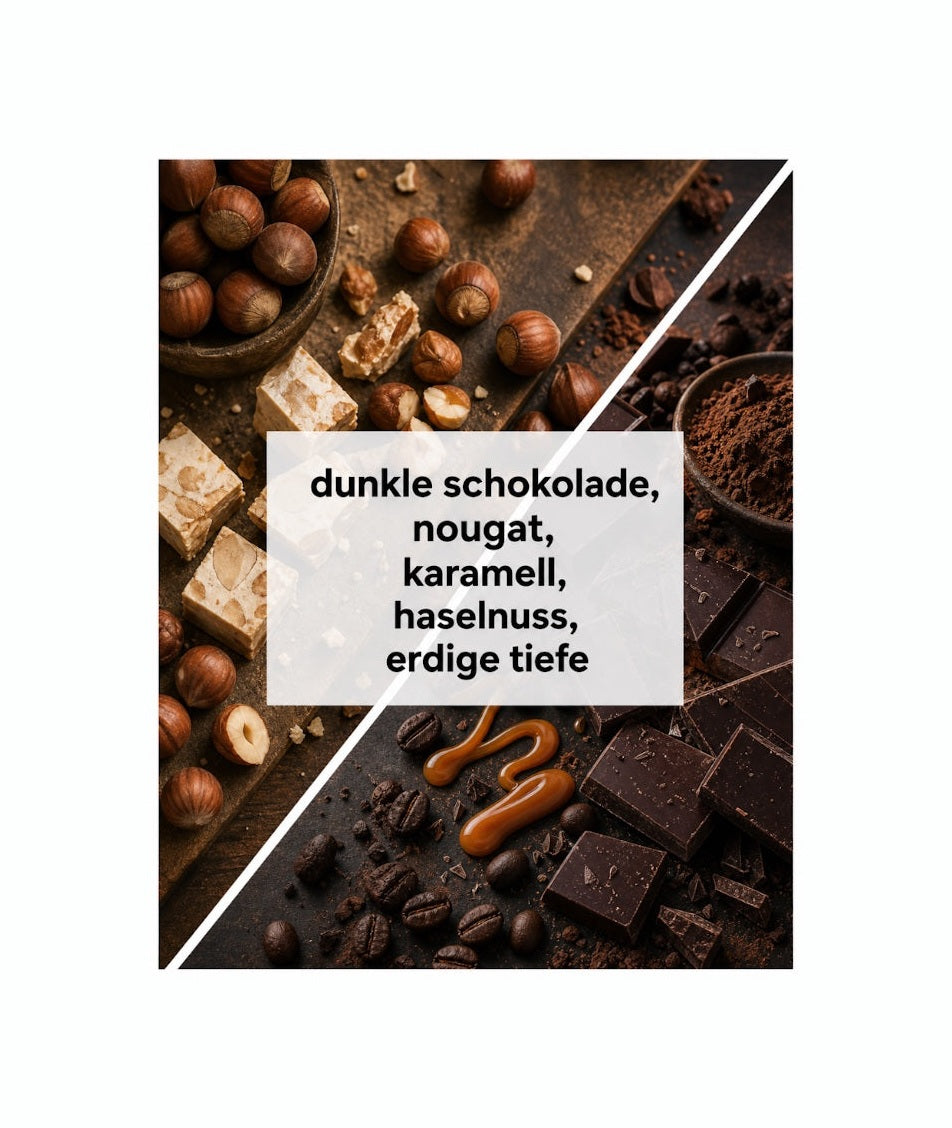
Dark chocolate, nougat and roasted hazelnut. Full, syrupy body, dense hazelnut brown crema, very low acidity. An espresso without sharp notes that works straight and does not disappear in milk.

Canephora, commonly known as Robusta, is part of the blend here and not a cost-cutting measure. The share provides the dense crema, the body and the nutty depth. Southern Italian espresso blends traditionally work with 40 to 50 percent Canephora, with one third Ätna is slightly below that. The Canephora comes from Kerala in south India and grows there from 800 meters under shade trees, washed processed. That is different from lowland Robusta from commodity-grade sources and the reason why Ätna has depth instead of sharp bitterness. A factual note: Canephora naturally contains more caffeine than Arabica.

Dark chocolateNougatCaramelHazelnutEarthy depth

Aromen sind natürliche Geschmacksassoziationen aus Rohkaffee und Röstung. Dem Kaffee wird nichts zugesetzt.

Legião Fazenda Dutra, Matas de Minas · Canephora from Kerala

A good fit if you …

  • you work with a portafilter or a moka pot
  • you like a dark, strong, low-acidity espresso
  • you drink a lot with milk, cappuccino, Flat white or latte macchiato
  • you want a dense crema and full body

Probably not if you …

  • you use an automatic machine. The oily beans clog the grinder. For that take Bergkraft
  • you prefer light, fruity specialty coffees. Then choose Hochlandblüte or Hochlandjuwel
  • you prepare with pour-over, AeroPress or French Press. The roast is too dark for that
  • you want pure Arabica. Then Hornisgrinde is better, it is the same Brazilian bean, only roasted lighter and without Canephora
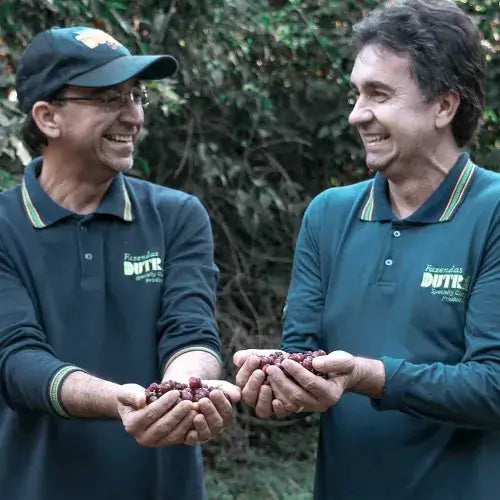
Die Menschen hinter dem Kaffee

Wer deinen Kaffee anbaut – mit Namen und Gesicht.

Wir kaufen in kleinen Mengen und kennen die Betriebe, von denen wir rösten.

Legião Fazenda Dutra, Matas de Minas · Canephora from Kerala
Legião Fazenda Dutra, Matas de Minas · Canephora from KeralaLegião Fazenda Dutra, Matas de Minas · Canephora from Kerala
Brasilien · Indien

Legião Fazenda Dutra, Matas de Minas · Canephora from Kerala

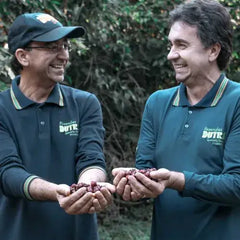
Ätna connects two origins. The Brazilian component is single-variety Roter Catuai from the Legião Fazenda Dutra in Matas de Minas, a family-run farm in its third generation. Founded in 1950 by José Dutra Sobrinho on just over one hectare, today over 300 hectares of specialty and organic coffee, run by Ednilson and Walter Dutra. Hand-picked, natural processed, sun-dried on patios.

The Canephora component comes from Kerala in South India. There Canephora grows from 800 meters altitude under shade trees, a cultivation practice common in India that gives the coffee more depth and less bitterness than typical lowland Robustas. It is processed as washed.

The combination of Brazilian sweetness and Indian structure yields an espresso with dense crema, full body and the typical southern Italian chocolate note, without acidity peaks.
So holst du alles raus

Dieselbe Bohne schmeckt in jeder Zubereitung anders. Hier stehen die Werte, mit denen wir sie selbst brühen.

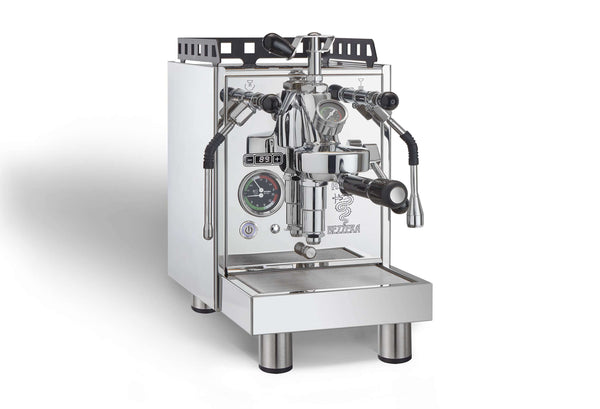
Espresso & Siebträger

Espresso
Dose
17–18 g im Doppelsieb
Yield
34–38 g
Grind
fein
Temperature
91–92 °C
Time
25–28 s

Sehr körperreiche Röstung: kühler und kürzer beziehen, sonst wird der Espresso bitter.

Cappuccino

Dose
8–9 g im Einzelsieb
Yield
17–19 g
Milk
155–160 g
Milk temperature
60–65 °C

Tasse 150 bis 180 ml, 1 bis 2 cm Schaum. Ein körperreicher Espresso trägt mehr Milch. Milch kalt in die Kanne und nicht über 70 °C aufschäumen, sonst geht die Süße verloren. Mit Haferdrink: Barista-Variante nehmen, die normale flockt beim Aufschäumen.

Flat White

Dose
17–18 g
Yield
34–36 g
Milk
120 g
Milk temperature
60–65 °C

Tasse 160 ml, Microfoam höchstens 0,5 cm. Ein doppelter Ristretto oder ein 1:2-Bezug ist hier eine gute Alternative. Milch kalt in die Kanne und nicht über 70 °C aufschäumen. Mit Haferdrink: Barista-Variante nehmen, die normale flockt beim Aufschäumen.

Latte Macchiato

Dose
8–9 g im Einzelsieb
Yield
17–19 g
Milk
235–265 ml
Milk temperature
60–65 °C

Glas 300 bis 400 ml. Ein körperreicher Espresso trägt mehr Milch. Milch kalt in die Kanne und nicht über 70 °C aufschäumen, sonst geht die Süße verloren. Mit Haferdrink: Barista-Variante nehmen, die normale flockt beim Aufschäumen.

Blend · Brasilien · Indien

Wo dieser Kaffee herkommt

Wir kaufen in kleinen Mengen und kennen die Betriebe, von denen wir rösten.

Weltkarte – Herkunft Natural Earth I (wie d3.geoNaturalEarth1), Antarktis entfernt. Punkt = [1000.00 + x·365.58, 569.06 − y·365.58] mit x,y aus der Natural-Earth-Formel (Bogenmaß), siehe weltkarte-README.md. Referenz: 0°,0° → 1000.00,569.06; −42.2°,−20.7° → 770.26,702.34; 75.8°,12.9° → 1417.86,486.10.
Legião Fazenda Dutra, Matas de Minas · Canephora from Kerala, Brasilien, Indien
Brasilien · Indien

Legião Fazenda Dutra, Matas de Minas · Canephora from Kerala

Arabica und RobustaNatural, Washed and Wet Hulled800 m - 1,200 m
Origin
Brasilien · Indien
Altitude
800 m - 1,200 m
Processing
Natural, Washed and Wet Hulled
Transparenz

Vom Rohkaffee bis in deine Tüte, jeder Schritt nachprüfbar.

Wir lassen den Rohkaffee analysieren und rösten selbst. Alle Werte hier gehören zur Charge, die du bestellst.

Vöhringen, Schwarzwald
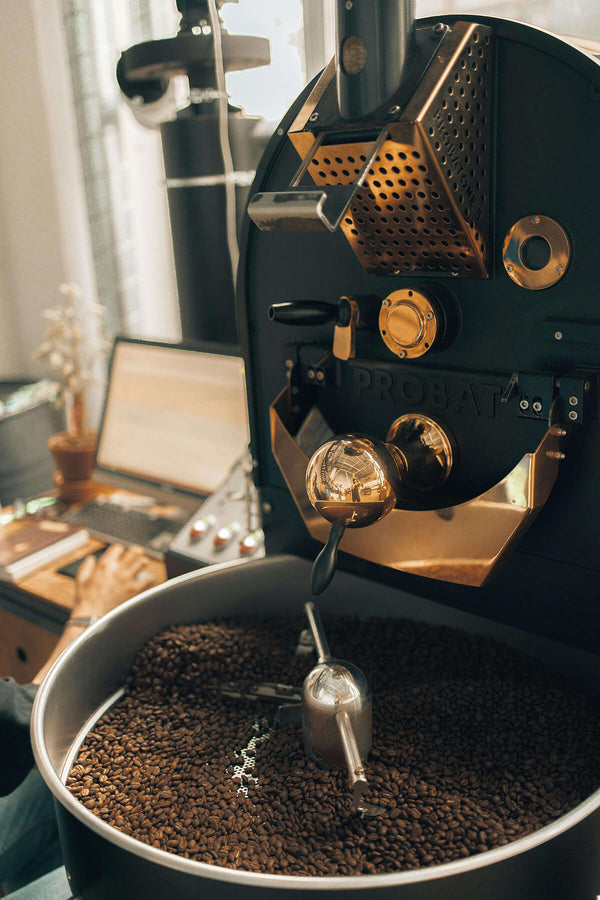
Roasted in Vöhringen, Schwarzwald
Mehr zur Rösterei →
  1. 1
    Green coffee · intake analysis

    Geprüft, bevor eine Bohne in den Röster kommt

    Jede Charge kommt mit Laborwerten vom Importeur. Wir übernehmen sie hier unverändert.

    82score
  2. 2
    Roasting · Vöhringen

    Schonend statt schnell

    Eine Röstung, in der die feinen Aromen zur Geltung kommen. Große Röstereien arbeiten heißer und kürzer, das macht die Bohne dunkler und nimmt ihr Nuancen.

    210 °CRoast temperature
    13 to 16 minRoast time
    MediumRoast level
  3. 3
    Freshness · filling

    Deine Tüte wird erst vor dem Versand befüllt

    Bis zur Bestellung lagert die Röstcharge verschlossen im Großgebinde. Das Röstdatum steht auf jeder Packung.

    10 to 14 daysResting time, then at its best
    around 4 monthsBest within
    On the bagRoast date
    Before shippingFilling
Customer reviews

What customers say about Ätna Organic Espresso, dark roasted

★★★★★

Die Bohne hält was sie verspricht

Die Bohne hält was sie verspricht.

D
Dirk SchrothVerified purchase
Fragen & Antworten

What customers ask about Ätna

Steht deine Frage nicht dabei, schreib uns. Wir antworten persönlich, meist am selben Werktag.

Eigene Frage stellen →
Where does the name come from?

Ätna is named after the Sicilian volcano and for us stands for the roast style, not for the origin. The green coffee comes from Brazil and India, it is roasted in Germany. The profile is Italian: dark roasted, low in acidity, with a Canephora component for crema and body.

Why not in an automatic machine?

The dark roast brings oils to the bean surface. In automatic machines they settle in the bean hopper and the grinder, this leads to clogged burrs and in the worst case to malfunctions. If you use an automatic machine, take Bergkraft. It is deliberately medium roasted, stays dry and still delivers body and crema.

How fresh is the coffee when it arrives?

We roast in Vöhringen and only fill your bag immediately before shipping. Until then the roast batch is stored sealed in bulk packaging. The roast date is printed on every package. After 10 to 14 days of resting the sweetness and body are just right, after that the coffee remains aromatic for about four months.

Whole bean or ground?

Both. In addition to whole bean we grind on request for portafilter (fine), drip coffee maker, moka pot or French Press (coarse). Freshly ground tastes best, ground coffee loses aroma faster.

What package sizes are available?

250 g and 500 g, most varieties also as 1 kg. The larger the package, the cheaper the price per kilo. We display the price per kilo directly at the size selection.

Is the coffee really organic?

Yes. All our coffees are EU organic certified, Naturgold and Naturharmonie are additionally Demeter certified. The responsible organic control body is shown on each product page in the bean profile, together with the note non-EU agriculture.

Can I get the coffee on a subscription?

Yes. With a subscription you save 10 % compared to a single order. You set delivery frequency and quantity directly at purchase.

Verpackung

Bio-Verpackung aus nachwachsenden Rohstoffen

Biobasierter PLA-Film aus Zuckerrohr oder Maisstärke statt Erdöl, FSC®-Papier, gefertigt in der EU. Schützt vor UV, Sauerstoff und Feuchtigkeit – und ist nach dem Öffnen wieder verschließbar.

OK biobasedFSC® paperMade in EU
  • Degassing valve Lets CO₂ out, no oxygen in.
  • Resealable Hygienically sealed once, then resealable with a zipper.
  • Light protection Laboratory tested, even for high UV protection requirements.
  • Roast date Is printed on every package. Filled only before shipping.

Oder schreib uns

Betrifft: Ätna Organic Espresso, dark roasted, das hängen wir automatisch an

Kein Newsletter. Wir antworten persönlich.

  • 5 stars: 1 (100%)
  • 4 stars: 0 (0%)
  • 3 stars: 0 (0%)
  • 2 stars: 0 (0%)
  • 1 star: 0 (0%)
D
Dirk Schroth
Die Bohne hält was sie verspricht

Die Bohne hält was sie verspricht.