


AeroPress Manual Coffee Grinder - Portable hand grinder with titanium-coated conical burrs, 60 grind settings, compact travel coffee grinder for AeroPress, espresso, French press, moka pot
inkl. Mehrwertsteuer
Finanzieren ab 8,71 € / Monat* mit
🚚 Shipping within EU: 8 €
EU shipping costs, see shipping policy.

AeroPress Manual Coffee Grinder - Portable hand grinder with titanium-coated conical burrs, 60 grind settings, compact travel coffee grinder for AeroPress, espresso, French press, moka pot
AeroPress Manual Coffee Grinder - Titanium-coated hand grinder with 60 grind settings
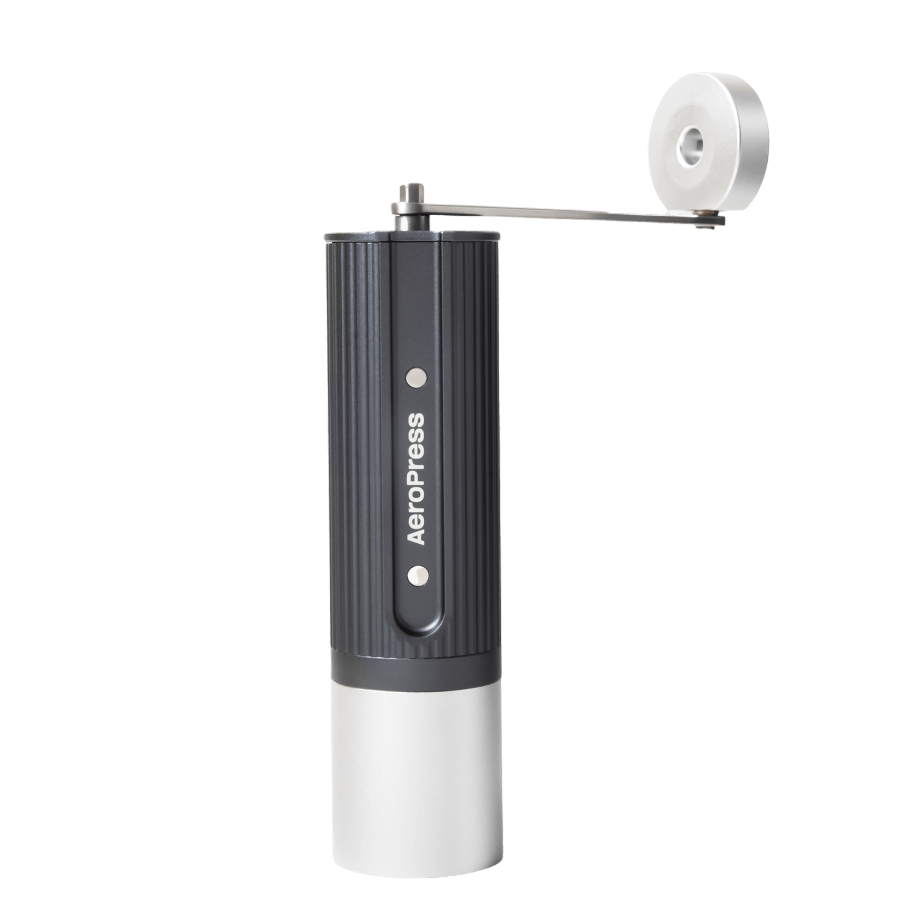
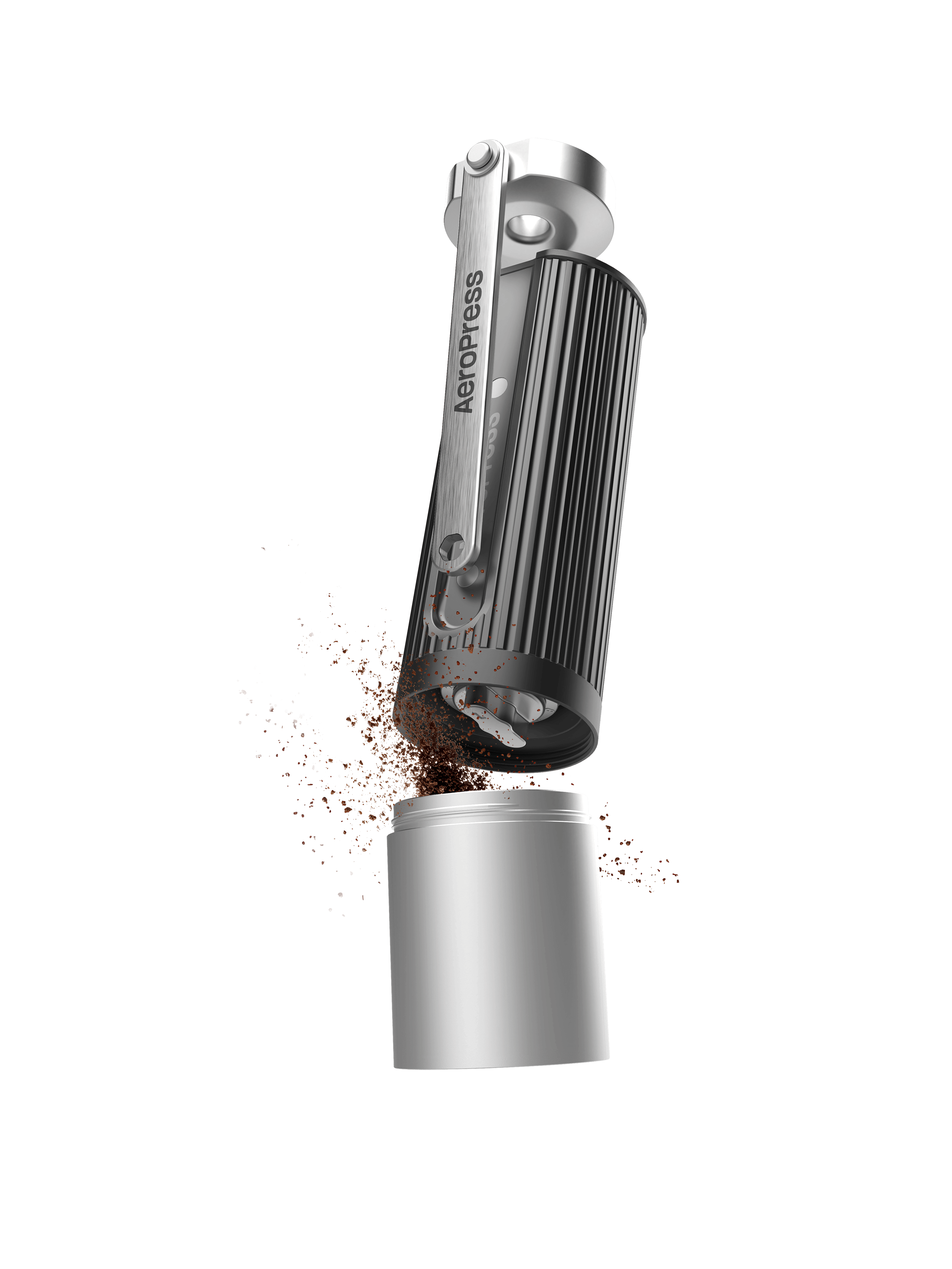
The AeroPress manual coffee grinder is the ideal companion for anyone who doesn't want to miss out on barista-quality coffee on the go. Titanium-coated conical burrs, 60 finely graduated grind settings and a slim full metal housing make it the perfect travel grinder for AeroPress, espresso, French press, moka pot and pour over. The grinder is designed so compactly that it fits completely into your AeroPress - including the crank.
Highlights & advantages
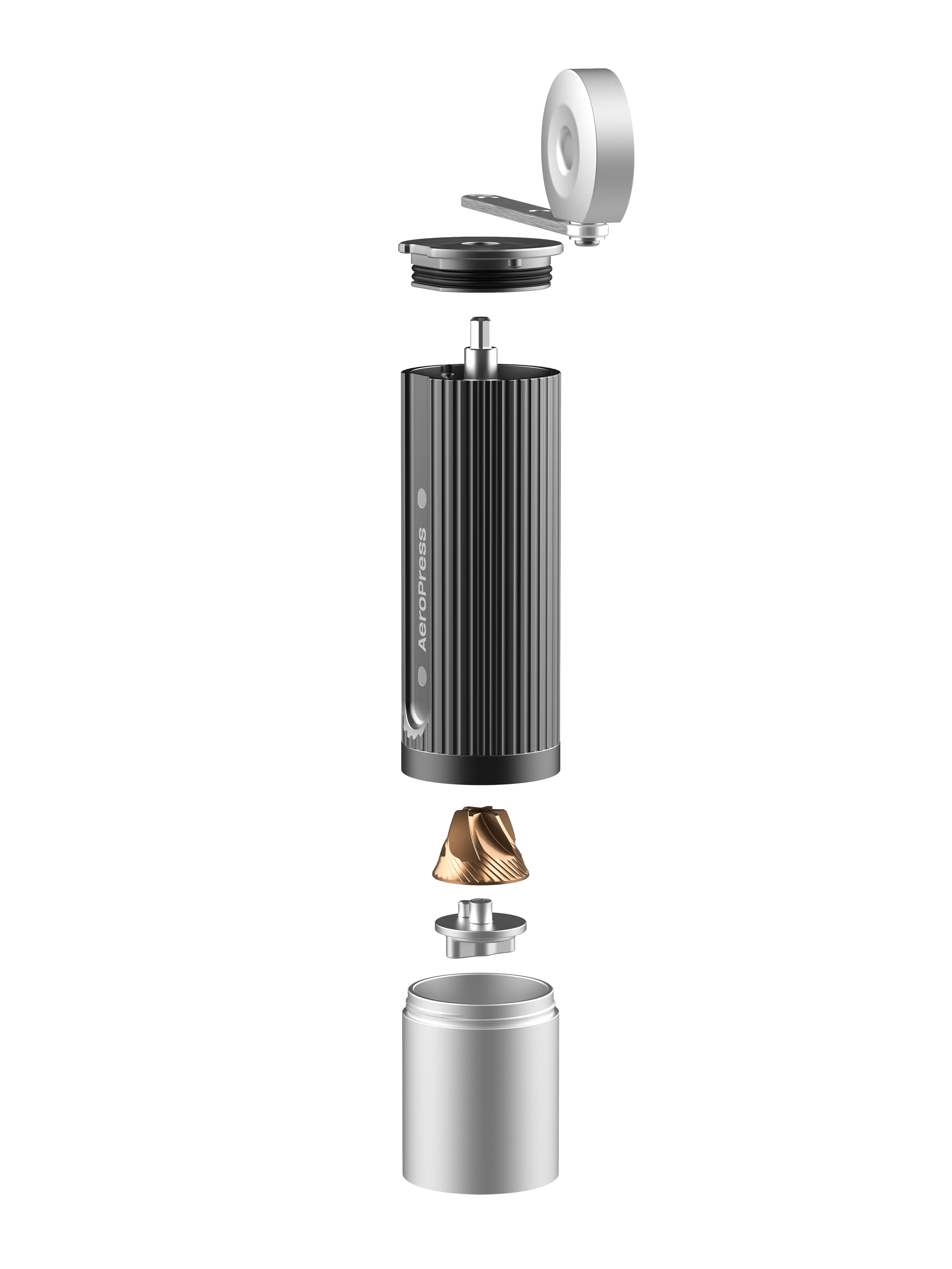
- Titanium-coated, Italian conical burrs for a long service life and precise grinding quality
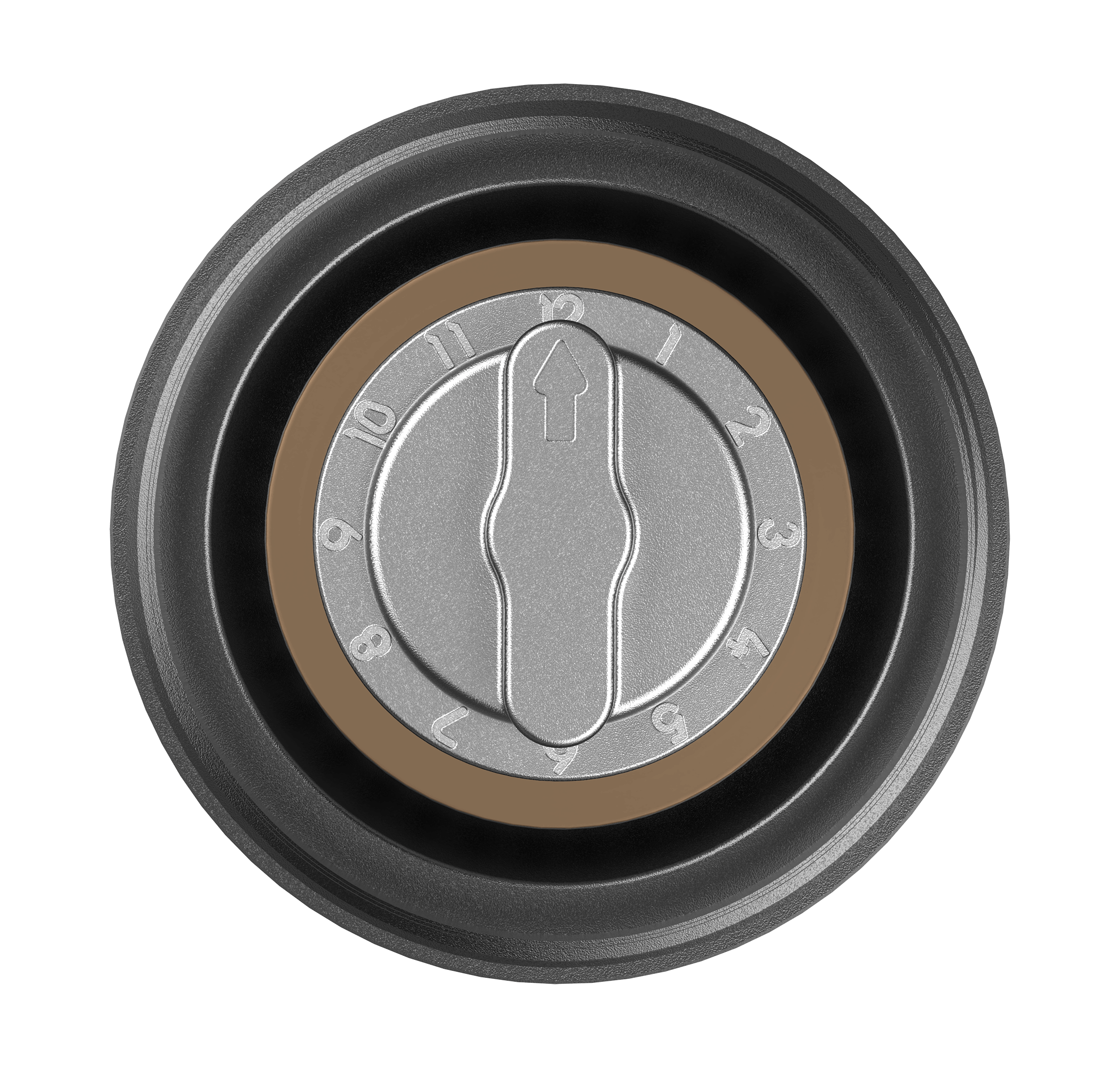
- 60 grind settings - from espresso fine to coarse for French press or cold brew
- Travel-optimized design - slim, robust, full metal housing, perfect for backpacks, suitcases or camping
- Fits in the AeroPress - grinder and crank can be stored in the AeroPress cylinder to save space
- Dual bearing & easy-grind crank - particularly smooth, quiet grinding
- Preset to a medium-fine grind - ideal for AeroPress recipes
Who is the AeroPress manual coffee grinder suitable for?
- AeroPress fans looking for a perfectly fitting, high-quality travel grinder
- Travelers, campers and vanlife enthusiasts who want to grind fresh wherever they go
- Home baristas looking for a second grinder for filter, moka or office use
- Coffee lovers who value precise grinds and manual rituals
Technical specifications
| Product type | Manual coffee grinder / hand grinder |
|---|---|
| Grinding mechanism | Titanium-coated, conical stainless steel grinders (Italian production) |
| Grinding degrees | 60+ incrementally adjustable grinds - from espresso to French press |
| Bean container capacity | approx. 25 g coffee beans (ideal for 1-2 cups) of coffee. Not suitable for espresso |
| Housing material | Full metal, robust and travel-friendly |
| Construction | Slim design, fits into the AeroPress cylinder |
| Crank handle | Long Easy-Grind crank, magnetic attachment, dual bearings |
| Areas of application | AeroPress, espresso, moka pot, French press, hand filter, cold brew |
Operation & grind adjustment
- Fill the bean container with up to 25 g of fresh beans.
- Select the grind using the adjustment ring on the base of the grinder (finer for espresso, medium-fine for AeroPress, coarser for French press).
- Attach the crank handle - quickly and safely thanks to the magnetic mechanism.
- Grind over the AeroPress, French press, moka pot or a filter.
- After grinding, remove the crank and slide it into the grinder body for storage - perfect for traveling.
Why this grinder fits perfectly with the AeroPress
The AeroPress is known for its compact size, high flexibility and excellent coffee quality. The AeroPress Manual Coffee Grinder was designed to do just that: it is lightweight, stable, extremely space-saving and offers enough precision to grind a wide variety of recipes - from classic AeroPress brews to espresso-like recipes and longer, filter-like preparations.
The combination of a titanium-coated conical burr grinder, 60 finely graduated clicks and AeroPress-compatible size makes it the ideal choice for anyone who wants to drink just as good coffee on the go as they do at home.
Angaben zum Hersteller
* Bonität vorausgesetzt. Ratenbeispiel für PayPal Ratenzahlung: effektiver Jahreszins 12,49 % p.a., fester Sollzinssatz 11,80 % p.a., Laufzeit 24 Monate. Genaue Konditionen und Gesamtkosten werden im nächsten Schritt von PayPal angezeigt. Angebot gültig nur für Kunden mit Wohnsitz in Deutschland. Weitere Infos zur Bonitätsprüfung.
Wenn Sie Fragen haben, können Sie sich jederzeit an uns wenden. Wir werden uns so schnell wie möglich bei Ihnen melden, werktags innerhalb von 24 Stunden.
-
Versandinfo
Wir versenden alle Produkte am selben Tag, bei einer Bestellung bis 13.00 Uhr.
-
Support
Auch nach deinem Kauf stehen wir dir beiseite und beraten dich. Hast du Fragen zu dem bei uns gekauften Produkt, dann kontaktiere uns bitte.
-
Kontakt
Email: [email protected]
Telefon: 07454 / 870 48 64
No reviews yet
Hast du noch Fragen?
Kontakt
Falls du noch Fragen zu unseren Produkten hast, schreib uns gerne hier oder benutze die Chatfunktion.